Wednesday, 11 February 2026

In search of monster trout


Dear Simon,


Well, after 18 months in the making the government finally published its White Paper on the water industry last week, A New Vision for Water.


New? It really is not in most respects. Gone is regulator Ofwat but in its place we have yet another regulator with the water functions of the Environment Agency and Natural England bolted on. Nine new reservoirs are promised by 2050, a reheat of a promise first given in May last year. There are plenty of big numbers bandied about: a £104bn here or an £11bn there but these are all numbers previously agreed in 2025. There is the usual red meat of executive bonus banning and a salve to bills payers of increased compensation when things go wrong; twice very little is still very little in my opinion. Page 4 of the document tells us that it was printed on paper containing 40% recycled fibre. I am yet to find the page that says the White Paper contains 80% recycled policies, but you get the drift. So, what of the 20%?

Read the full White Paper here

It must be pretty clear to most that this administration cares little for farming and if farmers thought the U-turn on inheritance tax was a precursor to better things I advise that no farmer reads page 35 entitled, Addressing Agricultural Pollution. It leads with a stark statement, as quoted by a Green MP at Prime Minister’s Questions, that “agriculture remains a key source of water pollution – around 40% of river and groundwater pollution is due to agricultural practices.” The proposal is that there will be a stronger and clearer regulatory framework as to how farmers manage their land, soils and crops. In addition, the use of sewage sludge and cattle farming will be bought under the current Environmental Permitting Regime.


The National Farmers Union are already, predictably, enraged but this is not a localised problem. An article in The New York Times, that coincidentally came out the same day as the White Paper, says that America’s factory farms generate nearly a trillion pounds of manure every year (four times more than people) with no legal requirement for farmers to treat the waste before it is released into the environment. The situation is exacerbated by the powerful lobbying interests of agriculture, subsidies that encourage factory farming and legislation that gives farmers opt outs that allows for polluting at will. It is not so different here as anyone who has followed the growth of the chicken farms in the Wye Valley will attend.


In creating a super regulator, I do sincerely feel an opportunity has been missed. Ofwat was a failure not because it lacked scope or power but because it was trying to juggle conflicting interests with its hands tied behind its back due to the terms of reference issued to it by successive governments. Essentially over four decades political parties of all hues demanded that Ofwat deliver cheap water by restricting the amount the water companies were able to spend on infrastructure whilst ignoring, until very recently, the environmental cost of doing nothing. Now I know it is not a popular view but the water companies, denied the traditional route for a return on investment i.e. improve your product and charge accordingly, resorted to ever more wacky financial shenanigans.


I do not see that the new regulator will do anything to change this inherent conflict of interest. It would have been far better to create two regulators; I know it seems unlikely that two quangos might be better than one, but let me explain.


The first, a Pure Water Authority (PWA) and the senior of the two, would have the sole duty to monitor and enforce water quality regardless of the vested interests of water companies or government price fixing. The other regulator would do everything else but would be answerable to the PWA for the impact its decisions have on water quality. It is regulatory conflict and competition of this nature that is required to drive up water quality for all our rivers, lakes and seas. Sadly, dumping the water functions of the Environment Agency and Natural England into the lap of a new style Ofwat will not achieve this.

In search of monster trout


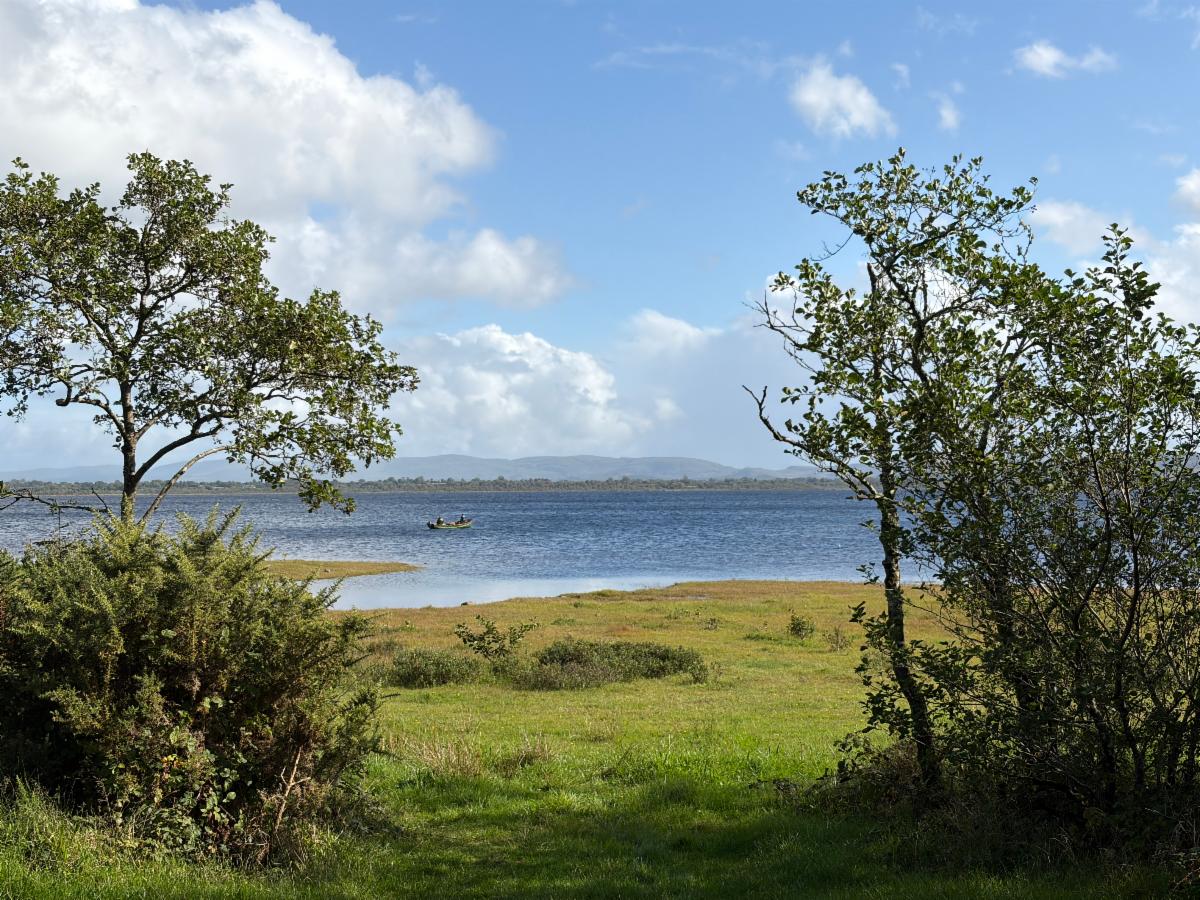
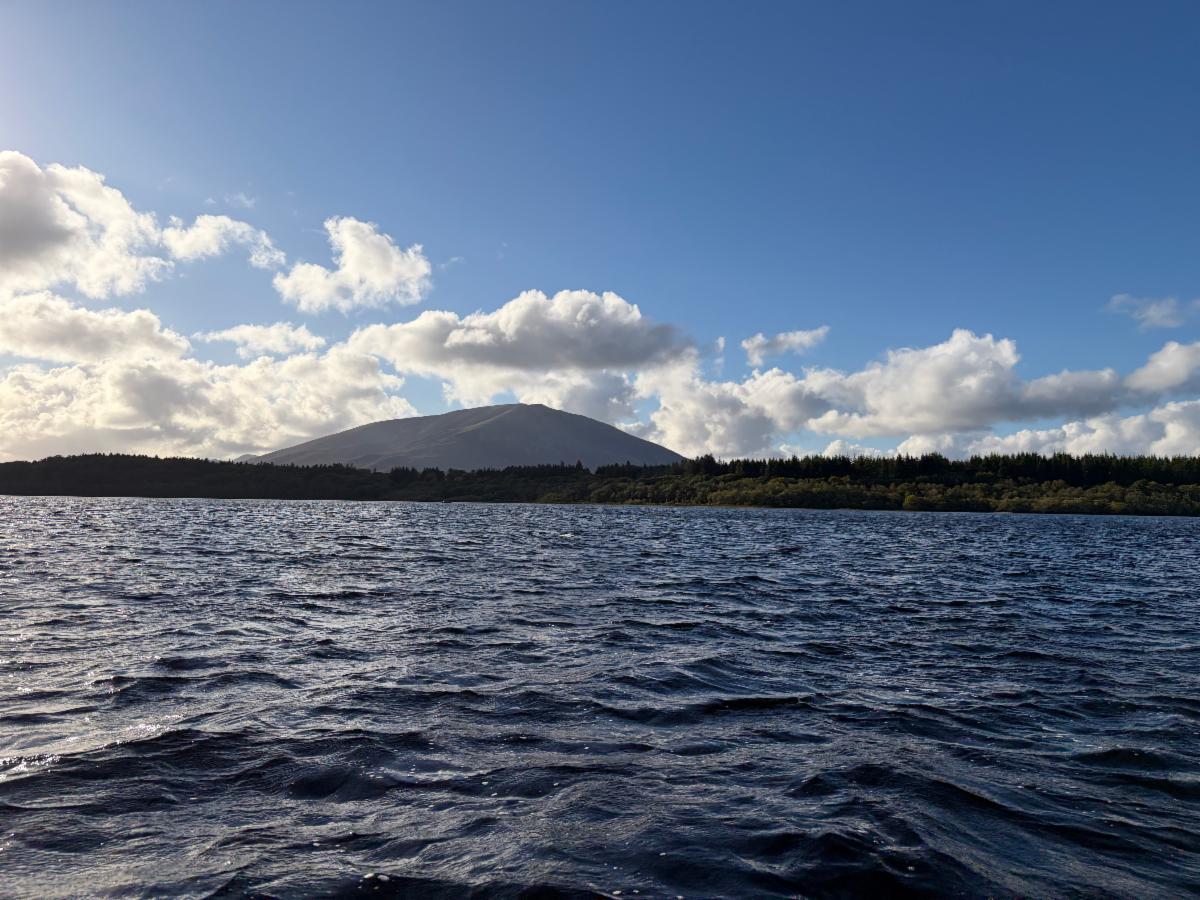
As you read this, I will just be touching down in Buenos Aires enroute to my first ever trip to South America in search on the fabled monster trout that are said to inhabit the rivers of Patagonia, fed by the snow melt of the Andes.


It is something of a trek; there are no direct UK flights to Argentina, I guess a Falklands War byproduct, so it is a one day layover in the capital followed by an internal flight of three hours and a two hour drive to the lodge in the Chubut Province which we will arrive at late Saturday.

Packing light?!

I am not entirely sure what to expect – the packing list includes amongst other things 10lb tippet and a #7 rod with a sinking line. It is now summer in the southern hemisphere with Patagonia averaging in the high 60s to low 70s°F. However, it has a reputation for being persistently windy, even in summer. Judging by the fly list with patterns such as ants and beetles, plus the opportunity for drift boat fishing, suggest it will have similarities to Idaho, Montana and Wyoming but I am pleased to see the legacy of Frank Sawyer straddles the globe, with his Pheasant Tail nymph a recommended pattern for the small creeks.


As for the fish it is trout of many colours, though none are truly native to these parts. Just for once it was not the British who populated the Argentinian rivers with brook, brown and rainbow trout, in addition to landlocked salmon, arriving in 1904 from North America. I will keep you posted!

Tales from The Mill coming soon


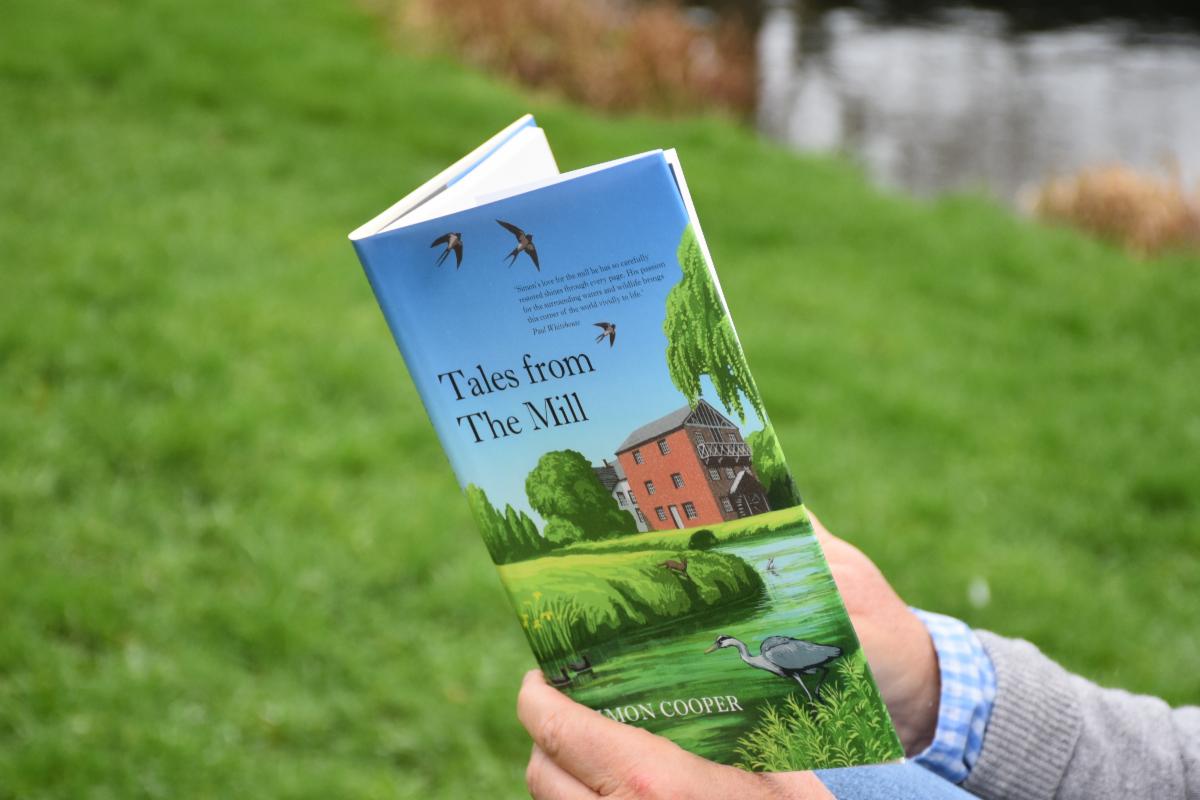
It seems a lifetime ago, in the midst of the pandemic, that I published my last book but I am delighted to give you a sneak preview of the cover and an extract from my new book Tales from The Mill to be published in March.


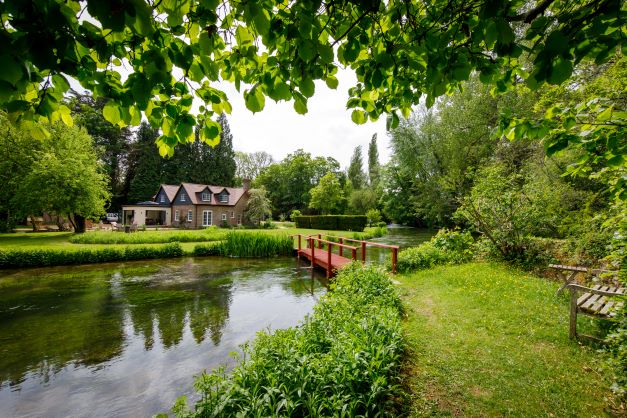
You may order a pre-publication copy here (save £5!) and also join me for the first official event to launch the book here at Nether Wallop Mill on Friday, 5 June. It will be a chance to look around The Mill in its summer pomp, listen to a brief talk from me, see the working mill wheel, the water meadows and, of course, the home of our many otters. Doubtful they will put in an appearance, but we can always hope!


The event runs 11am-2pm with a glass of Black Chalk sparkling wine, light lunch and a signed copy of the book included. Tickets are limited so book now via our Eventbrite link.

Closer to publication day Tales from The Mill will be available from Amazon, Waterstones and all bookshops but for now order direct.


"Spring is a gathering of all that is wonderful in the English countryside. It’s the moment when, after months of the desolated, monochrome landscape, Mother Nature breaks out her colour palette to bring life, hope and joy to every living creature and thing. Suddenly trees, for so long bleak sentinels along the valley ridge, show a hint of green. Small creatures, lured out from semi-hibernation by the midday warmth, scurry heard but unseen among the stiff, dead grasses alongside the Brook. Birds start to sing long and hard, to mark territory and call out for a mate. Ducks fight. Geese honk. Kingfishers whistle in flight. At night the eeks of otters echo up the valley. The foxes occasionally scream like damaged children but mostly steal silently by at night, keeping the rabbit population forever in equilibrium. The trout, largely dormant since the exertions of spawning around Christmas, start to show themselves, venturing from the dark recesses of the stream."


Summer at The Mill

A History of Fly Fishing in 50 Innovations. No. 3: The Reel


I am in two minds as to whether the reel requires inclusion in 50 Innovations. Yes, we all love reels. They can be things of great beauty, tactile and make the big bucks at antique angling auctions. Indeed, there can be few sweeter sounds in the world than the seductive first click of a Hardy Marquis as a salmon applies that unseen pressure to line, rod and then reel. But and it is a big but, reels are dispensable. You cannot fly fish without a hook, line or rod but you most certainly can fish without a reel.


As the modern axis of world trade turns to China, it seems almost inevitable to note that the first reel was invented by the Chinese in 300 or 400AD with reels in British fishing first becoming the commonplace in the 1600’s. It was not for a further century or more until a specific reel for fly fishing came into being, the process to what we use today arriving in two stages.

The Hardy Perfect

Firstly, there was the Birmingham style reel so called as the city was the primary place of manufacture which were made from brass and had a spool that could not be removed from the main body of the reel. These held sway until, in 1891, after three years of development Hardy launched the Perfect reel that had a detachable spool, adjustable drag and a ball race built into the mechanism to make the reel run more freely. However, it must be said that the Perfect owes much of its ‘innovation’ to the modern reel patented in America by Charles F. Orvis in 1874.


I think it is fair to say if today given an Orvis and Hardy reel of the late 19th century you would be able to fish quite adequately, Yes, we have the wide arbor, drag mechanisms are more sophisticated and modern alloys allow for lighter manufacture, but essentially the utility of those innovative reels remains undimmed but whether they deserve a place in the Hall of Innovation is up for discussion.

Orvis 1874 Patent Reel

Your nominations so far, in no particular order. Do keep them coming! simon@fishingbreaks.co.uk

People

F M Halford

Ernest Hemingway

Lefty Kreh

George Selwyn Marryat

Frank Sawyer

GEM Skues

Izaak Walton


Literature

Stillwater Fly Fishing by TC Ivens (1952)

Fly Fisher's Entomology Ronalds(1836)


Flies

Floating flies

Wet flies & lures

Saltwater flies

Gear

Eyed hooks

Floatant

Fly lines

Fly rods

Nets

Polarized sunglasses

Reels

Rods & rod rings

Tippet material & X rating for diameter

Tippet ring

Weighing scales

Waders


General

Stocking of fish

Internet

Quiz

The usual random collection of questions this week inspired by the date and the Newsletter topics.


1)     Who was ritually executed on this day in 1661 despite already being dead for two years?


2)     In what year did the Falklands War take place?


3)    Frank Sawyer, inventor of the Pheasant Tail Nymph, was a river keeper for most of his adult life on which river?


The answers are below.

Have a good weekend.


Best wishes,

Simon Signature

Check & book dates here

Simon Cooper simon@fishingbreaks.co.uk

Founder & Managing Directorwww.fishingbreaks.co.uk

1)     Oliver Cromwell

2)     1982

3)     River Avon in Wiltshire

Friday, 16 January 2026

TV's Out of Town rediscovered


Friday 16th January 2026

Greetings!


Over the Christmas break I spent a happy 45 minutes watching an episode of a TV show that took me all the way back to my childhood, Jack Hargreaves’ Out of Town.


For anyone under fifty you might want to look away now for Out of Town was a style of TV programming that simply does not exist today, presented by Hargraves from his garden shed (in fact a studio fabrication) from the late 1960’s to the early 1980’s. He was man of many sides, qualified vet, turned journalist, turned decorated WW2 soldier, turned back to journalism and then TV presenter along with being a founder of commercial television in the form of ITV. Along the way he had three wives, two additional significant relationships and five children from three different women plus associated stepchildren. 


Jack Hargreaves


In between all that he found time to make many hundreds of episodes of Out of Town that provided a window on the country life of rural Britain as the transmogrification towards an urban nation accelerated. Fishermen, farriers, horsemen, country fairs and horticulturalists were prominently featured as presenter Jack Hargreaves took the cameras around the country to explore the bucolic professions, pursuits and activities of the time, many of which were on the cusp of disappearing even back then.


It was a gentle show, as evidenced by the theme tune, which took two or three topics for each episode. Hargreaves was a man of strong opinions and clearly loved the camera, but he had a way drawing out those who he filmed, injecting humour, compassion and the sharing of information you might otherwise not know, into each segment. The series was made by Southern Television but was soon networked on a prime Sunday afternoon slot until the last episode in 1981.


It was not a fishing show per se, but there was plenty enough to keep me tuning in though I always groaned at his particular obsession with blacksmithery. Hargreaves was indeed a keen angler. In the year prior to the start of Out of Town he had a series called Gone Fishing and later collaborated with Ollie Kite on a show that took children from the city to introduce them to the countryside, and fishing in particular. He was a good fly fisher, but resiled at the thought of just fly fishing for trout, writing, “What do they know of fishing who know only one fish and one way to fish for him?" which I think are words to live by.


Anyway, that is all a very long winded introduction to the episode I watched which features Jack fishing during the Mayfly on what he calls his own water, which I assume is possibly the River Piddle* in Dorset close to where he lived. Aside from his slightly odd entomological explanations I guess what is most shocking is the fact that each and every fish caught is killed, and with a certain degree of relish to camera. That said I am pleased to see he makes a Shadow Mayfly work for him, as it is one of my bogey flies but that aside the essence of his day on the river is as exactly as you and I might enjoy it in a few months time.


You may watch the episode here and many others may be found on You Tube or on Freeview and satellite channels. *If anyone recognises the river location, please let me know.


Cartoon of the Week


I thought you might enjoy this cartoon which combines one of my favourite party games along with some of my least favourite creatures.


In beaver related news, our river keepers Charley and Si, headed off for a one day beaver course run by Natural England – I will spare you my opinion as to whether the expense and time was worthwhile other than in some box ticking sense.


However, there was a little bit of useful intelligence that came out of the day in Devon leading from a discussion on the beavers that were released in the River Wylye catchment, near Longleat in Wiltshire. It seems our furry rodents are not building any dams, content to paddle around the environs of the streams without need for any castorean engineering. The consensus was, that on small chalkstreams at least, beavers do not need the habitat a dam might create.


This is, if proven on a wider scale, great news for us. However, I do not think you will see it much promulgated by the beaver lobby for it undermines the central tenet of beaver usefulness, namely that they are creators of planet saving wetlands. No dams equals no wetlands, beavers simply becoming rather destructive tree munchers upending, for no particular purpose, the natural order of things of a riverine landscape that has served us well for centuries. 


Another outbreak of SSS (Selective Statistic Syndrome)


No sooner had I written about the selective use of rainfall data for dubious climate claims in the last Newsletter than an email pinged into my Inbox linking me to an article run by the BBC on 2 January in response to a press release from Anglian Water.


Anglian Water had said further measures to conserve water may be required in 2026 if drier conditions return over winter because there was a lower than average rainfall from February to August (my italics). I am not sure in what world those seven months are a data point, unless you are setting out to skew the data. Anglian Water on their website then go on to compound the crime by cherry picking more data stating that 11 of the past 14 months had below average rainfall, presumably because 9 out of 12 does not sound alarmist enough.


The proper data, as compiled by the Environment Agency on a bi weekly basis, tells us that in the Anglian region December had 94% of average rainfall, October-December 117%, July-December 99% and the full year 81%. The last figure in itself is worrying enough, so why the Anglian PR people, clearly sufferers of SSS, cannot lead with that defeats me because you look as dumb as a bag of nails when it is lashing down outside.


The Compleat Angler


Until Harry Potter came along Izaak Walton’s The Compleat Angler was the second most reprinted book of all time, only surpassed by the Bible. That reason alone seems to me, enough for this literary homage to angling, consideration as a contender for inclusion in the list of A History of Fly Fishing in 50 Innovations.


It is remarkable that a book of such a niche nature, written in the years immediately after the Civil War, of which Walton held an important position albeit as a Royalist, retains such a grip on piscatorial culture with a new edition or translation just about every year. It is to fishing what the Mona Lisa is to art, an enigmatic representation of a time and a person we do not fully understand. 


Window of the Walton Chapel in Winchester Cathedral


Walton published the book in 1653, already aged 60 years, expanding it in three further editions over the next 25 years, the final edition of his life including the Charles Cotton fly fishing section. Walton, who died at the remarkable age of 90, did not regard himself as a fly fisher when the book was first published, the fly fishing contribution by Thomas Barker, a retired cook and humourist. However, Walton did later take to fly fishing taught to both fish and tie flies by his friend and collaborator, Cotton.


The enduring fascination of the book is that it is not a how-to angle book, or really a fishing book, but rather examines the virtues of leisure and nature, fishing being a peaceful retreat from the turmoil of life. Of course, in the aftermath of the Civil War this was particularly apposite for Walton who had been on the wrong side, entrusted to care for one of the Crown Jewels which was then smuggled to the exiled Charles II.


Please keep your nominations for 50 Innovations coming. Apologies to all who have written thus far as I have been unable to reply to everyone but a particular thank you to Rupert Connell who sent this photo of ancient hooks, with and without eyes, (and a particularly unpleasant fish spear) taken in the Grand Egyptian Museum in Egypt. Next time I will publish the full list of nominations received.


Quiz


The usual random collection of questions this week inspired by the date and the Newsletter topics.


1)     Which religion was outlawed by the English parliament on this day in 1581?


2)     The first Harry Potter book was published in which year? a) 1987 b) 1997 c) 2007


3)     When Roy Thomson, later Lord Thomson of Fleet, described his business as “a licence to print money,” what was the business?


The answers are below.


Have a good weekend.


Best wishes,


Simon Cooper 

Founder & Managing Director


1)     Catholicism

2)     1997

3)     UK commercial television franchises


TIME IS PRECIOUS. USE IT FISHING


The Mill, Heathman Street, Nether Wallop,

Stockbridge, England SO20 8EW United Kingdom

01264 781988

www.fishingbreaks.co.uk


Facebook Twitter  Youtube  Instagram