Greetings! Over the Christmas
break I spent a happy 45 minutes watching an episode of a TV show
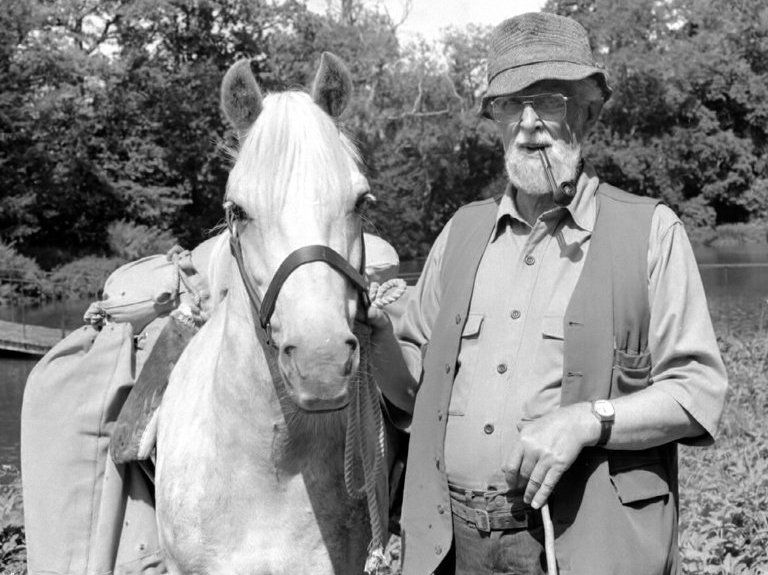
that took me all the way back to my childhood, Jack Hargreaves’ Out
of Town. For anyone under
fifty you might want to look away now for Out of Town was a
style of TV programming that simply does not exist today, presented
by Hargraves from his garden shed (in fact a studio fabrication) from
the late 1960’s to the early 1980’s. He was man of many sides,
qualified vet, turned journalist, turned decorated WW2 soldier,
turned back to journalism and then TV presenter along with being a
founder of commercial television in the form of ITV. Along the way he
had three wives, two additional significant relationships and five
children from three different women plus associated
stepchildren. |
|
|
In between all that
he found time to make many hundreds of episodes of Out of Town
that provided a window on the country life of rural Britain as the
transmogrification towards an urban nation accelerated. Fishermen,
farriers, horsemen, country fairs and horticulturalists were
prominently featured as presenter Jack Hargreaves took the cameras
around the country to explore the bucolic professions, pursuits and
activities of the time, many of which were on the cusp of
disappearing even back then.
It was a gentle
show, as evidenced by the theme tune, which took two or three topics
for each episode. Hargreaves was a man of strong opinions and clearly
loved the camera, but he had a way drawing out those who he filmed,
injecting humour, compassion and the sharing of information you might
otherwise not know, into each segment. The series was made by
Southern Television but was soon networked on a prime Sunday
afternoon slot until the last episode in 1981.
It was not a
fishing show per se, but there was plenty enough to keep me tuning in
though I always groaned at his particular obsession with
blacksmithery. Hargreaves was indeed a keen angler. In the year prior
to the start of Out of Town he had a series called Gone
Fishing and later collaborated with Ollie Kite on a show that
took children from the city to introduce them to the countryside, and
fishing in particular. He was a good fly fisher, but resiled at the
thought of just fly fishing for trout, writing, “What do they know of
fishing who know only one fish and one way to fish for him?"
which I think are words to live by.
|
|
|
Anyway, that is all
a very long winded introduction to the episode I watched which
features Jack fishing during the Mayfly on what he calls his own
water, which I assume is possibly the River Piddle* in Dorset close
to where he lived. Aside from his slightly odd entomological
explanations I guess what is most shocking is the fact that each and
every fish caught is killed, and with a certain degree of relish to
camera. That said I am pleased to see he makes a Shadow Mayfly work
for him, as it is one of my bogey flies but that aside the essence of
his day on the river is as exactly as you and I might enjoy it in a
few months time.
You may watch the
episode here and many
others may be found on You Tube or on Freeview and satellite
channels. *If anyone recognises the river location, please let me
know.
|
|
|
Cartoon of the Week
I thought you might
enjoy this cartoon which combines one of my favourite party games
along with some of my least favourite creatures.
In beaver related
news, our river keepers Charley and Si, headed off for a one day
beaver course run by Natural England – I will spare you my opinion as
to whether the expense and time was worthwhile other than in some box
ticking sense.
However, there was
a little bit of useful intelligence that came out of the day in Devon
leading from a discussion on the beavers that were released in the
River Wylye catchment, near Longleat in Wiltshire. It seems our furry
rodents are not building any dams, content to paddle around the
environs of the streams without need for any castorean engineering.
The consensus was, that on small chalkstreams at least, beavers do
not need the habitat a dam might create.
This is, if proven
on a wider scale, great news for us. However, I do not think you will
see it much promulgated by the beaver lobby for it undermines the
central tenet of beaver usefulness, namely that they are creators of
planet saving wetlands. No dams equals no wetlands, beavers simply
becoming rather destructive tree munchers upending, for no particular
purpose, the natural order of things of a riverine landscape that has
served us well for centuries.
|
|
|
Another outbreak of SSS (Selective Statistic Syndrome)
No sooner had I
written about the selective use of rainfall data for dubious climate
claims in the last Newsletter than an email pinged into my Inbox
linking me to an article run by the BBC on 2 January in response to a
press release from Anglian Water.
Anglian Water had
said further measures to conserve water may be required in 2026 if
drier conditions return over winter because there was a lower than
average rainfall from February to August (my italics). I am not
sure in what world those seven months are a data point, unless you
are setting out to skew the data. Anglian Water on their website then
go on to compound the crime by cherry picking more data stating that
11 of the past 14 months had below average rainfall, presumably
because 9 out of 12 does not sound alarmist enough.
The proper data, as
compiled by the Environment Agency on a bi weekly basis, tells us
that in the Anglian region December had 94% of average rainfall,
October-December 117%, July-December 99% and the full year 81%. The
last figure in itself is worrying enough, so why the Anglian PR
people, clearly sufferers of SSS, cannot lead with that defeats me
because you look as dumb as a bag of nails when it is lashing down
outside.
|
|
The Compleat Angler
Until Harry Potter
came along Izaak Walton’s The Compleat Angler was the second
most reprinted book of all time, only surpassed by the Bible. That
reason alone seems to me, enough for this literary homage to angling,
consideration as a contender for inclusion in the list of A History
of Fly Fishing in 50 Innovations.
It is remarkable
that a book of such a niche nature, written in the years immediately
after the Civil War, of which Walton held an important position
albeit as a Royalist, retains such a grip on piscatorial culture with
a new edition or translation just about every year. It is to fishing
what the Mona Lisa is to art, an enigmatic representation of a time
and a person we do not fully understand.
|
|
|
|
Window of the Walton Chapel in
Winchester Cathedral
|
|
|
Walton published
the book in 1653, already aged 60 years, expanding it in three
further editions over the next 25 years, the final edition of his
life including the Charles Cotton fly fishing section. Walton, who
died at the remarkable age of 90, did not regard himself as a fly
fisher when the book was first published, the fly fishing
contribution by Thomas Barker, a retired cook and humourist. However,
Walton did later take to fly fishing taught to both fish and tie
flies by his friend and collaborator, Cotton.
The enduring
fascination of the book is that it is not a how-to angle book, or
really a fishing book, but rather examines the virtues of leisure and
nature, fishing being a peaceful retreat from the turmoil of life. Of
course, in the aftermath of the Civil War this was particularly
apposite for Walton who had been on the wrong side, entrusted to care
for one of the Crown Jewels which was then smuggled to the exiled
Charles II.
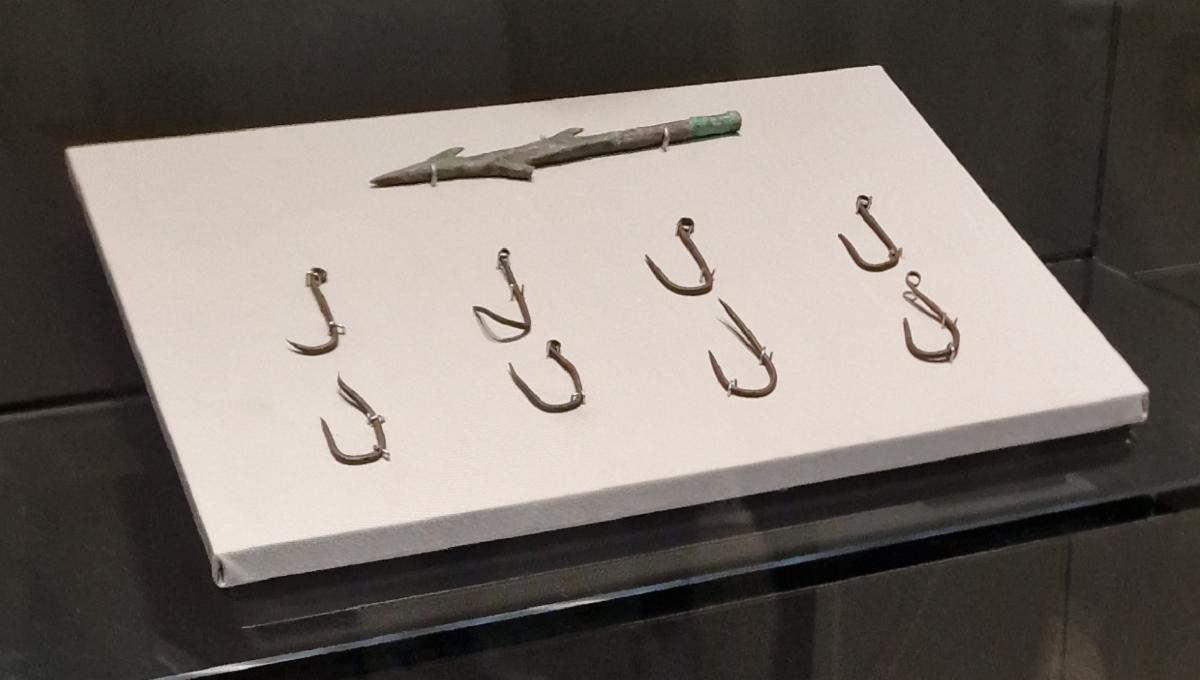
Please keep your
nominations for 50 Innovations coming. Apologies to all who have
written thus far as I have been unable to reply to everyone but a
particular thank you to Rupert Connell who sent this photo of ancient
hooks, with and without eyes, (and a particularly unpleasant fish
spear) taken in the Grand Egyptian Museum in Egypt. Next time I will publish the full list of
nominations received.
|
|
|
|
The usual
random collection of questions this week inspired by the date and
the Newsletter topics.
1) Which religion was outlawed by the English
parliament on this day in 1581?
2) The first Harry Potter book was published in which
year? a) 1987 b) 1997 c) 2007
3) When Roy Thomson, later Lord Thomson of Fleet,
described his business as “a licence to print money,” what was
the business?
The answers are
below.
|
|
|
|
|
Have a good
weekend.
Best wishes,
|
|
|
Simon Cooper
Founder & Managing Director
|
|
|
1) Catholicism
2) 1997
3) UK
commercial television franchises
|
|
|
TIME IS
PRECIOUS. USE IT FISHING
|
|
|
The Mill, Heathman Street, Nether
Wallop,
Stockbridge, England SO20 8EW United
Kingdom
01264 781988
www.fishingbreaks.co.uk
|
|
|
|
|
|