Friday, 5 December 2025

The wasted hundreds of millions spent on fish protection


Friday 5th December 2025

Greetings!


We have been getting a little bit excited about £1.2m coming our way via Southern Water for Operation White Hart, a three year programme to investigate the reasons for the precipitous decline in the chalkstream salmon population and, hopefully, implement some measures to reverse the decline on the rivers Itchen and Test. The who, what, how and where the money will be spent is still unclear as it is early days so watch this space. However, these are simply crumbs from the table compared to the hundreds of millions being spent on fish ‘protection’ measures at Hinkley Point C, the nuclear plant being constructed on the shore of the Bristol Channel in Somerset.


Hinkley has long had a perceived fish problem. As you will well know, nuclear generation requires huge amounts on water for cooling, which arrives by way of giant intake pipes from the sea. The Hinkley intakes estimated to shred 46 tonnes of fish a year once in operation. Now, as I wrote about back in April 2024, 46 tonnes might seem like a lot of fish, but it really is not. The Margiris, a super trawler that operates in the English Channel, is capable of catching 250 tonnes of fish a DAY.


Hinkley Point C intake pipe


However, despite this blindingly obvious fact, as the Daily Telegraph reported in the week, the total spent on fish protection measures at Hinkley C now tops £750 million including special intake mouths (£500m), fish recovery and return system (£150m), saltmarsh offset (£50m) and an acoustic fish deterrent system (£50m). In terms of protecting the lives of endangered fish, that spend represents 0.028 sea trout saved each year, and 0.083 salmon and six lampreys. Or in the case of the shad, £280,000 per fish life saved.


How have we come to this financial and ecological madness? Well, The Telegraph article comes in the wake of a government report into the regulatory costs of such projects as Hinkley that have become a happy hunting ground for over zealous bodies such as the Environment Agency and Natural England who throw their weight around, aided and abetted by pressure groups such as the RSPB, Rivers Trusts and Friends of the Earth who weigh in with their own agendas. The result, as I will attest in my dealings with some of the above, is an emphasis on process rather than outcome. The cost in time and money of the former is disregarded whilst outcomes become nebulous predictions, the fallout dealt with by others long after the regulatory decision makers have moved onto their next rodeo.


How much better off would we be if those hundreds of millions were being spent on solving our current problems; compared to Hinkley, the Operation White Hart spend is no more than an accounting error. Instead of making house builders and homeowners spend billions on bureaucratic bat, newt and tree surveys how about a levy that actually diverts the money away from the pockets of consultants into real world solutions? I know these so called ‘nature funds’ are far from perfect, but it is hard to see how they could be worse than what we have now.


Anglers: watch your backs


News has come that the Testwood salmon fishery is no more, as least for the foreseeable future, as the owners have taken the lease back in hand, ending centuries of recreational salmon fishing on this famous River Test pool close to Southampton Water.


The move has been reported as a conservation measure in the light of the falling numbers of chalkstream salmon which for me is an interesting take on the decline in the migratory fish population not just here in Hampshire, but across the UK in general. Of all the problems that assail our anadromous fish who is it that thinks that rod and line catches have been responsible for the parlous state we find ourselves in? After all, chalkstream salmon are not without their protections: the close season is effectively policed and catch-and-release has been a legal obligation for some years.


The River Test becomes Southampton Water


Herein lies a danger for all of us who love fishing. News alert: not everyone who supports river conversation have the best interests of angling at heart. In fact, some see conservation as the Trojan Horse to end recreational fishing. Despite the fact that anglers were banging on about river pollution and the associated woes decades ago, long before the ‘conservationists’ took ownership of the issue, we are now often the villains of the piece. We leave litter. We discard fish lines. We disturb nesting birds. We catch fish. We manage rivers for fishing not fish. And so on. And so on.


Believe me, we need to sup with the longest of spoons. Already conservation funding is coming with strings attached such as the end of stocking. Soon wild trout zones, where fishing is banned or restricted to the point of extinction, will become normalised. But this is bunkum. Anglers are being shot because we were once the messengers. Fishing is not the problem; pollution is the problem. If you want your children to still fish, we will need to fight our corner and sometimes turn our back on the siren calls of those who really do not like us very much. And believe you me there are plenty of those people who work in River Trusts, Wildlife Trusts, Natural England and the Environment Agency.


River Frome salmon news


Not sure why this is becoming a salmon week in this Newsletter, but I guess it is all due to a confluence of news, sadly mostly bad this time from the River Frome in Dorset.


You might not be aware of it, but the Frome is one of the most monitored salmon rivers in Europe, the research run by the Game & Wildlife Conservation Trust (GWCT) dating back over 40 years to 1973. This impressive body of data charts the decline of what was once a prolific Atlantic salmon river, with catches running into the thousands each year but now mostly the matter of a few hundred. Part of the programme is annual PIT tagging, first introduced in 2002, that catches, weighs, measures and microchips 10,000 juvenile salmon that have hatched during winter and spring. The PIT tags then generate movement data so that the team know when the salmon leave the river for the ocean and, hopefully, return some years later. However, this year there were so few juvenile salmon in the river that the research team where only able to tag 3,226 fish, even worse than the previous record low of 4,593 recorded last year.


A fine River Frome salmon from Ilsington


As I have written before, there is a great deal we do not know about the decline in the Atlantic salmon population, much of which happens way out in the ocean, in international waters beyond the scope of any national body. So, as Donald Rumsfeld once intimated, it is all about the known unknowns and to my mind Dylan Roberts, Head of Fisheries at GWCT, offers the blueprint in this respect:


“The issues for salmon are many and complex. They are facing much tougher conditions in the marine environment, where global warming and concerns over bycatch are posing serious threats. But if we are able to improve conditions in our rivers, and make sure they can grow fitter, larger and stronger and reproduce in greater numbers, they will stand a better chance, once they migrate to sea, of returning in larger numbers.


My team has seen first-hand the changes to the physical nature of the river Frome. In recent years, we have seen a huge increase in the growth of algae between spring and autumn which smothers the riverbed, shades and then reduces the growth of plants like water crowfoot, which are crucial habitats for juvenile salmon and the insects upon which they feed. We’ve also seen increases in the quantity of sediment, which is mud running from the riverbanks and ploughed fields into the river where it smothers and suffocates salmon eggs.


Excessive algae also reduces the amount of oxygen available to fish in rivers at night and especially during the warmer months, this can stress, reduce the growth of and even kill fish. The algae grows excessively due to high levels of nutrients - nitrate and phosphate which are released into rivers from sewage, septic tank discharges and running off agricultural land.


To create a better future for salmon, we need to tackle these issues together and at scale. To date, projects have been too small and patchy - mainly due to a lack of funding and bureaucratic challenges around farming and conservation - to make the changes needed.”


Now here is a thought: if we took just one third of the money being spent on ‘fish protection’ at Hinkley that £250m would be almost enough to buy all the land* along the length of the River Frome from source to estuary to create a one mile river protection corridor. Of course, that is never going to happen because, we will be told, there is no money. But as Hinkley proves, there is the money, but it is being spent by idiots.


*22,800 acres at £12,000/acre= £268,800,000


Fly Fishing Film Tour is back!


In more cheerful news I am pleased to hear that the Fly Fishing Film Tour is returning to the UK next year, marking its 20th anniversary.


Many of you may recall that it was first bought to our shores as part of the River Test One Fly Festival and now it is hosted in 14 countries in 300 venues featuring some amazing, adrenaline packed short films covering saltwater and freshwater fly fishing for species around the globe.


If you have not been I promise you will leave the cinema buzzing with just one thought in the front of your brain – I MUST GO FISHING! There are five UK showing including London (7 March) and Stockbridge (18 March). Tickets are on sale now.


Quiz


The usual random collection of questions this week inspired by the date, sporting occasions this weekend and the Newsletter topics.


1)      Which British newspaper is first published on this day in 1791 and becomes the oldest Sunday newspaper in the world?


2)      Why might a fish be euryhaline?


3)      If Lando Norris becomes the F1 World Champion on Sunday, he will be the second from Somerset. Who was the first?


The answers are below.


Have a great weekend. Go Lando!


Best wishes,


Simon Cooper


1)      The Observer

2)      It lives in both salt and freshwater

3)      Jenson Button in 2009


TIME IS PRECIOUS. USE IT FISHING


The Mill, Heathman Street, Nether Wallop,

Stockbridge, England SO20 8EW United Kingdom

01264 781988

www.fishingbreaks.co.uk


Saturday, 22 November 2025

The reason why your windscreen has no dead insects


Greetings!


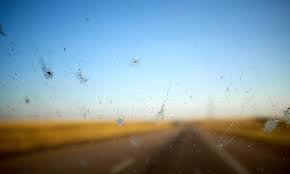
I think we all ask from time to time the question, where have all the insects gone. Clouds of moths gathering around a light at night. Flocks of butterflies festooning the springy turf on a downland walk. That anglers favourite, the blue winged olive, the reliable companion to a day on the river. Today all are absent or around in much reduced numbers. The empirical manifestation of this decline is the lack of corpses spattered on a car windscreen and headlights after any drive in the country.


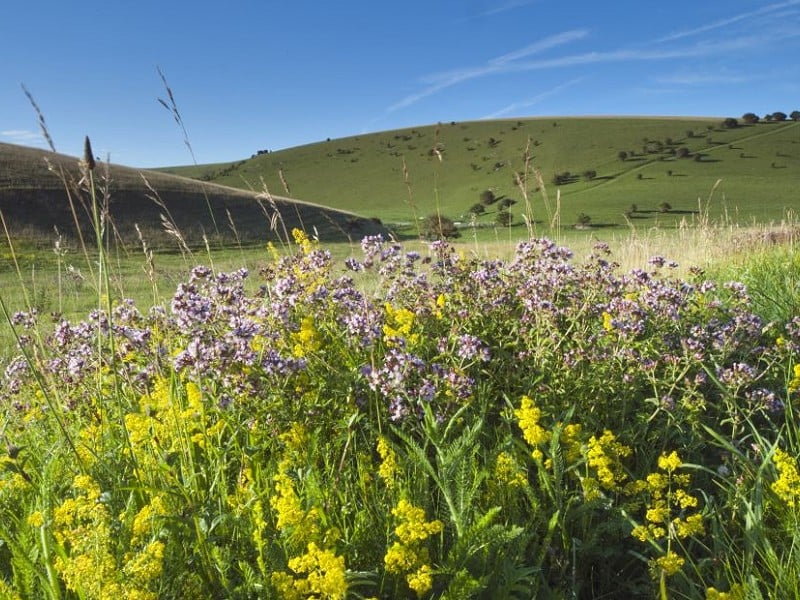
Modern pesticides (there is a clue in the name) which are slavered over farmland, plus the increasing use of flea treatments for pets and all manners of household chemicals play a part but a survey just published that charts the disappearance of meadows from the British landscape adds another twist to this sorry tale of rural destruction.


A grim outlook


Thanks to the digitisation of maps from the 1960’s which have been layered on to current maps and maps from the 1930’s by the UK Centre of Ecology and Hydrology we can now put numbers to what has happened to our grasslands, wetlands, heathlands and other habitats, along with urban development and farming over the past 90 years. With the exception of woodlands it does not make for happy reading.


Grasslands have shrunk by 29%. Semi-natural habitats including heathland and wetland by 42%. Urban areas that went from 13% in 1930 to just 14% in 1960 then jumped to 20% in 2020. Counterintuitively, in the same period, the woodland area has doubled from 6% to 12%. The one flaw in the digitised map data is that it is unable to differentiate agricultural grassland from wildflower-rich meadowland; other surveys suggest we have lost as much as 97% of wild meadows in this period.


Overall the period of greatest decline was from the 1930’s to the 1960’s which is something I know to be true of our part of Hampshire. I am sure plenty of you are familiar with the Roman road that connects the A303/A34 turnoff with Stockbridge. Today the fields that line the 5 mile route are a bellwether of modern agriculture with rape, wheat, barley, poppies, sunflowers or flax appearing in different years according to the changing demand. But wind the clock back to a point in time within the 90 years of the survey and you would have seen not crops but thousands of acres of grass chalk downland flecked with scrubby hawthorn bushes, lightly grazed by sheep but otherwise left to its own devices.


So, to come back to the question: if the rate of habitat decline has been slowing why have insect populations have fallen so precipitously this century. My guess is that some while ago we passed a tipping point. At first as the wildlife lost its native habitat it moved to other places but animals insects and birds have become marginalised from even these substitute homes as farming has become more efficient, urban spawl taken its toll and pollution rendered uninhabitable swathes of the countryside and thousands of miles of river. In the end our insects are dying out because they are running out of places to live.


Talking up a storm


Did you know it rained in winter? And I also heard a rumour that summer can be hot. Now, of course, to you and me that is no news but for the 24 hour news cycle, the Met Office and every retired weather forecaster in search of continued media exposure this is breaking news.


I despair when we are deluged with stories of upcoming weather ‘events’ or named storms which are essentially nothing more than the weft and weave of the British climate. From a purely selfish point of view it creates havoc for us in the office as the phones light up and the Inbox fills up. Eight times out of ten the predictions are woefully wide of the mark, with us all marched up the metrological hill Duke of York (not that one …) style.


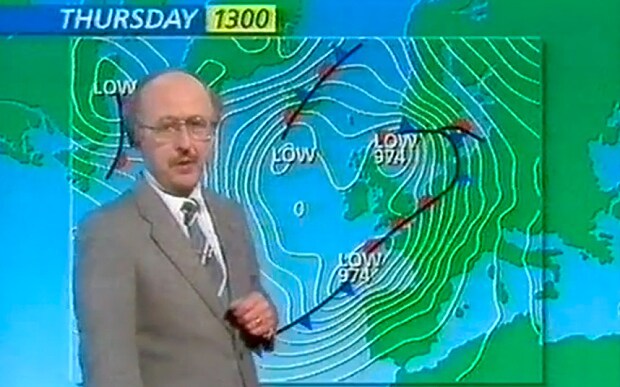
Michael Fish a few hours before the Great Storm of 1987


In the bloodstock industry there is a saying ‘Breed from the best and hope for the best.’ I suspect in the weather industry there is a saying that goes something along the lines of ‘Talk up the storm and ignore the norm.’ The outcome of these headline filling forecasts is rarely as bad as predicted which I guess is a safety first approach borne out of the infamous Michael Fish it-is-a-storm-but-not-much-of-one forecasting error of the 1980’s.


You can see the forecasting, protect my back thought process: well, if we say it is going to be really bad and it is bad, kudos to us. And anyway, if it is not as bad as we say it was going to be how is that going to hurt anyone? Better safe than sorry! At this point high street retailers, anyone in the hospitality business and chalkstream letting agents run screaming for the hills whilst every government agency talking head dons a hi-vis jacket and hard hat to sharp elbow their way into the narrative.


Weather forecasters have a proper scientific title; they are meteorologists pursuing the branch of science concerned with the processes and phenomena of the atmosphere, especially as a means of forecasting the weather. Their mission is not to drive eyeballs to TV channels or clicks to websites by, quite literally, talking up the storm. It is not exactly what a certain President might call Fake News but modern forecasting definitely veers all too easily towards the hyperbolic


PS You can read here an article I wrote for The Spectator in 2021 on the how ‘freak’ weather events are really nothing of the sort.


Psst! Want to start a pot farm?


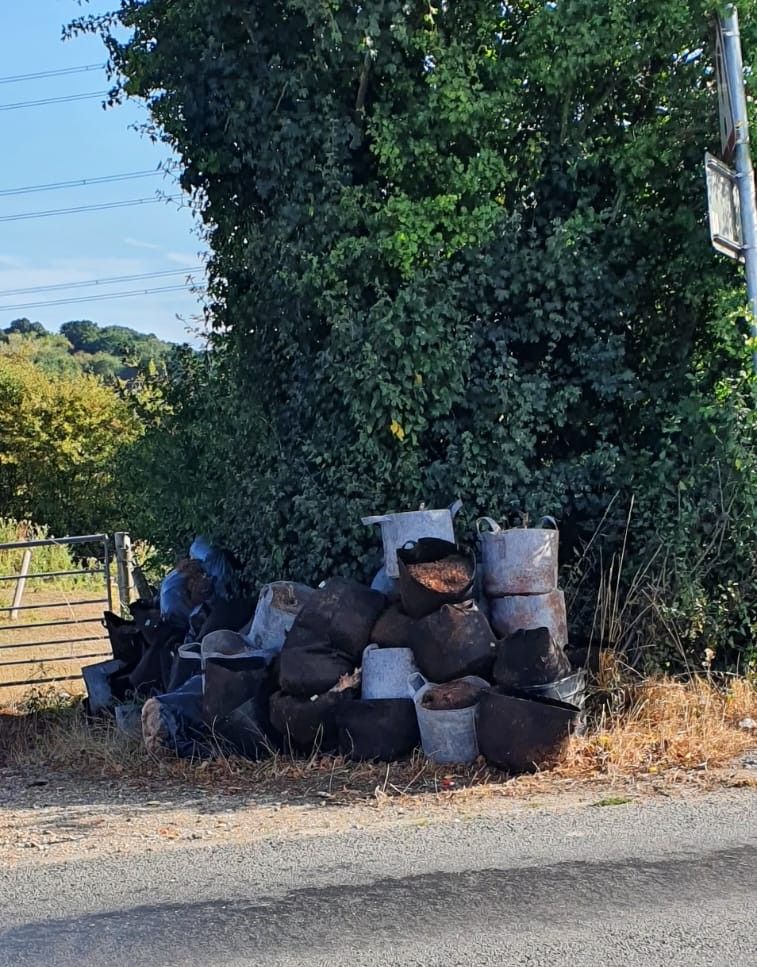
Over the past few years if you wanted to start a cannabis farm, I would surely have been your go to source for all the paraphernalia required. Compost, lighting, pots, shelving, hydroponic equipment – you name it I have had it all, bar the plants themselves (!), courtesy of fly tippers who have, on numerous occasions, chosen the gate entrance to a fishery of ours on the River Itchen as their dumping ground.


I was reminded of this recently for three reasons. Firstly, we were treated to another fly tip, but this time quite boring builder’s rubble and secondly a report by a House of Lords inquiry into the millions of tonnes of waste dumped in the countryside. The Lords report largely focussed on large-scale, organised crime tipping but I can tell you it is a real issue on a smaller, localised level. I can all but guarantee that if I took you out today for a drive around the Test valley, within less than fifteen minutes, we would come across at least one new fly tip. And from my observations these are far from organised but rather the dumping of unwanted household rubbish, sofas, mattresses and garden waste being particular favourites of those who cannot be bothered with the local tip, especially it seems at the weekend.


Pots from a pot farm .......


What happens to the rubbish depends on the exact position of the dump but essentially if it is on your land the removal is at your cost. However, I will give kudos to Winchester City Council who administer most of the Itchen valley, as they have an efficient app for the reporting and removal of fly tips, taking a relaxed view when it might be argued whether the rubbish is not on the public highway but on private land.


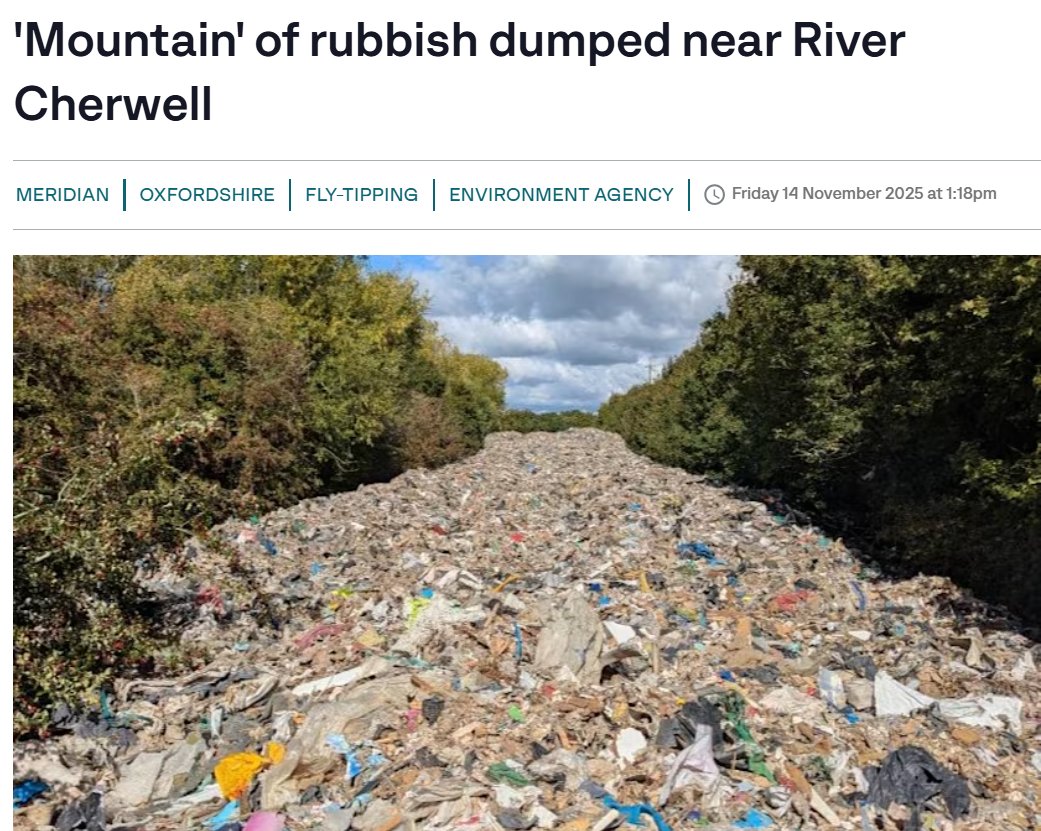
Oh, and the third reason was of course the monumental fly tip by the River Cherwell in Oxfordshire which the press rather primly noted as having ‘been reported by anglers’ as if we were some breed of strange litter vigilantes. Er, it was hundreds of metres long plus 20m wide and 10m deep. Now, guess who is in charge fly tipping regulation? Our old friends, the Environment Agency (EA) who were singled out for criticism in the House of Lords report that was published before news of the Cherwell dump emerged.


The evolution of this story tells you something about the EA. First of all, they responded that the dump had appeared overnight, which seemed a pretty incredible claim at the time considering the scale of it. However, this narrative has been ‘walked back’ the timeline now that it was first reported in May, but the local authority did not carry out a joint visit with the EA until July at which point a cease and desist letter was issued to the landowner but the dump continued to grow as the letter was sent to the wrong person!


Billy Burnell, chairman of a local angling club, monitored the site as it was active and growing bigger, asking the perfectly valid question as to why the EA, having issued the cease and desist notice, a copy of which was pinned to the site gate, were not more proactive in ending the dumping. Just imagine for a moment if the EA gets a report of large groups blatantly fishing without a licence at the same place on a regular basis. Are they going to pop down to pin a sign to the gate? Of course not. A full panoply of bailiffs would be dispatched, replete in stab vests and utility belts much beloved by paramilitary wannabes, ready to march off the miscreants to magistrate’s court followed by a naming and shaming in the local paper.


I truly do not understand the EA. It loves to sweat the small stuff (I could go on for hours about the petty regulation they impose on river management) whilst other much larger, blatant and egregious transgressions from river pollution to fly tipping get lost in a paper jungle.


Rome was not built in a day but this was according to early EA reports


Photo of the Week


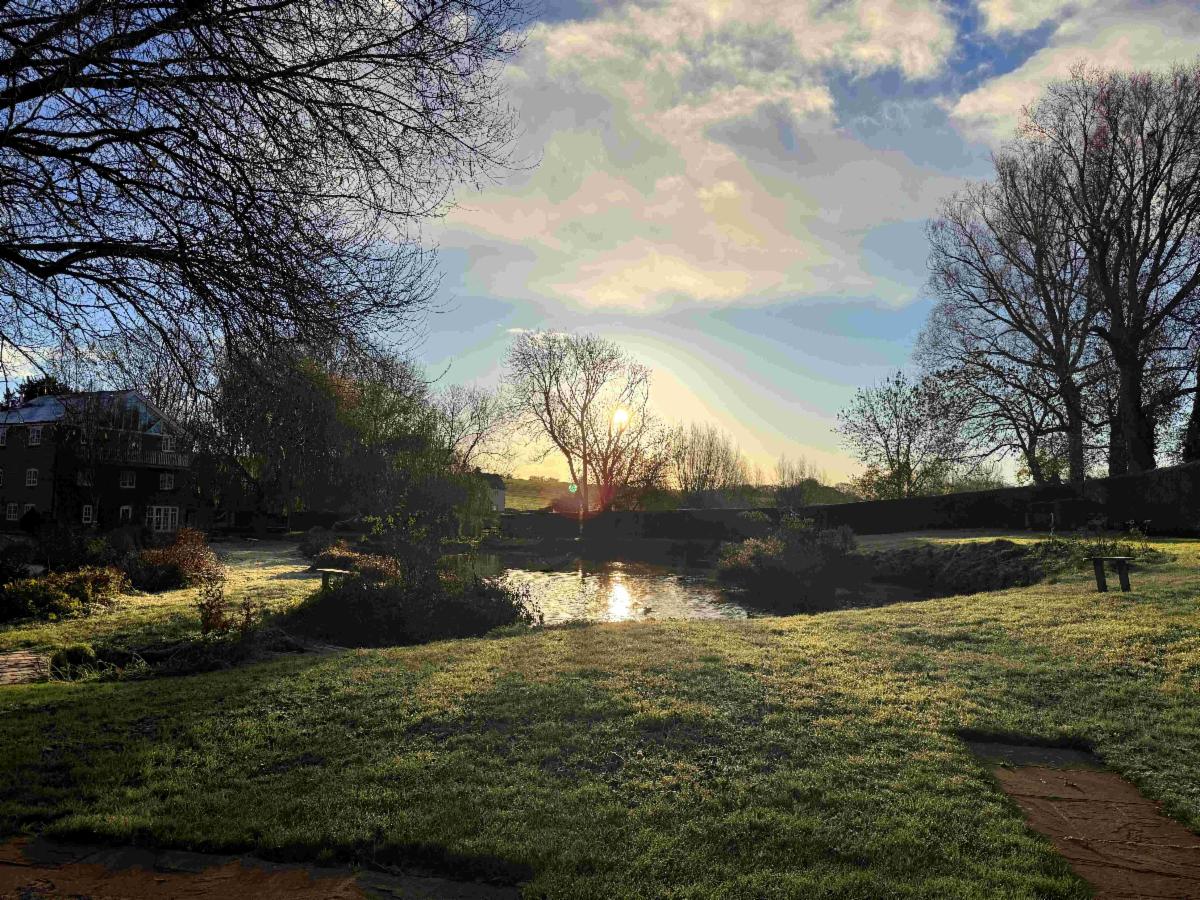
First heavy frost of the year at Nether Wallop Mill


Quiz


The usual random collection of questions this week inspired by the sporting occasions this weekend and the Newsletter topics.


1) In which year was gambling established in Las Vegas? a) 1906 b) 1931 c) 1941


2) In which country, Australia or England, did the Test match of 1882 that gave rose to the subsequent Ashes series, take place? 


3) What is synoptic meteorology?


Answers are below. Good luck!


Have a great weekend of sport.


Best wishes,


Simon Signature


Simon Cooper simon@fishingbreaks.co.uk

Founder & Managing Directorwww.fishingbreaks.co.uk


1) All three are correct depending on whether determined by law, location or format

2) The Oval, England

3) The study of weather over a large area at a common point in time to understand and predict weather patterns