Tuesday, 8 November 2016

Carp are smart, salmon are not

Carp are the cleverest fish and salmon the most stupid - its official! Actually I am being slightly disingenuous as this was the off-the-cuff answer to a question from the audience by Dr Felicity Huntingford at the How Smart Fish Lecture? at London Zoo last week.
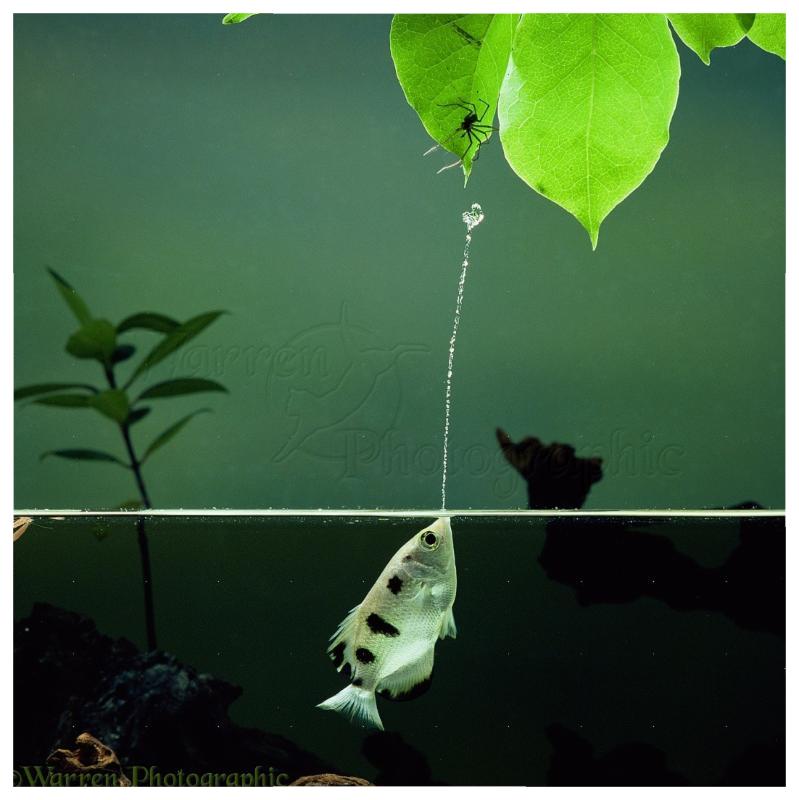
It is a very long time since I sat in a lecture theatre; I was rather dreading the 3 hours set aside for introductions, talks and questions but it really did speed by. The nub of Dr Huntingford's argument is that fish have two types of behaviour - inherited (or instinctive) and learnt. She gave the example of the latter by way of the archerfish.  It obtains food by squirting a jet of water from below the surface to dislodge insects from branches that hang over the water.  It is a complicated task that requires estimating the refraction of the water, angle of trajectory, distance of travel and power of the water jet. Juvenile archerfish are hopeless at the ouset, but over time hone their skills by practice and observing their elders.

She also quoted an interesting bit of research from New Zealand that suggests fish have long memories for bad things. The behaviour of trout was observed in two types of rivers: one where there was only catch and release and the others where there wasn't. In the catch and release rivers the fish soon learnt to move away at the sight of anglers, whereas in the other rivers the fish were less likely to do so.

And how about the carp vs. salmon conclusion? After 40 years of observing fish and training them to undergo certain tasks she seemed in no doubt that carp were the most intelligent of all fish, though she did mention a particular oscar fish that despite being perfectly well and fit, took to laying down on its side when it no longer wished to participate in her behavioural tasks. Salmon she seemed positively exasperated by, saying they were impossible to train to do anything. And perhaps the most perplexing fact of the night was that the brain of a captive reared salmon was only 60% that of its wild counterpart. But here's the thing - introduce something into the cage early on in the life cycle, be it a structure or a rock, and the brain grew to a similar size.

A mention must go to Charles Jardine who gave the anglers eye view as to the behaviour of fish, which I think was fascinating to the many students and academics in the audience. For the record (and I hope he offends nobody in this) Charles rated wild rainbows the most intelligent fish and perch the stupidest. 


HELL IS A FISH EVERY CAST

I must admit I had never heard of the Mop Fly until Justin Scheck of the Wall Street Journal gave me a call. 'What did I think of it', he asked. Well, I couldn't help. I'd never seen one, let alone fished one and Justin, a keen fly fisher himself, wasn't much better placed having only heard of this wonder fly by repute.

The story goes that some years ago a fly tying enthusiast in North Carolina, USA took a pair of scissors to a kitchen mop using the furry end to create a whole new look of fly. It worked but didn't break out much from his local circle of anglers until it reached the hands of Lance Egan who used it to winning effect in the US National Fly Fishing Championships in June this year.

But not everyone was happy. Was this a fly or a lure? Did it contravene the spirit of fly fishing? Did the users of the Mop Fly deserve the less-than-complimentary epithet of Moppets? Justin was intrigued. Could this US sensation work on British trout as well? Or was it just a localised oddity? There was only one way to find out, so he headed hot foot with a handful of Mop Flies down to Nether Wallop Mill.  

I'm rarely excited by flies, but as Justin uncurled his hand to reveal buff, blue and brown versions I have to admit to being intrigued. I guess some people must have felt something similar back in Victorian times when Skues first promulgated nymph patterns. But the Mop is no nymph however hard you might like to finesse the point. A giant maggot perhaps? Frank Sawyer was derided for his creation The Killer Bug which was termed the 'maggot fly' by purists (I use the word advisedly) back in the 1950's. More of this later, as I think there is a connection across the decades.

Regardless of what it does or does not look like Justin and I headed for the stocked lake here at The Mill. I didn't expect much of a challenge; there are so many fish you can almost walk across the lake on their backs and not get your feet wet. But strangely they looked but didn't take. The blue they absolutely hated, the buff got a few grabs. In fact it was only the brown, with a bit of cunning movement during the retrieve that elicited fish. I think it is fair to say at this point Justin and I thought the Mop Fly over-hyped.

Photo courtesy of Justin Scheck/WSJ
Thus with little hope we headed to the Wallop Brook. No tame rainbows here. Just true wild brownies. Whilst Justin fiddled about with his camera I did an idle roll cast to put some line on the water prior to a proper cast. To my total astonishment from nowhere appeared this fish, heading for the fly like an exocet. In true rookie style I promptly pulled the fly of his mouth and whilst I turned to Justin to say 'Did you see that!' another fish did exactly the same, sparing my blushes by hooking himself. Justin and I jabbered away for a full five minutes in total amazement. Ten minutes later I had another on the Mop to a blind cast into a likely lie. At that point we called it a day.

Justin's article duly came out in the Wall Street Journal (you can read it here) which in turn prompted a call from The Times with a request for an interview. So this time we headed for the River Test proper; I'm sure Halford was spinning in his grave before we even stepped out of the car. We started out, mostly for the benefit of the photographer, on a fast, shallow section where I targeted some static, solitary fish. Despite The Mop passing right by their noses, they showed no interest at all. That said it was hard to fish The Mop with any confidence as it sunk to the river bed almost immediately, trundling along amongst the stones.

How to tie a Mop Fly
The photo call over we headed for one of the pools where I knew a good pod of fish congregate below a bridge where the water spills through. As a sort of control test I tried a dozen casts with a good sized Daddy Long Legs. A few looks but nothing more. Time for The Mop. I exaggerate not but from the moment the fly took on water and began to sink it was literally mobbed by four or five fish, the most aggressive hooked in an instant.  Duly released I continued to cast upstream into the pool for another fish, but a bit like on the lake, second time around plenty of looks but no takes until eventually it was ignored. So, I changed my position casting across rather that up the pool. Bingo, first cast another fish in the same manner, on the drop as the fly sunk amidst a skirmish between the fish for the fly. After that they ignored it again until we called it, an admittedly short, day. You may read The Times article, that was published October 22nd, here.

There is a story of the avid angler who dies. At the pearly gates St Peter asks him how he would like to spend eternity. 'Fishing a gin-clear river with free rising trout on a summers' day.' comes the eager reply. Peter nods his head with a wry smile, ushers over one of the angels and duly kitted out the pair head through the Garden of Eden to a place far away where indeed they do find the most glorious, pellucid river, bathed in sunshine with trout in abundance. First cast, up comes a fish, the most wonderful specimen released shortly after. Second cast has the same result. As does the third cast at which point our man turns to the angel and says, 'This is absolute heaven.' receiving something of an odd look by return. But after a while the novelty of a fish every cast starts to pall, so the angler indicates to the angel he has had enough for the day. At which point it is gently explained to him that he is not in heaven, but in hell where he is destined to spend all eternity fishing, catching a fish with every cast.

Mops heads that come as slippers as well
So if hell is a fish every cast I'm glad the Mop Fly is not quite what some have billed it to be. It certainly, in certain circumstances, excites fish unlike just about any other fly I have ever used. Why, I am not entirely sure. It is really too big to be mistaken as a maggot, but it may look like a chubby earthworm. Equally it does look a lot like the Caterpillar Fly and though I have never personally observed it I'm sure our trout do eat the real things from time to time as they drop from trees and bushes.

My final thought, and this bring us full circle to the Killer Bug, is that the Mop Fly is made from a micro-fibre that is positively designed to absorb water. My fish certainly liked The Mop best when completely wet and Sawyer tied his fly with the no-longer-available Chadwick 477 wool that was most effective when wet, not because it sunk but because it took on a translucent quality.

Anyway, our fly tying guru Alan Middleton is currently hunched over his fly tying desk creating a whole palette of Mop Flies in red, blue, green, orange, pink and just about every colour under the sun thanks to Amazon who have provided mop heads from around the globe. I will report on further forays.  


2016 FEEDBACK DRAW WINNERS

Well, that is it. Another trout season officially drew to a close on October 31st

Some years you need to describe anyone who fishes in the last month as generically 'braving the elements' but the truth is that this is rarely so. October is currently in a benign cycle, dry without many gales or extremes of weather. A look out your window today at the trees shows this to be so; plenty of leaves remain green and a while off falling.

So, into the final monthly draw went a mixture of anglers. Some were out for a last trout day, others keen to search out some grayling.  Our winner is Clive Garland who was in the former category with a day on the Rectory beat at Mottisfont Abbey in early October. The Vuefinder Flypatch is on its way.

That leaves me with the one final draw to make to close out 2016. Everyone went back into the hat for the Sage Click Reel and I am delighted to say that Jason O'Dell wins this uber-cool reel. The only tough decision Jason has to make is whether he wants the reel in 0-2, 3-5 or 4-6 wt. format. As they say, that is a first world problem.


QUIZ
A random selection of questions loosely based on today's topics:
 
1)    Which fish has the largest brain?

2)      Who, or what, do ichthyologists study?

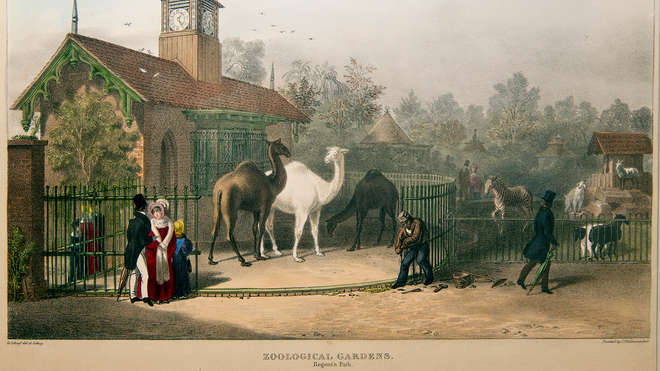
3)      When did London Zoo open?

4)  Which fictional children's book creature was named after a resident of London Zoo?

It's just for fun and answers are at the bottom of the page.  

Have a good weekend.
 
Best wishes,
Simon Signature    
Founder & Managing Director  


Quiz answers: 1) A manta ray 2) Fish  3) 1828  4) Winnie The Pooh

Thursday, 6 October 2016

How smart are fish?

How smart are fish?
 
How smart are fish? Well, some days I am tempted to think very smart, but maybe that talks more to my inability to catch them rather than some innate intelligence on their part.

Museum of Fish Culture c. 1880
Regardless it is a fascinating question and one that is going to be addressed at the Institute of Zoology in November in  a talk and discussion organised by The Buckland Institute entitled, "How smart are fish? Integrating what scientists and fishers know".

First up will be eminent fish scientist Felicity Huntingford, from the Universities of Stirling & Glasgow who has worked on the behaviour of fish for more than 45 years, having a special interest in their social interactions and how they avoid predators. Dr Huntingford will be followed by renowned angler Charles Jardine who will use his extensive knowledge of fish, their behaviour and the ecosystems to give an anglers-eye view. After that the audience will be invited to join the discussion. Here is what to expect:

"The talks in this event will challenge the commonly-held view of fish as robot-like animals with no intelligence and a 30 second memory, which often leads to fish conservation being ignored in favour of more charismatic animals. As our first talk will show, this view is very far from the truth. Fish vary of course, but the group as a whole have a well-developed capacity for learning, a good memory when this is needed and perform many complex behaviours that in mammals, for example, would be deemed intelligent or "smart". Thus fish form mental maps, use tools, build complicated structures and develop traditions. The dissonance between popular image and reality arises because most people do not have the time or opportunity to discover just how complex fish behaviour is.

However, it needn't be this way. Recreational anglers spend a lot of time observing and interacting with fish, so in this session we will explore what they have to say about how smart fish are. We will draw on the experience and observations of our second speaker, a lifelong angler and commentator, and also, we hope, on the expertise of anglers in the audience. Our aim is to promote creative discussion between people with different perspectives and to highlight the value of the traditional knowledge that anglers possess and pass on to successive generations."

Frank Buckland
As alluded to, this is the first of a series of talks organised by The Buckland Institute, a charitable foundation that was endowed by a remarkable man, Frank Buckland, who left a substantial sum on his death in 1880 to promote the understanding of fisheries through public lectures given by an annually appointed Buckland Professor.

Buckland was one of those amazing men of the mid-Victorian era who used his verve, intelligence and wealth to carve out a new set of beliefs for the benefit of the working man. It was his desire to make it known that around the shores of Britain lay a wealth of nutritious and cheap food that was there for the benefit of all. But as a naturalist he was wise enough to understand that you needed knowledge before exploiting this precious harvest.

So it was that that this prolific writer, campaigner against river pollution, and researcher on fish-culture and fish farming came to establish the UK's first fisheries museum in South Kensington in 1865. He was clearly an unorthodox scientist; for reasons I have not been able to ascertain he fed a porpoise brandy, the act immortalised in an engraving. His contemporary, Charles Darwin loathed him, but that maybe because he was unwise enough to attend a dinner at Buckland's home. The menu is said to have included boiled elephant trunk, rhinoceros pie, porpoise heads, and stewed mole.

44lb Irish salmon caught in 1869
Whatever his failings as a host Buckland assembled the most amazing collection of fish casts that were on show in what was called the Museum of Fish Culture. 

Sadly after his death the exhibits fell into decay until in 1968 the remaining 45 casts were transferred to the Scottish Fisheries Museum where they are being continually conserved to this day. 

It is a salutary thought that 136 years on from Buckland's death we still know remarkably little about fish, though maybe it is worse that we are still fighting river pollution.

If you would like to attend the talk entry is free with a ticket. It takes place on Wednesday November 2nd 6pm-9pm at London Zoo. For tickets click here.

A monster garfish

CHALKSTREAMS FROM THE AIR

Here is a unusual view of the chalkstreams shot from the air over the upper reaches and wild meadows of the River Test by Nico Gubbins earlier this summer.

Nico, who is a commercial film maker with a niche of work shooting properties from the air, bought his brother along as the 'model' as they spent the day on the river as the drone captured an eagle-eye view of the four beats. 

What I had forgotten, or rather taken for granted over the years, is the ribbon of unspoilt woodland and meadows through which Bullington Manor runs. It is very special and explains why it is such a great place to see so much wildlife and where the fly life flourishes.

To watch the clip click on the photo or here.


SEPTEMBER FEEDBACK DRAW WINNER

The last full month of the chalkstream year has drawn to a close and we are into a stunning autumn. Well done to Chris Coleman who fishing Middleton Estate and School Farm on consecutive days and wins the Vuefinder Fly Patch.

October is the big one. We'll have the usual monthly draw and then absolutely everyone from April to October goes back into the metaphorical hat (actually it is a randomised electronic draw ...) for the Sage reel pictured opposite.


QUIZ

In the news today were toads. Apparently the population has declined by two thirds in the past two decades which might explain why we have so many slugs, which are a favourite food. So, a few toad related questions this week.
 
1)    How many varieties of British toad are there?

2)      What are the two primary differences between toads and frogs?

3)      How long are toads thought to live in the wild?

4)  For how many years was Mr Toad sentenced in The Wind in the Willows?

5)    What do herpetologists study?

It's just for fun and answers are at the bottom of the page.  

Have a good weekend.

 
Best wishes,
Simon Signature    
Founder & Managing Director  


Quiz answers: 1) Two. The Common and Natterjack. 2) Toads have warty, dry skin and frogs moist, smooth skin, whilst toads crawl and frogs hop.  3) 10-12 years with 50 years recorded in captivity.  4) 20 years.  5) Amphibians and reptiles.

Saturday, 27 August 2016

The Aggregation of Marginal Gains

The Aggregation of Marginal Gains


I ended up watching more of the Olympics than I ever intended; by sheer fate I flew out on the day of the opening ceremony and flew back on the closing day as the flame was handed to the next host city, Tokyo. My destination didn't offer much in the way of TV choice but as we were in the same time zone as Rio the ESPN sports network made for easy viewing with two channels dedicated to the Games, one anchored from the Caribbean and the other Canada.  I never quite worked out why that was so, but deprived of Clare Balding I soldiered on, soon becoming quite knowledgeable in the workings of the Trinidad and Tobago athletic community and coming to the view that the Canadians generally prefer the Winter Olympics.

Dave Brailsford
Actually it was refreshing to be spared the jingoistic home coverage but it must be said that both the ESPN channels were in awe of the Great British effort as we scaled the medals table with each successive day. They seemed to be positively gleeful as we pushed China into third spot. As Francis Urquhart in House of Cards would have said, "You might very well think that; I couldn't possibly comment". Well, I do have readers in China ......

The really interesting discussions on ESPN asked the question as to why Team GB had been so successful. There was no side to this, just genuine inquiry. We were expected to do well in London 2012 but to improve in 2016? Well, that blew away all known metrics. Lottery funding is the most obvious reason but the more thoughtful commentators kept drawing the attention to cycling coach Dave Brailsford and his concept of "aggregation of marginal gains" that seeks for "the 1 percent margin for improvement in everything you do."

For Brailsford this meant examining every aspect of competitive cycling, finding that 1 percent in everything - the athlete, the lifestyle and the kit. They started by optimizing the things you might expect: the nutrition of riders, their weekly training programme, the ergonomics of the bike seat, and the weight of the tyres. But Brailsford and his team didn't stop there. They searched for 1 percent improvements in tiny areas that were overlooked by almost everyone else: discovering the pillow that offered the best sleep and taking it with them to hotels, testing for the most effective type of massage gel, and teaching riders the best way to wash their hands to avoid infection. They searched for 1 percent improvements everywhere.

Which had me thinking: could we apply the same to fly fishing? Of course the immediately exciting part of this is that it provides the perfect excuse to buy new stuff - rods, reels, lines, flies, clothing - well, the Brailsford theory seems to suggest no boundaries. Good bye cheap and cheerful B&B, hello five star luxury. But then again, try explaining that credit card statement away to your loved ones using the 1 percent argument. Good luck. But, on the serious other hand, Brailsford does have a point and his theory does work for fly fishing. But how?

Flies are a good point in case. In the tackle trade the old adage is that flies are tied to catch fishermen not fish. I'm sure we have all been snared this way as the huge array in the shop assail the senses so that after a few sensible choices we revert to buying on the basis of flies we like the look of regardless of utility. In the world of Brailsford such indiscriminate behaviour would have no place. Flies would only be bought to match the hatch and each successive fishing trip would be dedicated to adding a small new fact to our entomological knowledge.

Kit? Well, I don't think you have to have the very best or most expensive rods, reels, lines etc. but you do have to keep abreast of the times. Even the quite backwater of fly fishing technology moves on apace. Buying a new rod every year will not help, but buying a new one every five years will. Clothing? Well, I am not suggesting a skin-tight body suit but do dress for the weather. The fish are wet already so they don't care about the rain but if you keep dry and warm you'll catch more fish than if sheltering in the fishing hut.

I think suggesting a fitness regime might be a step too far, but ask any fishing guide the morning greeting they dread most for the day ahead and it will be "we all got slaughtered last night", accompanied by groans and a rush for the coffee pot. A vow of abstinence is too much to ask of any red-blooded fly fisher but generally it is better to get p****d the night after rather than the night before.

I am not going to attempt to list every variable in a fly fishing day that can be incrementally improved; you are smart enough to work them out for youself. But the interesting correlation to marginal gains is marginal losses i.e. repeatedly doing the same thing badly.  How many times have you lost a fly in a tree only to lose the replacement in exactly the same tree? The Brailsford theory holds in reverse, though he notes the losses have a tendency to snowball - it is a lot easier to get worse than better.

The big but to all this is the 'aggregation' word. Marginal improvement does not come in a rush nor will it be immediately noticeable. It is like being on a diet where you vow to lose a stone at the rate of an ounce a day and keep to it - that eureka moment will be a while coming.  


QUIZ

Just a few random ones to stretch the brain ahead of a relaxing weekend:


1)     When were Bank Holidays enshrined in law?

2)   Where in the UK would you receive the most Bank Holidays each year?

3)      Who has caught the biggest salmon so far this year in Iceland?

4)      What was the unexpected catch by a German angler earlier this month? 


It's just for fun and answers are at the bottom of the page.  

Have a great Bank Holiday weekend.


Best wishes,
Simon Signature 
Founder & Managing Director  


Quiz answers: 

1)      1871  2) Northern Ireland and Isle of Man with 10 each. Scotland 9. England 8.  3) Eric Clapton at 28lbs  4) The intimate area of a nudist swimmer. Read article ..... 


Tuesday, 2 August 2016

How to Spend It


Well, that is me sorted for Christmas which is a relief. I always start worrying around this time of year as my family begin to badger me for my Yuletide shopping list. My advice to you all - get in early and go big.


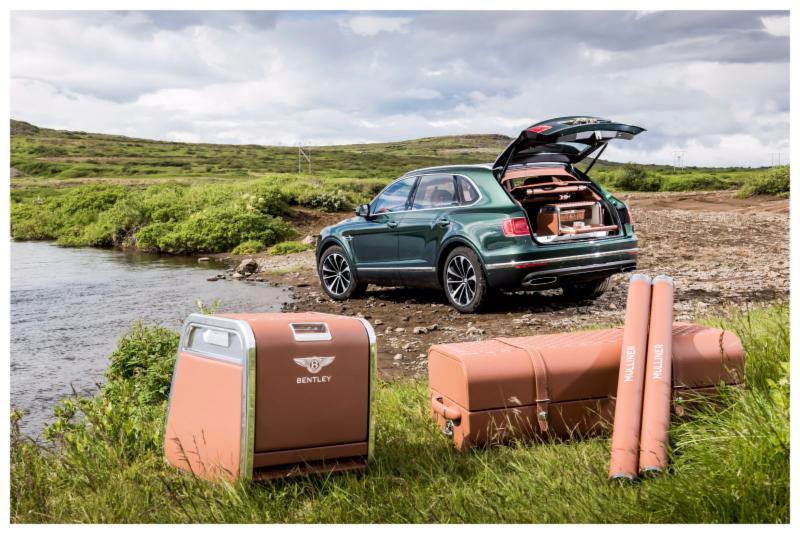
Now, let's face it the new Bentley Bentayga, the luxury SUV wagon, is an OK sort of a request. For the fishermen it is practical and safe. Always wise to emphasise the 'safe' word as your loved ones don't like the thought of anything bad happening to you. After all we do go to VERY dangerous places just off the M3. But on its own, let's face it the Bentayga (named after a rugged peak in the Canary Islands apparently), is something of a paltry gift. I laugh at the £175,000+ price tag.  

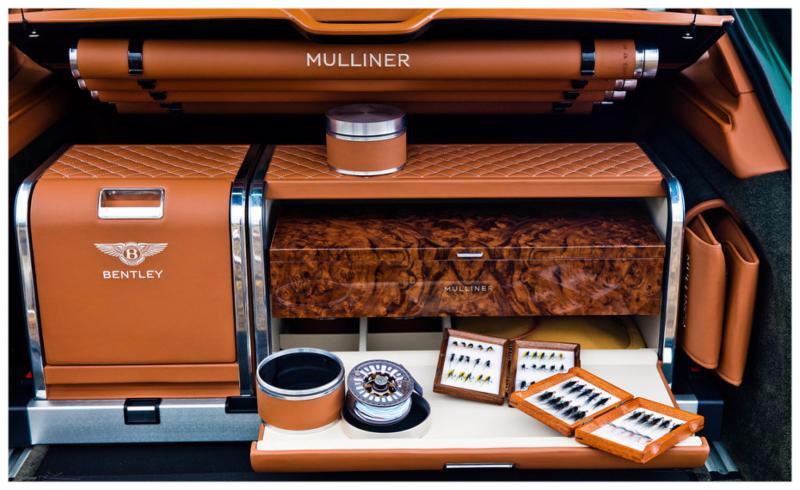
So, as I say go big and insist on the ultimate optional extra with the Bentayga Fly Fishing edition which has been created by Bentley's in-house coachbuilding division Mulliner. For a mere additional £80,000 Bentley tell us you may upgrade to all this:

"Four rods clad in special leather trimmed tubes sit under the parcel shelf, above landing nets in matching leather bags stored in carpet-trimmed pockets in the boot side. Three individual, saddle-leather-trimmed units sit at the heart of the setup - a 'master tackle station' with a sliding tray, a refreshment case and a waterproof wader stowage trunk.

That station houses a Burr Walnut veneered drawer containing fly-tying vice and tools, as well as a selection of hooks, feathers and cottons. As you would expect, the refreshment case contains a set of Mulliner fine-china tableware and metal flasks, perfect for when you need a break from reeling them in. All three units can be removed from the Bentayga's boot, giving maximum luggage space back.

For those fearing a fishy hue could detract from the smell of diamond quilted leather, Bentley provides a handy electronic dehumidifier unit to ensure your favourite hobby doesn't sully the Bentayga's interior. Further protection comes in the form of rear-sill protection covers and a waterproof boot-floor."

Of course the canny amongst you will be wondering what are these rods. Trout or salmon? Cane or carbon? What weight? What make are the reels and lines? Are the hooks barbless? And so on. Sadly, despite much trawling through numerous Bentley press releases and web pages I have still no idea. It seems to be something of a secret. But hey, why spoil the surprise for Christmas Day.
 

HOMES ON THE RIVER

Sedge Cottage
Not every home on a river needs to cost a fortune. Matthew Hallett at Winkworths in Salisbury sends me word of three houses with fishing rights attached on the Wiltshire chalkstreams. 

You may take your pick between a quaint cottage at Bishopstone on the River Ebble,  a rather more modern house on the River Bourne and the aptly named barn-style Fishermans Reach on the River Nadder.

It is fair to say none of these are massive beats but speaking as one who lives over and beside the Wallop Brook it is hard to resist the allure of a river. The ever-burbling stream is a wonderful sedative to the stresses of life and aside from the fishing any bit of chalkstream, however apparently insignificant to the uninitiated, is a haven to be treasured.

Here are links to all three:


Of course if you don't want a home on the river but just the river it seems Wiltshire is the place to look this month with a good, long beat on the River Wylye on the market through Strutt & Parker. The guide price is £415,000 for both lots, the land and the fishing.

River Wylye at Stapleford, Wiltshire

QUIZ

A few random teasers this week.

 
1)      How long is the Tour de France?

2)      Does the Tour circuit France clockwise or counterclockwise?

3)      Has angling ever been an Olympic Sport?

4)     Jeremy Fisher of Beatrix Potter fame was what kind of a creature?

5)    And who tried to eat him?

It's just for fun and answers are at the bottom of the page. 

Have a good weekend.

 
Best wishes,
Simon Signature    
Founder & Managing Director  


Quiz answers:
1) 3,500 km or 2,200 miles over 21 stages. 2) The race alternates between clockwise and counterclockwise circuits of France. 3) Yes. Angling was an unofficial sport at the 1900 Olympics in Paris. At a series of competitions in August, some 600 fisherman participated in 4 separate events. No results have yet been discovered for these competitions. 4) A frog. 5) A large trout.