|
||
|
|
||
Friday, 24 May 2019
My Mayfly day


Friday, 10 May 2019
Going to the dark side
Going to the dark side
Dear Simon,
I didn't think that my appearance on Countryfile Diaries could cause anyone any upset but, according to one email, I have apparently crossed a line to take the side of the anti brigade. Heavens, I was only talking about otters ........
 |  |
| The Guardian's 1986 'Points of view' advert |
Years ago, The Guardian newspaper ran a marketing campaign that had the strap line 'Points of view'. In the most memorable of the adverts you saw two images. In the first a middle aged man walking along a pavement beneath some scaffolding was clearly terrified as a running skinhead bore down upon him. The inference was clear. Robbery. But in the second image, shot from the reverse angle, bags of cement were falling from a scaffolding above. The skinhead was trying to save the man. What you see or read is all about perspective.
The fact is that the way we see the countryside from our sporting perspective, be we shooters, fishers or hunters, is very different to those whose involvement is as ramblers, hikers, bird watchers, bikers or any of the many other myriad of ways in which the countryside is enjoyed. Most of us don't own large chunks of land so we can't really claim ownership to say that the right to pursue our pastime trumps that of all others. Ultimately use of the countryside is a collaborative thing whether our view of it is from a car window or a riverbank.
We shouldn't fight Countryfile. We should embrace it. It's a show that encourages people to love the British countryside. These are the people who we will need to rally to our support in the years to come as pollution, urbanisation and the other manifest dangers to rivers and wildlife loom ever larger.
No longer turning Japanese
You know I have often bragged about my favourite toy, the Toyota Hi Lux. Well, the love affair is over. Mercedes Benz have lured me across the aisle with their first ever pickup truck.
 I must confess there was some logic in my decision, though you might caveat that by saying there is little logic to buying any car. The latest iteration of the Hi Lux lacks power and is 50% more expensive that the equivalent model in 2010.
The Benz on the other hand has borrowed much from the USA truck market - high suspension, grunty engine, tweaked exhaust pipes and generally all-round bigger than its European competitors. Which is somewhat ironic as currently the Germans don't have any plans to release it in the USA.
Anyway, it is rather fun to drive and the number on the roads are still so few that us owners exchange smug waves of recognition. However, I'm still to work out the purpose of the little glass panel in the back window, not much larger than an A4 sheet of paper, that slides open at the flip of a switch.
Steeple Langford - River Wylye
It has been a bit of a last-minute rush but I am delighted to welcome into the Fishing Breaks fold a lovely section of the River Wylye at Steeple Langford that lies upstream of Salisbury and south of the A303.
 For those of you with long memories you might recall this as part of the Steeple Langford Fishery run by Paul Knight (now at Salmon & Trout Conservation) which had two large trout lakes in addition to the river. Things have changed a bit since then with the ownership now in the hands of the Wiltshire Wildlife Trust. Known as the Langford Lakes Nature Reserve the lakes are now fished by a coarse syndicate but the lakes primary purpose is as a breeding and resting ground for wild fowl; it is something of a bird watchers paradise with paths, hides and viewing platforms.
As for the river, which is separate and private from the rest of the reserve, it has undergone a radical change as the Trust have their own river restoration team who undertake contract work so the half mile section has become something of a test ground for many innovative techniques that are now commonplace.
Make no mistake this is a beat that is managed to be as natural as possible without erring on the side of jungle warfare. In broad terms you can divide the fishing into two sections: above and below the weir pool. The lower section is shallower, faster and more gravelly. The upper slower and deeper. This is an all wading beat; there are few opportunities for bank fishing and all the fish are wild. There is no stocking so as a consequence this is all catch and release.
For more details and booking click here. The river opens today.


April feedback winner
New season, new monthly draw for the feedback forms that many of you so kindly return.
You do have the rather fine Hardy Marquis reel to look forward to at the season-end draw but month-by-month I am going to be rather random. This time around the very good book by Jon Day I reviewed last month.
Well done to Mark Gomm who came out of the April hat, unusually for a draw winner a Nether Wallop Mill private tuition guest.
Mark: the book is in tonight's post.
The Quiz
This is the time of year for baby birds, so a test of knowledge of who grows into what. As ever, it is just for fun with answers of the page.
|  |
| Answer no. 4 |
1) Squab
2) Poult
3) Eyas
4) Cheeper
5) Gosling
Have a good weekend.
Best wishes,





Simon Cooper simon@fishingbreaks.co.uk
Founder & Managing Director
1) Pigeon 2) Chicken 3) Falcon 4) Grouse (photo) or partridge 5) Goose
Friday, 26 April 2019
My unlikely love affair
My unlikely love affair
We are
first up for the new series of the BBC Countryfile Spring Diaries, the show
going out at 9.15am on Monday 29 April on BBC One. You know the story but
you might like the BBC's take on the show:
 |
 |
|
|
|
"Paul
Martin (the presenter who interviews me) is discovering that our back gardens
can be a convenient snack stop for cheeky creatures who are always on the
lookout for a free meal. Otter numbers in particular are on the rise in
the UK, and Paul has been meeting a man whose battle to save his fish stocks
turned into an unlikely love affair."
The show
will be available shortly after broadcast on BBC
iPlayer.
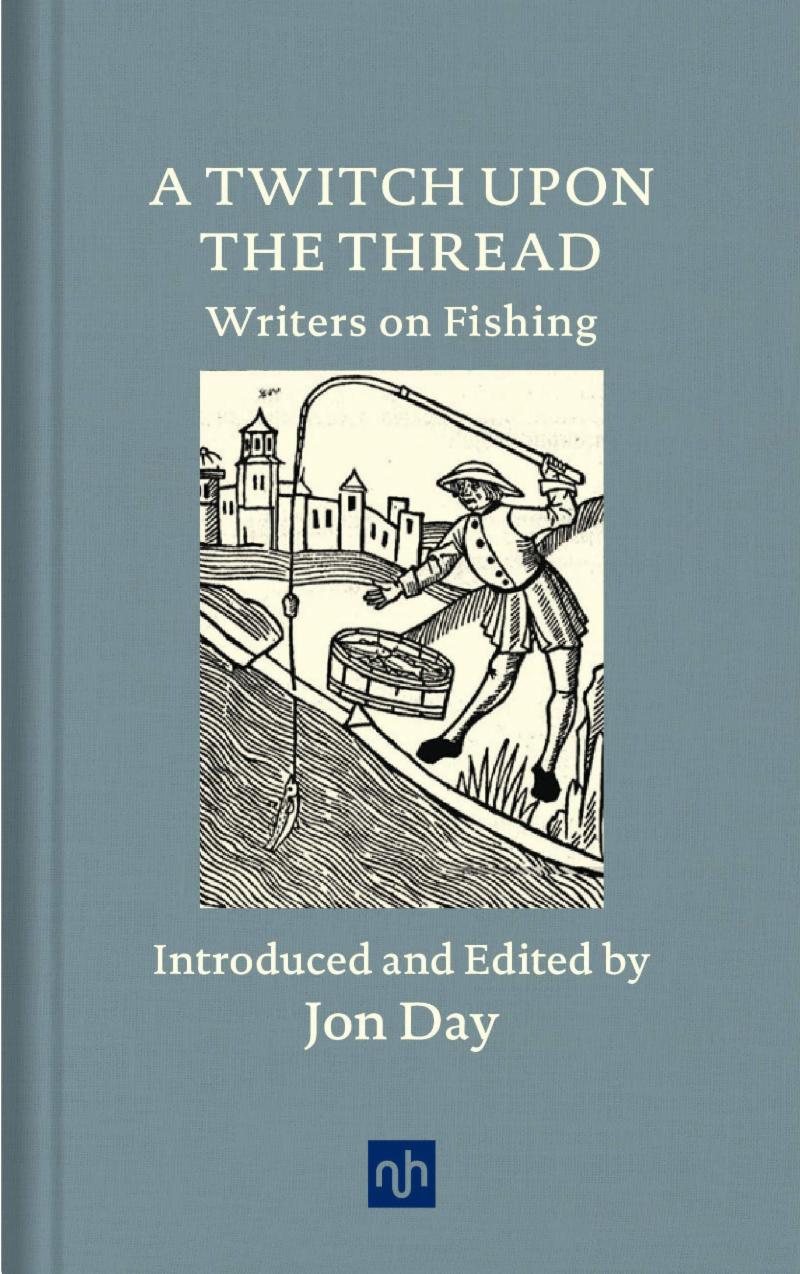
A Twitch
Upon The Thread
Over my
fishing lifetime I have come across plenty of fishing anthologies but I can't
recall one that captured my imagination quite as much as Jon Day's
A Twitch
Upon The Thread.
The
difference with Day's book lies in his chosen subtitle - Writers on Fishing. He
has scoured the library of King's College London where he teaches English for
not just great fishing literature but that written by our greatest writers. Who
would have known George Orwell, who I always assumed to be a dour sort of
fellow, defined his childhood through fishing? That John Donne took against fly
fishers, for little good reason as far as I can tell, in his 1633 poem The
Bait calling us 'curious traitors'. That Charles Dickens wrote of sturgeon
in the River Thames.
 If you ever
sought a paragraph to define why we fish, then the words Izaak Walton quotes in
The Compleat Angler from his friend and fishing companion Sir Henry
Wotton still resonate four and a half centuries later,
If you ever
sought a paragraph to define why we fish, then the words Izaak Walton quotes in
The Compleat Angler from his friend and fishing companion Sir Henry
Wotton still resonate four and a half centuries later,
"An
imployment for his idle time, which was then not idly spent: for angling was
after tedious Study, a rest to his mind, a chearer of his spirits, a diverter
of sadness, a calmer of unquiet thoughts, a moderator of passions, a procurer
of contentedness: and that it begat habits of peace and patience in those that
profess'd and practis'd it. Indeed, my friend, you will find angling to be like
the vertue of Humility, which has a calmness of spirit, and a world of other
blessings attending upon it."
However,
before we all get carried away with a warm, fuzzy feeling inside Lord Byron was
less impressed by The Compleat Angler, railing against the cruelties of
angling saying of us all, "No angler can be a good man."
Ranging
across five centuries its hard not to be impressed by Jon Day's deft collection
which was published last week by Notting Hill Editions and is available through
Amazon at £14.99.
PS In case you think A Twitch Upon The Thread sounds familar it is indeed the name of Book II in Evelyn Waugh's Brideshead Revisited which in turn takes the quote from a G K Chesterton Father Brown story. It is a fair old bit of literary upcycling.
No more
trouble at t' mill
The River
Test at Whitchurch Fulling Mill is one of my longest standing beats; the
connection goes back nearly twenty years through three different owners, though
it is only the most recent who have any interest in fly fishing.
 Richard and
Lucy are passionate about the river and it shows; all sorts of improvements are
completed, in progress or planned. Over the winter a combined team from the
Wild Trout Trust and fishery students from Sparsholt College did great work on
the wading section above the mill. The canopy was trimmed back, bank repaired
and the felled trees used to create deflectors. Since then Mark Burns the river
keeper has planted more than fifty heads of ranunculus
weed.
Richard and
Lucy are passionate about the river and it shows; all sorts of improvements are
completed, in progress or planned. Over the winter a combined team from the
Wild Trout Trust and fishery students from Sparsholt College did great work on
the wading section above the mill. The canopy was trimmed back, bank repaired
and the felled trees used to create deflectors. Since then Mark Burns the river
keeper has planted more than fifty heads of ranunculus
weed.
For those
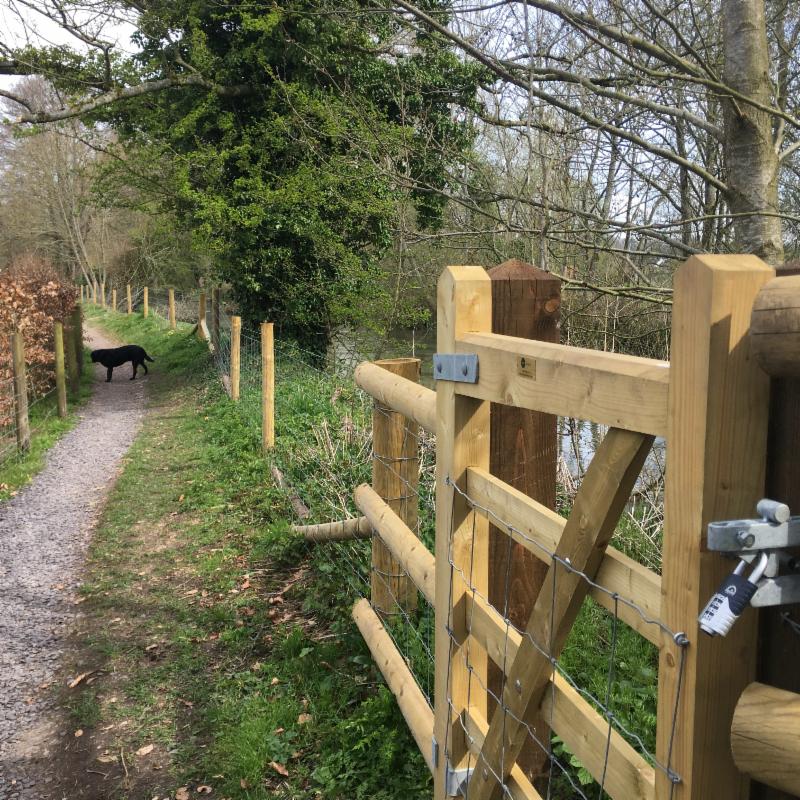
of you who have fished Fulling Mill in the past you might recall the footpath
than ran along part of the beat. Most of the time the intrusion was limited to
walkers enquiring as to whether you had caught anything (I perfected about 20
various answers to alleviate the tedium) but on a sunny day dogs, children and
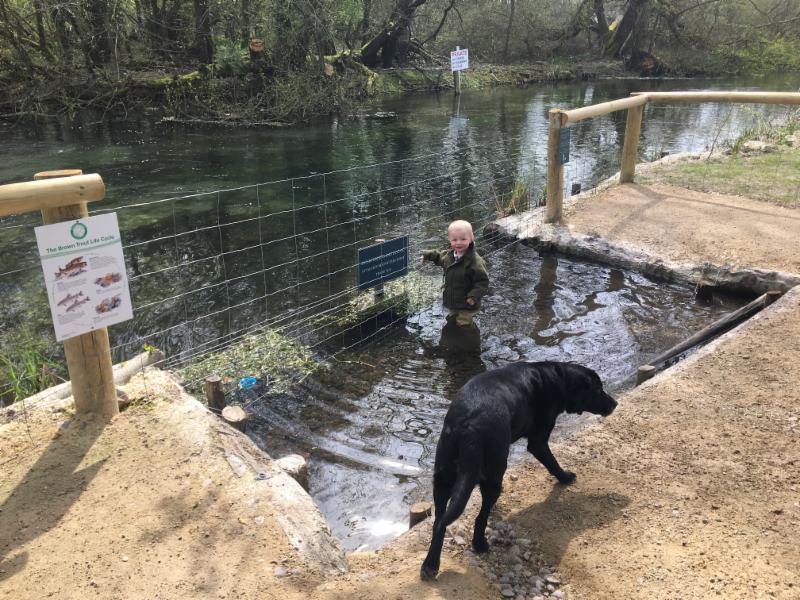
bread thrown to the ducks could be a nuisance. However, the new fencing and a
cunningly designed splash for dogs, duck feeding and even children (!) seems to
have done the trick for trouble free fishing in the future.
The season
opens at Whitchurch Fulling Mill on 1/May. More details here .....
New places
for 2019
As you know
I always like to find something or somewhere new for each season and 2019 is no
exception. Here's a brief summary:

Ideal for
groups of 2-4 Rods on a combination of the Tanyard and House beats, the former
being great if you like to wade.
In addition
to the carrier ticket we are now offering the lake tickets online, which
includes the recently added Catch & Release lake. You can combine river and
lake tickets to switch at will during the day.
Located
downstream of Upavon Farm and upstream of Avon Springs this is right in the
heart on Frank Sawyer country.
The Quiz
|
|
 |
|
|
Castle Howard the
setting for Brideshead Revisited starring (l-r) Anthony Andrews, Diana Quick
and Jeremy Irons.
|
More
questions to hopefully entertain and enlighten. As ever it is just for fun with
the answers at the bottom of the Newsletter.
1) The Greek
messenger Philippides was running from Marathon to where, establishing the
legend responsible for the marathon road race?
2)
In
what year was the ITV series Brideshead Revisited first broadcast?
3)
What
does a podiatrist study?
Have a good
weekend.
Best
wishes,


Simon Cooper simon@fishingbreaks.co.uk
Founder & Managing Director
Answers:
1)
Athens
2)
1981
3)
Disorders
of the foot, ankle and lower extremity
Friday, 12 April 2019
Saving the British Countryside
Rescuing the British Countryside
Greetings!
On Sunday,
jaded and jet lagged, I pulled out a wheelbarrow and did what I do about once a
month - a litter patrol on the lanes that lead into Nether Wallop. I know my
fellow villagers think me quite mad; waving as they drive past with faces that
are a picture of bewilderment. To this date, and I'm talking years, nobody has
ever stopped nor does anyone ask when I meet them at some village event or
other. Maybe they just think it is behaviour, to lean on the East Anglian
psychiatric phrase used by doctors to describe their 'unusual' patients, Normal
for Nether Wallop.
 The fact is that I am
determined that anyone arriving into our village is greeted by hedgerows and
verges that are flecked with wild flowers rather than the glinting of abandoned
tin cans. For even in our rural backwater we are blighted by litter.
The fact is that I am
determined that anyone arriving into our village is greeted by hedgerows and
verges that are flecked with wild flowers rather than the glinting of abandoned
tin cans. For even in our rural backwater we are blighted by litter.
As I plod along the road,
with my gloves and long stick, I often try to discern the mindset of the car
drivers who discard all manners of trash. It's not like you can just drop it or
make a misjudged hurl at a waste bin. You have to consciously wind down the
window intent on littering the green, unsullied countryside. Why? I have no
idea but I suspect my never ending audit of my gatherings might give some clue.
Essentially 9/10ths of what
I collect is what you might describe as the detritus of food of the move -
coffee cups, energy drinks, soft drink cans, plastic bottles and food wrappers.
To date I have never found anything of value or worth keeping though the large
blue device, best described, to save blushes, as a sex toy, caused some
hilarity. There must also be a secret drinker taking a nip on the way home -
there is a regular cache of empty ready mixed Gordon's Gin &Tonic
cans.
Most litter forays will end
in a half filled barrow but I'm long past being angry. It is, along with rural
crime, the blight of life in the countryside. And I'm not alone in this
essential chore. Ask any river keeper whose patch takes in a local picnic spot
where the river bed will have to be scoured clean after a sunny weekend.
I guess the only consolation
is that the blight of litter is far from being a uniquely British disease. I
was jet lagged after returning from a bone fishing trip in the Bahamas where
the mangrove swamps are the collectors of ocean rubbish and the white sand
beaches as blighted as the green verges of Nether Wallop. It is nothing new. I
recall something similar fishing on the northern extremes of The Great Barrier
Reef two decades ago. Not that familiarity makes the sight any less depressing but
it does illustrate the intellectual conceit that surrounds the current 'save
the planet' debate.
David Attenborough's latest
opus on Netflix quite rightly highlights the horrible mess we are making of our
world and no doubt the dying auks will become the poster children of the cause
on social media. But as I stare into the contents of my barrow I know exactly
the demographics of the culprits. It is the very generation who will reap the
whirlwind of the unfolding environmental catastrophe but it seems to be a
generation who like to talk big about saving the oceans without be able to
sweat the small stuff. I mean really, if you can't dispose of your litter
responsibly, what hope is there? As I say it doesn't make me mad any longer,
but it does make me very, very sad.
Postscript: after penning the above
piece I headed for the offices of Harper Collins for a marketing meeting on my
upcoming Frankel book, which by the way is out on 13/June in time for
Father's Day and Royal Ascot. As the meeting finished Helen Ellis, the PR
genius to whom I am ever grateful, pushed a copy of the just published Green
and Prosperous Land into my hand. 'You'll like this.' she said. And
Helen is right.
The writer Dieter Helm, an
Oxford economist and chairman of the National Capital Committee (a government
quango) sounds an unlikely ally to find beside you at the barricades. But he's
one of us - a fly fisher and the subtitle to his book A Blueprint for
Rescuing the British Countryside takes to task the decades of bureaucracy and
vested interest of lobbyists that have bought us to our current sorry state. It
is more than worth a read and available from Amazon. As is my Frankel book for pre-order; ignore the 11/July date which has
been superseded.

Life
mimics art
I think there is a phrase 'life mimics art'. If I'm right then
writer of
Salmon Fishing in the Yemen, the late Paul Torday will be grinning from ear-to-ear from
whatever cloud he occupies as news comes of a successful salmon farming
operation in the United Arab Emirates.
 It seems that for the past
two years weekly batches of fingerlings from Argyll in Scotland have been flown
the 5,000 miles to saltwater tanks of a desert fish farm which is able to
perfectly replicate the salinity, temperature and water movement of the
Atlantic salmon's native home.
It seems that for the past
two years weekly batches of fingerlings from Argyll in Scotland have been flown
the 5,000 miles to saltwater tanks of a desert fish farm which is able to
perfectly replicate the salinity, temperature and water movement of the
Atlantic salmon's native home.
But far from ending in the
disaster of Torday's novel the fish are now on the menu for UAE restaurants
leapfrogging nearly all other fish to become the second most popular fish in
the region, a particularly popular choice for the health conscious young.
You really could not make it
up ......
One Fly on
the move back
It looks
like the One Fly will be making a move back to where it originally began for,
in case you haven't heard the news, Lucy and The Peat Spade team have taken
over The Grosvenor Hotel in Stockbridge to expand their portfolio.
|
|
 |
|
|
Nick (r) with Top Angler
Ed Burgass
|
Lucy tells me the
restoration and upgrade of this iconic building on the High Street will be done
gradually, but after a brief closure for a major spring clean, it reopened last
week. Do drop in or visit the website.
As you know the One Fly is
now a biannual event so no Festival this year but we will be back on 23rd/24th
April 2020. I am delighted to announce that the winning guide from 2011 Nick
Parish will be taking over from the late and much missed Peter Roberts as Guide
Captain, the pivot on which the whole One Fly swings.
Thank you Nick for putting
your hand up. As they say one volunteer is worth a thousand conscripts.
Details of the 2020 One Fly
Festival here.....
New fly
packs for 2019
In association
with the leading British fly tying company Fulling Mill we have reworked my fly
pack selections with a whole new range for 2019.
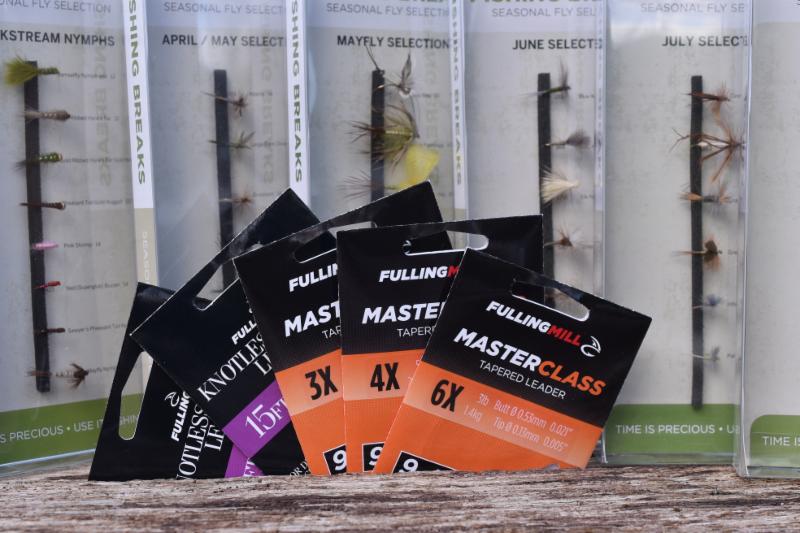 We still have the seasonal
variants for spring, Mayfly, summer and autumn but I have also added a
Chalkstream Nymph selection and Grayling selection.
We still have the seasonal
variants for spring, Mayfly, summer and autumn but I have also added a
Chalkstream Nymph selection and Grayling selection.
In addition you will receive
a free tapered Fulling Mill leader with each pack specifically chosen to
optimise your presentation. So, for instance, there is a 9ft 6lb/3x with the
mayflies, a 15ft 2lb/7x for the grayling and so on.
All the packs are available
online and will be dispatched the same day direct from us here at
Nether Wallop Mill.
The Quiz
More
questions to hopefully entertain and enlighten. As ever it is just for fun with
the answers at the bottom of the Newsletter.
1) Who wrote "Life
imitates Art far more than Art imitates Life"?
2) The 32nd
President of the United States died on this day in 1945. Who was he?
3) Which are the three most
common species of Hirundinidae birds that arrive in Britain, mostly from
Africa, around this time of year?
Have a good weekend.
Best wishes,
Simon Cooper simon@fishingbreaks.co.uk
Founder & Managing Director
Answers:
1)
Oscar Wilde in
his 1889 essay The Decay of Lying.
2)
Franklin Delano
Roosevelt
3)
House Martin,
Sand Martin and Swallow
Subscribe to:
Posts (Atom)