Friday, 11 October 2019

Grayling: zero to hero

Grayling: zero to hero

If you happened to take a glance at the Fishing Breaks web site around the date of its inception (1996: yes,I know some of you weren't born ....) much will be familiar. However, what you might take notice of today was the almost total absence of references to grayling. Basically, back then we all shut up shop and went on our holidays at the end of September.

The fact was, bar a very small band of brothers, grayling were, to all intents and purposes, despised. Catch rules were emphatic: all grayling must be killed. 

I can recall the Environment Agency electro fishing our beats to remove grayling that were unceremonially dumped on the Romsey Park Memorial pond much to the delight of the local kids.

Did I sell grayling day tickets after the end of the trout season? Absolutely not. Grayling fishing, such as it was, was a murky world under the purview of the river keeper. Access was granted to those in the 'know' in return for the discrete transfer of folding currency. A Pythonesque nod nod, wink wink arrangement. But today grayling fishing is more popular than it has ever been, every bit as organised and formalised as trout fishing. The question is how, in the space of just over two decades has the grayling gone from zero to hero?

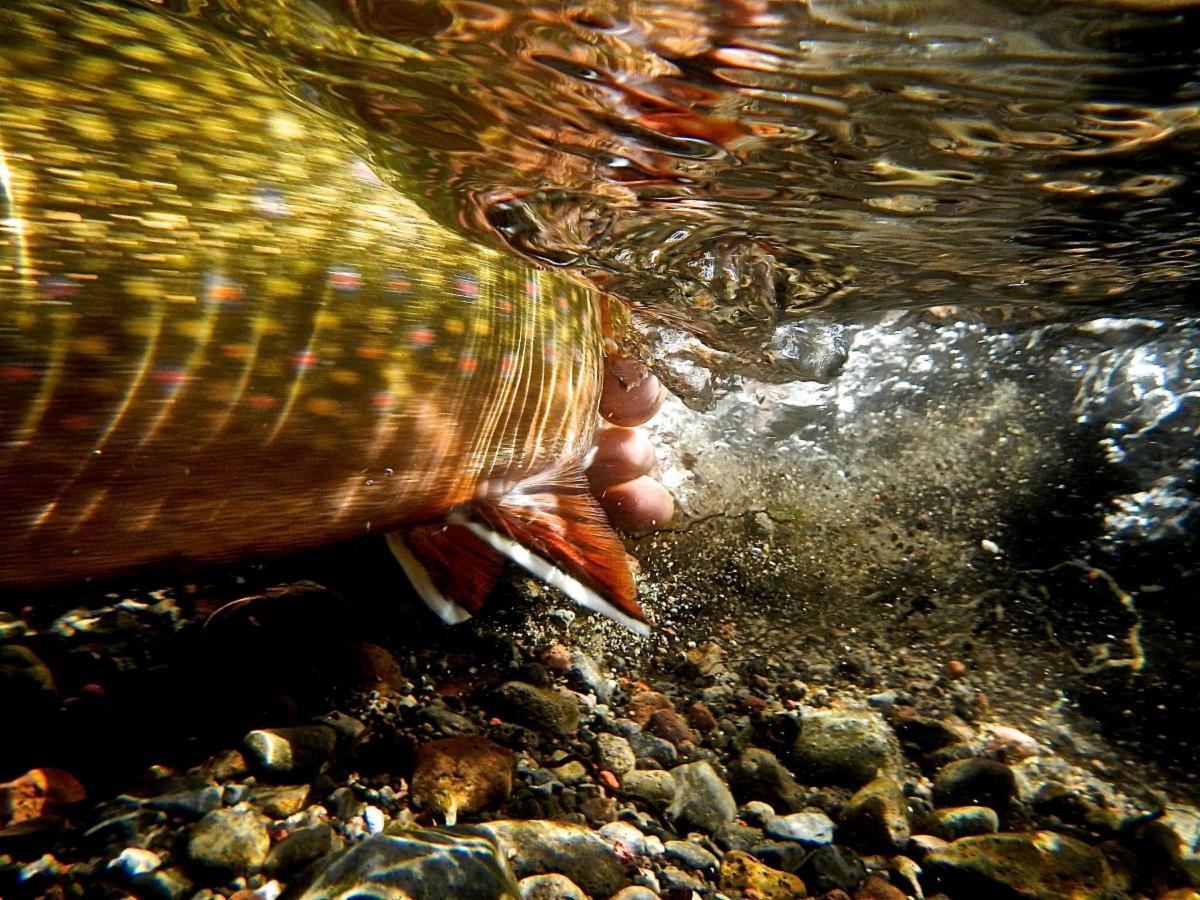
Part of the allure seems to me the totally wildness of grayling. There are simply no recently stocked or reared grayling; they exist only by the goodness of Mother Nature. The populations do rise and fall - it is generally accepted that there is a five-year cycle - so in bad years, assuming no environmental disaster, there is nobody to blame but the fickleness of the breeding pattern. In the good years the huge multi-generational shoals are a chalkstream wonder. And as a fish in the hand it is quite different to trout: more tactile, the scales rough-smooth and the body more ripped. The colours a palette of gunmetal grey, topped by the peacock plumage of that huge dorsal fin, so disproportionate to the fish itself. And the thyme smell; no other fish I know leaves such a pleasant afterthought.

So why so hated? They occupy the same homes as trout. Take the dry as well as any of the other natives. Use that fin to give something of a struggle. And can be as picky and hard to catch as any trout. The high priest of fly fishing, Frederick Halford, a man of great opinions, had no problem with grayling. Don't forget the subtitle of his seminal work Floating Flies and How to Dress Them, was 'Modern Methods of Dressing Artificial Flies for Trout and Grayling.'

I suspect the reasons were part snobbery, part genuinely held trout conservation beliefs. Halford might have been open-minded but his disciples who took up his mantle (he died on the eve of WW1) in the inter-wars were anything but. The perceived superiority of dry over nymph dates precisely from this period, as does the reputational decline of the grayling who are more generally caught on nymph and at a time of year when the 'true' sportsman had laid down his rod in favour of his gun.

As for the competition between trout and grayling, the truth is that grayling do interfere with trout. This was amply demonstrated a couple of years ago when an underwater photographer trained a group of trout and grayling for the camera with fish pellets. Frankly, when it comes to food, grayling are the bullies! And they do eat trout eggs but if this was a species threatening habit, we'd have lost our native trout population long ago. It is, as with most things in nature, all a question of balance.

So, it seems we have gone full circle. Halford, I suspect, would be proud of us.


The best half term treat evvvvver!

I recall the Christmas term half term as the worst; sometimes school seemed a more alluring option than home. Your mother was obsessed with discovering what you wanted for Christmas (you rarely got what you asked for) and the family treat was a day out to some sodden theme park or dreary stately home.

Well, I can't promise powder filled slopes or jetting off to the sun but a day catching fish is no bad option. Otters aside (more about their return next time) we have a lake stuffed with fish. More than I ever planned. Just waiting to be caught under expert tutelage.

I have set aside three days over half term for the different age groups (8-11, 12-15 & 16-17 years), with Steve Batten on hand. Steve has perfected the ideal programme which mixes it up: we do the obvious casting and fishing stuff but add in some ecology (pond dipping is an amazing eye opener), fly tying and fish anatomy to inculcate budding fly fishers with knowledge beyond the obvious.

For more details click here

Grub, grayling & getting out

On the hot topic of our rehabilitated salmonid there is plenty going on this autumn:

Grub & grayling: Andy Buckley, our Derbyshire man, is not just one of the most innovative guides around but also a dab hand with the Kelly kettle. Enjoy a long half day with him on the middle Dove with one of his memorable bankside lunches. Great value at £175 for two.

Grayling course:
 Bob Preston is our go-to guide for all thing's grayling down south. His first course sold out, so we have an extra date on October 17th.

More beats, more rivers:
I've never been able offer so many choices for grayling. New this year are Coombe Mill (Avon), Steeple Lanford (Wylye) and Wrackleford (Frome).


That was September

As far as I am concerned it can rain from now to March; it probably won't but it might seem that way sometimes.

I won't go as far as to say the rain we had in September was transformative, but it was certainly a timely fillip. The summer detritus that had built up on the riverbeds was soon on its way; here on the Hampshire/Wiltshire border we had a whole month of rain in a single day. Washing the ranunculus clean to allow the sunlight to penetrate is a bonus that encourages a burst of growth ahead of the winter when it goes semi-dormant.
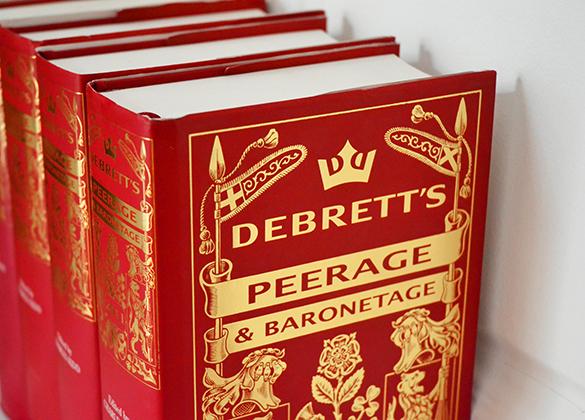
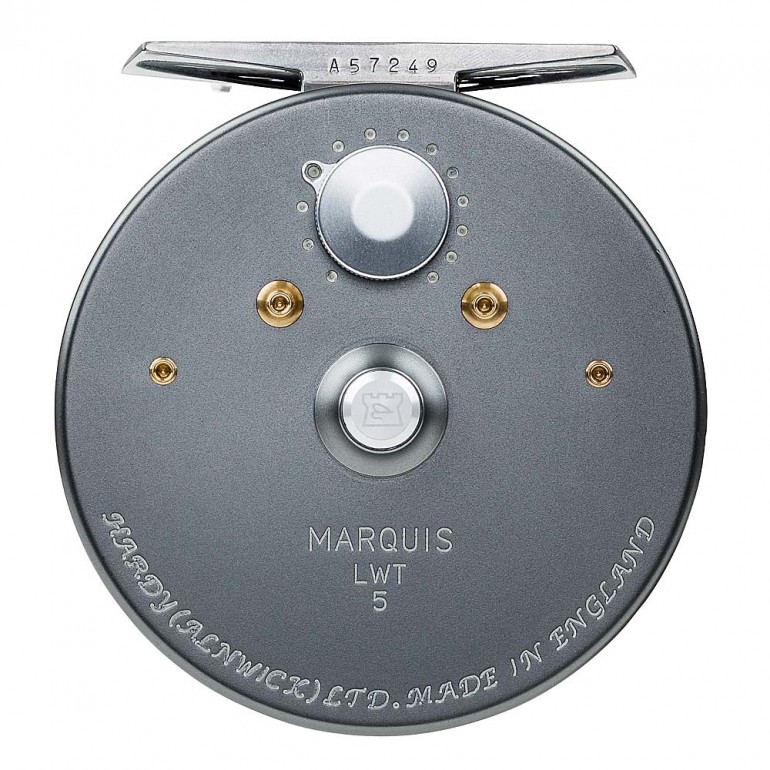
September is, of course, the final full month of the trout season so the penultimate feedback draw to the year. In October we will have a mix of both you trout and grayling types in the draw before the Hardy Marquis reel draw but for now the September winner is Steve Pell who had a guided day on the middle Dove with Andy Buckley. 

Steve: snood in the post.


The Quiz

A test of your etiqutte and word power. As ever the quiz is just for fun, with answers at the bottom of the page. 
 
1)      What is the plural of marquis?

2)    Of the five titles of the peerage where would you be ranked as a marquess?

3)      Is reelable a word?
Have a good weekend.


Best wishes,
Simon Signature    
Founder & Managing Director


Answers:

1)      Marquises or marquis
2)      The titles of the peerage, in descending order of precedence, or rank, are: duke, marquess, earl, viscount, baron.
3)      Yes. Something that may be wound or reeled

Saturday, 28 September 2019

Rules. What rules?


Rules. What rules?

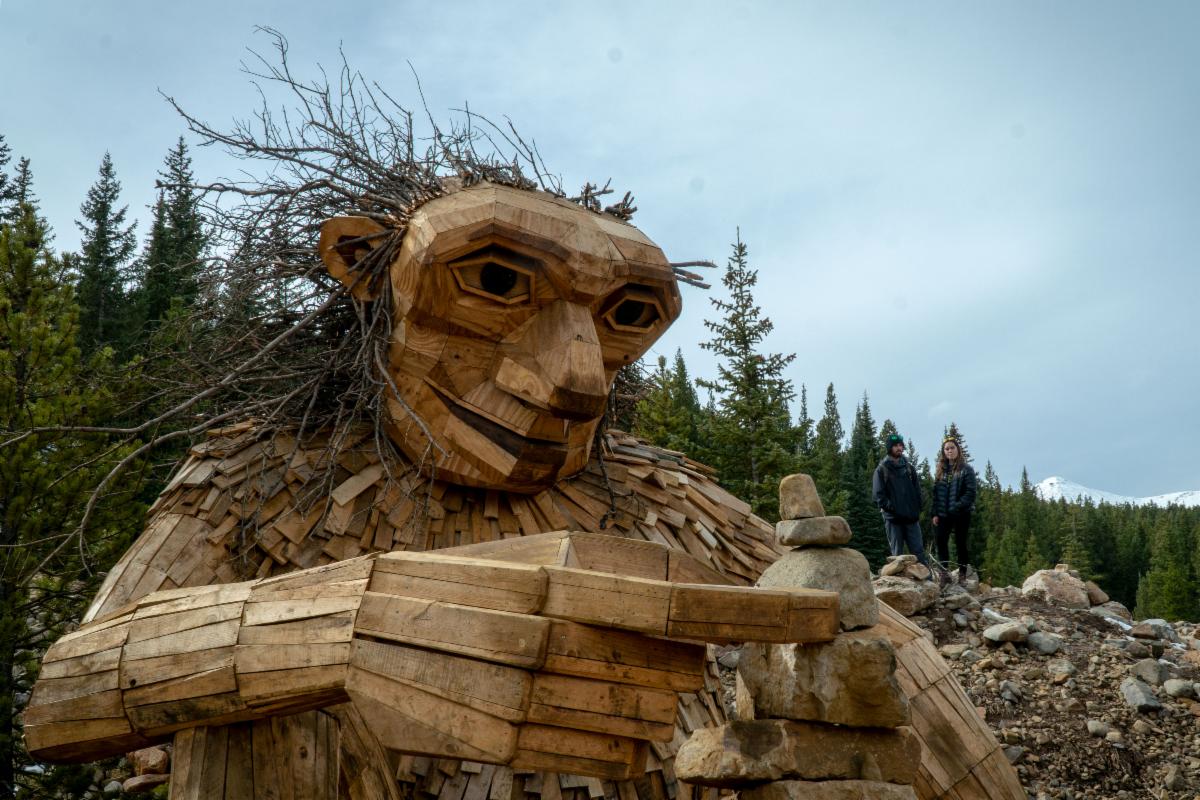
When I was growing up a troll was a mythical, gnarled looking creature that hid in a cave ready to leap out to scare unsuspecting passers-by. Parents deployed the fear of the troll to discourage us children from certain places. Such innocent times. Today trolls are a real thing. People who lurk in the recesses of the internet ready to pounce on actions or words that transgress or offend the moral code of the aforementioned troll.

Ivan the Breckeridge troll
Brexit. Donald Trump. Climate change. 21st century trolls have never had it so good so I guess it was inevitable that some would find their way into the fly fishing community. 

Now you might suppose I am talking about those opposed to the whole concept of fishing. But no. This is blue-on-blue. One fly fisher trolling another. Lambasting, in strong and unpleasant language, an angler who committed the most heinous and unpardonable act - he used a weighted nymph under a strike indicator.

Always assuming they are conducted in the spirit of friendship, I always enjoy these debates about what methods are 'good' and which are 'bad', but it is worth first setting out exactly what the base line is. The law if you like. It is pretty sparse. On a national basis the only things that are specifically prohibited in England & Wales (there are additional regional by-laws) is using live crayfish as bait, anything other than an artificial lure or fly for salmon before 16 June and gaffs or tailers. The truth is if you own a river you can pretty well fish, and allow those who use it, to do so in the way of your choosing. The regulations set out by the Environment Agency largely revolve around close seasons and catch sizes. Where they rule on what's on the end of your line it is by way of local by-laws on bait, spinning and so on. The closest they veer into fly fishing territory is that salmon rule. When it comes to dry vs. nymph or dropper vs. not the law is clear: there is no law. It is, as the troll opined, about ethics or in the case of a strike indicator, unethical. But I'm not so sure.

We have to be clear about fly fishing; it is an entirely contrived activity. If you had to catch fish to survive using a fly rig (even with an indicator!) would be way down the list of preferred methods to keep you alive. Like most sports the rules such as they are, are part tradition, part practical and part pragmatic. But often there is little logic; we do it that way because we've always done it that way and we like it that way.

But in the absence of rules it is dangerous to be guided by, or judge on, the basis ethics. Mine may be very different to yours. As Voltaire said, "It is forbidden to kill; therefore all murderers are punished unless they kill in large numbers and to the sound of trumpets."


Flying fishing

HUMAN LIFTING FISHING DRONE - WORLD FIRST
Drones and fishing have been happy companions for a few years now. Saltwater anglers use them to scope out expanses of sea. Adventurers spy up the river for miles ahead. Coarse anglers use them to go one better than bait boats. So, the next logical extension (!) is to suspend the angler beneath a drone.

It can't be done I hear you cry. But in Australia in can. And it has been done though the authorities are investigating whether it is both legal, a probably more importantly, safe.

What you can't deny is that it was, despite all the odds successful. 


Fly tying with Barry Ord Clarke

I don't know about you but for me where most how-to books fail is in the diagrams or photographs that don't quite demonstrate every stage of the process; one tiny missing fragment of knowledge defeating your attempts to learn a new cast, tie a knot or create an esoteric fly pattern. However, Barry Ord Clarke has come up with the answer in his just published The Feather Bender's Flytying Techniques.

Originally from Lancashire Barry is both a professional photographer and award-winning fly tyer who's flies are on display in the Fly Fishers' Club and even though I hazard you didn't even know it existed, the Catskill Fly Fishing Museum in the United States. 

With a mission to explain Barry's book doesn't focus on flies to tie for the sake of tying but rather those we use day in, day out - the Klinkhamer, Pheasant Tail Nymph and Midge to name but three of his twenty-eight. 

Naturally he has his own take on each, but in addition to the beautiful photographs Barry has enlisted modern technology. Use your mobile phone to scan the QR code on the relevant page and up will pop a video showing Barry tying that very pattern.

That said you can go one better to see Barry live on Thursday 7 November when he will be at the Orvis store in Stockbridge 3pm-7pm signing copies of his book, tying flies and ready to answer any questions you might have. More details here Barry's book is available on Amazon for £25. 


The Quiz

This might well be out of date by the time you read this ....... as ever the quiz is just for fun, with answers at the bottom of the page. 
 
1)      What do the initials QR (as in QR code) stand for?

2)      In which US state are the Catskill Mountains?

3)  Who are the longest and shortest* serving British Prime Ministers of all time?


Have a good weekend.


Best wishes,
Simon Signature    
Founder & Managing Director


Answers:

1)      Quick Response
2)      New York State
3)      Robert Walpole is the longest at 20 years starting in 1721. The shortest George Canning with 119          days in 1827. *Boris Johnson is currently on 65 days.


Friday, 13 September 2019

Don't swallow the bait

Have you heard about Bait? If you haven't you surely will soon. It is an unlikely film to capture the zeitgeist shot as it is in black and white, on a hand cranked camera with the sound - both dialogue and music - dubbed on afterwards.

Without giving too much away it is the story of a Cornish fishing village where the bait once used to lure fish is now the 'bait' to entice tourists. Most of the town has sold out both in terms of housing and employment but are mostly unhappy vassals to the incomers. There are almost too many good lines to pick from (some too obscene for here) but my absolute favourite is a girl on the bus who announces of one of the Londoners that, "He was so posh I thought he was speaking German."

BAIT Official Trailer - UK Berlinale Forum 2019 Entry
BAIT Official Trailer
You will have almost certainly have guessed by now that the film revolves around the conflict between locals and incomers, which in the case of Bait, ends very badly. As word of the film spreads (it only went on general release 30/August) it will, I am sure, add fuel to the fiery debate as to who has the right to buy where. But this debate will be almost entirely binary in nature: locals good, incomers bad as if we have arrived at this point all of a sudden. But the evolution of the English village is a far more complicated affair. Take Nether Wallop.

My village was largely in a state of stasis in the centuries running up to the 20th; it was not until just prior to the outbreak of WW1 that it began its evolution to how it is today. The local Lord who owned all the land and houses around these parts put his estate up for auction. Some of the larger houses were bought by what you might call the wealthy merchant class (often as unpopular at the Bait incomers), but the vast majority were farmhouses and tied farm cottages. In most cases the ownership simply went from the Lord to the new owners who were previously his farm tenants. The only other property owners in the village were those who provided goods and services to the locals: the miller, the baker, the butcher, the blacksmith and so on. And this was how it would pretty well stay for the next half a century with four social classes in rigid hierarchy: posh house owners, landowners, farm workers who lived in the houses provided by the farmer and the self-employed shop keepers/artisans.

The change to how to we stand today really started in the 1950's as the nature of agriculture changed and transportation links improved. Suddenly people had choices. A brand-new house in Basingstoke with a job in a modern factory or office? It was an easy choice. Villages were hollowed out. What was truly dreadful housing to start with was abandoned to become even worse. In my childhood I recall dozens of dilapidated cottages. My father even bought the one opposite our home as he couldn't bear to see it tumbling down. He did it up but barely broke even on the pittance he resold it for such was the lack of demand. Today it would probably command £400,000.

It might seem hard to believe now but in the 1950's, 1960's, and to a lesser extent the 1970's, there was a flight from the countryside; the rural idyll as depicted in the Saturday supplements simply did not exist. Countless cottages were demolished to make way for practical, and generally ugly, bungalows. Farmers would almost give away the houses that were no longer required for their ever-shrinking work force. But not everyone went. The four local farmers who currently own the bulk of the land around the village are true Wallopians. There are still people who were raised and currently live in the house in which they were born. But this group is tiny in its totality - no more than a couple of dozen of the seven hundred odd residents of Nether Wallop.

And therein lies the problem with the local vs. incomer debate. How do you define a local? Is it residency of twenty, thirty, forty or fifty years? Do you lose your place in the queue if you move away to join the Army or somesuch? Or isn't tenure enough. Do you have to be second or third generation with all your long-gone relatives laid out in the churchyard? And then there is added complication of good work vs. bad work. Tilling the soil is seen as worthy but servicing the needs of visitors or part-time residents is not. Somehow, we seem to have elevated the hard grind of physical labour, which was both dangerous and life shortening, to an epic endeavour. It might seem that way if you didn't have to do it but that flight from the countryside shows what those who had to do it found, when given half a chance, an escape route.

The English village is a dynamic reflection of Britain as a whole. It fluxes. It flows. People come, some stay but most, in time move on. But to pretend that there was ever a golden age of bucolic harmony is a fiction. Enjoy Bait. It is a great film. But like much great cinema is uses the vehicle of human conflict to tell a story which is fundamentally at odds with the way things truly are.


Dorian's destruction

I pricked up my ears when news of Hurricane Dorian's route across the Bahamas was first mooted. For the most part hurricanes are the storms that we fear most but expect least; metrology is an inexact science in the face of one of Mother Nature's most destructive forces. The predicted path of the storm would only have to deviate by ten or twenty miles to entirely miss these relatively small and generally sparsely populated islands.

East End Lodge before Dorian
I have travelled many times to Grand Bahama. It is my favourite bone fishing destination. It is not a poor country by international standards. Wealth, measured by GDP is $31,000/head - ours in the UK is not that much further ahead at $39,000. But as you leave the thriving commercial centre of Freeport it doesn't feel that rich. The highway is well paved, but it's just single carriageway and is the only road heading east. Early on during the one hour drive there are plenty of good houses, the more recent built on stilts four foot above the ground. But the further you go the fewer the good ones become. The settlements, such as they are, are mostly collections of shacks, each surrounded by abandoned cars and boats.

Occasionally something comes upon you by surprise. The crossing of the azure blue sea canal dug north to south across the island in the 1970's in the belief that a huge marina and waterside development would follow. All that remains today are the weed strewn building plots and the decaying street layout. Or the giant oil storage silos, each of the dozen as large as St Pauls Cathedral with the dome lopped off, in the midst of a coconut tree clearing with the hugest of the huge supertankers moored at the end of a long jetty offloading their oil to supply the Caribbean via smaller ships.

East End Lodge after Dorian
My driver told me this facility had recently changed hands for $600m; this was in 2014. I had no idea whether that was true; it seemed a lot for a few tanks in the middle of nowhere. I also wondered as to his veracity when I asked as to the explanation of the tide mark at chest height that was on every tree I saw for miles and miles. "Hurricane," he said "we all got flooded." It seemed incredible that so much land could be engulfed by so much sea. And then return to something near normality. But I now know it to be true.

I'm sorry to report for those of you who know East End Lodge on the far eastern tip of Grand Bahama that it has been all but destroyed. The photo at the top, taken in happier times, is of the owners Robert on the left and Cecil in the middle (this is a joint US/Bahamian venture) in front of the main lodge. It is now razed to the ground. What is left of it is the pile of damage just in front and to the right of the green building in the after photo.. The white sticks in the water are what are left of the quay. The roofless building the rod and gear room. It seems that by some small mercy that one of the accommodation bungalows has survived but precious little else. You can watch the short fly by video, with more photos, from which the above frame was taken here. Click through to the fourth photo which will start  to play as a video. East End Lodge comes into view at the five second mark..

My heart goes out to them all at East End Lodge. Not only is the business shattered for now but their homes as well. Nearly everyone who works or has some association at the Lodge - and there are many - live in McLeans Town a few hundred yards away. The town fared no better. It is horrible. The photo below is stark in the truth. I wish them all well and promise to be on the first plane out when they reopen their doors as I know they will.
McLeans Town last week

That was August
 
Though we yinged and yanged between extreme heat and extreme downpours August turned out just fine. I am not exactly sure where we are in the overall rainfall for 2019 but I'm guessing we will end up in the somewhere around 8-10% below average.

The effect on the chalkstreams very much depends on where you are on each system. The top headwaters are very thin, the middle sections on the low side without it being critical but with astonishing clarity. The lower beats have rarely had such a fabulous year.

Well done to Peter Collins who fished at Upper Clatford on the River Anton; he comes out of the metaphoric hat first to collect a snood for the August feedback draw.


The Quiz

As ever the quiz is just for fun, with answers at the bottom of the page. 
 
1)      What is the highest and lowest number of hurricanes in the North Atlantic in a year during the past two decades?

2)      The Rugby World Cup starts later this month in Japan. How many Rugby World Cups have there been and who has won the most?

3)      Which came first - the Men's or Women's Cricket World Cup?
Have a good weekend.


Best wishes,
Simon Signature    
Founder & Managing Director


Answers:

1)      2 in 2013 and 15 in 2005. The average is 7 a year.
2)      8 since 1987 and New Zealand 3 times.
3)      Women's 1973 vs. 1975

Friday, 30 August 2019

Season of mists and mellow fruitfulness

Season of mists and mellow fruitfulness

I have never been a great fan of poetry. I recall getting into considerable trouble with my English tutor for, when asked to critique a poem, I went on a diatribe as to the wastefulness of this apparent literary art. Most poems where, I maintained, a pretty collection of soaring faux rhetoric that invited the reader to seek meaning when there was indeed none. A sort of intellectual practical joke.

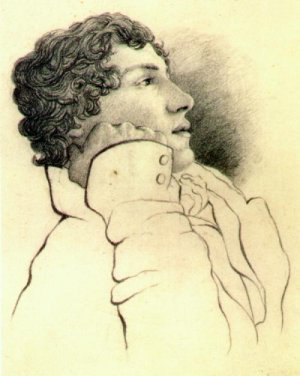
John Keats. August 1819.
Many years on from my lecture hall tantrum I still don't feel the love for poetry. When I come across verse in whatever context (what are those Nationwide TV adverts about?) I glaze over to allow my mind to go a different place. But I guess I'm mellowing just a little. If someone chooses to read Alfred Tennyson's poem The Brook at my funeral, "For men may come and men may go, But I go on for ever." I'll prick up my ears. I'll also make an exception for To Autumn for it has a particular connection to the chalkstreams.

John Keats, along with Wordsworth, Byron, Blake and Shakespeare is regularly cited in the top five English poets of all time. I'd hazard that his opening line "Season of mists and mellow fruitfulness" is as often quoted (and without being reviled) as Wordsworth's "I wandered lonely as a cloud". And very shortly it will be the two hundredth anniversary of his poem that charts the three different aspects of the season: its fruitfulness, its labour and its ultimate decline, that he penned on 19th September 1819 after walking beside the River Itchen.

Keats was a troubled man; he would be dead eighteen months after writing To Autumn aged just twenty-six. Overtaken by both health and financial difficulties this was to be the last poem he would write. The day he walked was a Sunday. It is commonly assumed that he drew his inspiration from his regular route along the water meadows south of Winchester, across what would be regarded as Winchester Cathedral and College land today. However, more recent research suggests that day he walked upstream from the cathedral, turning away from the river to take in the view from St Giles Hill above the city.

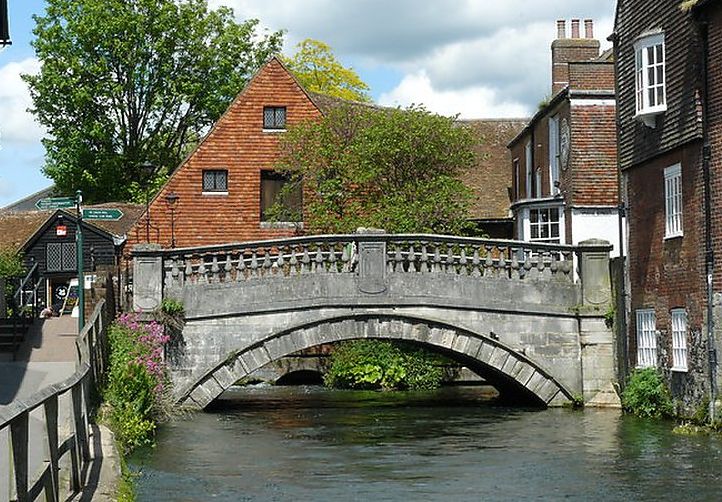
If you try to retrace his steps, you might be disappointed. The stubble of his corn fields on the hill are long replaced by suburbia. The Itchen is largely hidden from view, buildings standing on the banks where Keats' sallows (willow trees) once grew. That said not all historical context is lost. The bridge over which he crossed to make his way up St Giles Hill, and the ancient Winchester City Mill at its base, remain largely unchanged.

So, if you do try to take the walk to celebrate the anniversary - I certainly will - you'll probably pause on the bridge to watch the churning, turbulent river below as it is spat from the confines of the mill race. But for all the melancholic beauty of Keats' words it will probably be those of Tennyson that come to mind, "For men may come and men may go, But I go on for ever."

Bridge with Winchester City Mill behind


Sex. But not as we know it.

Here in the UK we are trying to preserve the integrity of our native wild trout population by stocking only triploid trout; that is to say infertile fish. Not everyone likes this approach, the result of an edict passed down by the Environment Agency and with the backing of law, about eight years ago. Some feel that triploids, as opposed to the fully fertile diploids that we used to stock, adapt less well to life in the wild, have lower survival rates and are less inclined to rise.   

We are not alone in one fish population having the potential to elbow out another. In the western states of the USA brook trout, originally introduced from the eastern states, are outcompeting the native cutthroat to become the dominant species to the detriment of both the habitat and fishing. Eliminating, or even reducing their numbers by netting, chemical or other human intervention has proved ineffective so since the turn of the century Idaho Fish and Game biologists have turned to genetic manipulation for a solution. Here is how it works:

"Every trout, just like humans, has genetic markers that determine their sex, either XY (male) or XX (female) and according to a study released by the American Fisheries Society, the males can be feminized by exposing them to oestrogen. And by breeding these "feminized" males, a YY male trout can be produced. These YY trout are then introduced into the wild. But this is where it gets interesting when the YY males spawn with an XX female, 100% of their offspring will be almost 100% XY males. The idea is this, that over time as these fish continue to spawn, eventually the entire population will be male and then die out."

It is still early days but experiments suggest that these wonderfully named 'Trojan brookies' could eradicate an unwanted brook trout population in a decade. Which begs the question, could this work for brown trout in the UK? If, assuming they didn't have the same behavioural problems attributed to triploids, we stocked Trojan browns instead then we'd be still be able to preserve the genetic integrity of our native population who would happily continue to breed with each other.


Video of the Week

Salmon Fishing In Sweden -
Salmon Fishing In Sweden " Silver Shadow " 
Here's a good Atlantic salmon fishing film from the Catch Me Fly Fish crew.

They head for the Swedish rivers that flow into the Baltic Sea to prove, contrary to most films that make it look easy, how tough it can sometimes be.

To watch it click here.


The Quiz

As ever the quiz is just for fun, with answers at the bottom of the page. 


1)      Which famous angler and author is buried in Winchester Cathedral?

2)      Who led the force that invaded the city of Troy hidden in the Trojan Horse?

3)      When did Winchester cease to be the capital of the Kingdom of England?


Have a good weekend.


Best wishes,
Simon Signature    
Founder & Managing Director


Answers:

1)      Izaak Walton
2)      Odysseus
3)      1066