Sunday, 15 March 2015

Mick Lunn 1926-2014

Nether Wallop Mill, Stockbridge, Hampshire 15th March 2014
  
It is very rare for a river keeper have an obituary in the Daily Telegraph and rarely one as long and fulsome as that for Mick Lunn, third generation head keeper to the famous Houghton Club on the River Test. The only one I could recall that Mick's came anywhere near was that of Frank Sawyer in 1980.

Mick Lunn 
I have to admit I only briefly knew Mick when he was at the Houghton Club, as he retired just as I started Fishing Breaks. However, living as he did in Stockbridge for his retirement I got to know him a little. In his latter years it is fair to say he fell out of love with the River Test. He had strong opinions that he was happy to share and through his friend Clive Graham-Ranger he found a regular outlet in print and on TV.  Undoubtedly he made some good points, but I felt he was too extreme in many respects which cast, for me at least, a pall over his otherwise remarkable life. Here is the obituary that appeared in the Daily Telegraph 27th February:

 "Mick Lunn, who has died aged 88, was head keeper of the Houghton Club, arguably the world's most celebrated fly-fishing club, and the third generation of his family to occupy the post.

The Houghton Club has 15 miles of double-bank fishing on the river Test, near the small town of Stockbridge in Hampshire. Rising at the village of Ashe, the river winds gracefully through the county's chalk downlands until it reaches the sea at Southampton. Since the 19th century its pellucid waters have made it the destination of choice for fly-fishermen, particularly when the clouds of mayfly are making a banquet for the trout.

Founded in 1822, the Houghton Club initially had 13 members. Today there are 26, and it is a byword for exclusivity: election is by invitation only. Its headquarters remain at the Grosvenor Hotel in Stockbridge, and the club's record books throw light not just on two centuries of the members' fishing exploits but also on the way they responded to portentous events. An entry dated May 10 1940 reads: "Germany today invaded Holland and Belgium, Mr Neville Chamberlain resigned and Mr Winston Churchill became PM. A warm bright day with a poor rise. Few fish moving."

Later that year the secretary reported: "In the autumn some Australian troops arrived in Sheepbridge [on the Test] and proceeded to bomb the water. They did not kill very much and fortunately they were shortly afterwards transferred to other fields - perhaps to Libya, where no doubt they put their bombs to better use."
The waters at Houghton have been fished by the Prince of Wales, British prime ministers and American presidents. In the 19th century JMW Turner and Sir Edwin Landseer fished there and made sketches of their surroundings which they presented to the club.

The Lunns were the club's head river keepers from 1887, when William Lunn (Mick's grandfather, a former child labourer in an Essex brickyard) took on the job. William made a lifelong study of fish and fly, paying particular attention to what the trout actually sees. He created some 40 fly patterns, many of which are still used today; these include the Lunn's Particular, Caperer, Houghton Ruby, Sherry Spinner and Orange Quill Variant.

William's son, Alfred, took over from his father in 1931, and served as head keeper until 1962, when the role passed to his son, Mick. An only child, Mick had been born at Houghton on February 14 1926, and to mark his birthday had been christened Valentine. He disliked the name, and managed to jettison it at the age of seven, when he won first prize at the local village fete fancy dress competition with his impression of Mickey Mouse. The name Mick stuck.
Later in life he described the Houghton of his childhood as "very insular", adding: "Even though the next village was only three miles away, we never went there; it would have been like going abroad." The family lived mainly off the land (growing their own vegetables, shooting and trapping for the table) and the river (taking pike and grayling). During the war - when meat was rationed - Mick's mother, Alice, sometimes served up a moorhen and coot casserole.

As a boy he sang in the choir, ferreted for rabbits and enjoyed football (the village could muster only 10 boys for its team, so the blacksmith's daughter was conscripted to play on the wing). He first cast a fly at the age of eight, and learnt to tie flies at the feet of his grandfather. His first fly (to which his grandmother gave the name Val's Own) had a Rhode Island Red hackle and tail, and a peacock herl body. By the time he was 10 he was selling flies to Houghton Club members.

A bright boy, Mick was educated at Andover Grammar School (where his fees were paid by two members of the Houghton Club); but there was never any doubt that he would follow the careers of his father and grandfather.
From 1946 to 1948 he did National Service in the Far East as a lieutenant with the Devonshire Regiment. He then joined his father on the riverbank at Houghton. During his early days as an "apprentice", one of the club's members, the Liberal MP Lord Harmsworth, would lie down on the bank after lunch and go to sleep, instructing the young Mick to "wake him up if a good trout rose".

Over the years until his retirement in 1992, Mick Lunn oversaw the expansion of the club's fish farm, and was greatly valued for his rivercraft as he guided and advised fishermen on the banks of his beloved river. Like all good river keepers, he could spot trout lying in the water when most fishermen could not, and he was always ready to offer sage advice about which fly was best suited to the conditions.

On the matter of choosing the right fly, he counselled: "As far as I'm concerned, it's the size of fly that matters... size is pretty well everything: no matter what you use, during a fall of black gnat or hawthorn flies, the trout will be interested only in very small or large black flies."

Sometimes Lunn had to gratify the whims of Houghton Club members. The eminent plastic surgeon Sir Harold Gillies, for example, got it into his head to emulate those Victorian fishermen who had fished the Test from horseback. He co-opted Lunn to chauffeur his Bentley close to the water, while Gillies - standing on the passenger seat with the sunroof down - solemnly cast his fly. "He did rise one fish," Lunn observed wryly, "but generally we put down every trout for miles."

In 1990 Mick Lunn published a memoir, A Particular Lunn: A Hundred Glorious Years on the Test (written with Clive Graham-Ranger). In it he criticised modern farming practices, the water authority and the expansion of the local population, all of which in his view had had deleterious effects on the well-being of the river Test. As Lunn told Graham-Ranger in an interview with The Telegraph in 2011: "Years ago the Test was always crystal-clear. When I was a boy at school in Andover, it was a little market town. Now it's almost the size of a city and its waste water is finding its way into the river. They are still building more houses, though, and I have no idea where the water is going to come from to feed its domestic and commercial plumbing demands. Also, the weed in the river is not so prolific, particularly ranunculus, which acts as a filter and cleans up the river. "

When Lunn retired, Houghton Club members bought him a cottage on a feeder stream near the Test, and he continued to fish, landing his final trout at the end of last season. He was a popular after-dinner speaker, and enjoyed shooting, horse racing and golf. Mick Lunn and his wife, Joyce, had a daughter, but there was no son to continue the family tradition.

Mick Lunn, born February 14 1926, died December 26 2014"

Editors note:  My personal favourite story of Micks' (which I think is in his book) relates to D-Day. In the run-up to the invasion General Eisenhauer fished the Houghton Club water, guided by Alfred, Mick's father to whom the General took a shine, so much so that he invited Alfred to accompany him a few days after D-Day, to visit the troops in France. Alfred was no soldier, but he was a regular in the Home Guard and for the lack of anything else to wear put on that uniform for the trip. As they reached France and disembarked from the boat onto the Mulberry Harbour Alfred heard one solider shout out, to the hilarity of all, "We must be f*****d, they've sent in the Home Guard". 

Clive Graham-Ranger died 18th May 2014.


Fly Fishing Film Tour UK is back

Last year's Fly Fishing Film Tour was a sell out, so I am delighted to welcome it back to the sole UK venue showing the six pulsating short films from around the globe.

We have the beauty of Trout in Montana, Atlantic Salmon against the rugged backdrop of Iceland, saltwater antics in Cuba, Calico Bass in the surf of California and the Lost Boys of Yantarni battling the Alaskan elements for Coho Salmon. It is two hours of the best fly fishing films you will ever see and guaranteed to make you want to go fishing!

 To cope with demand there are two showings; a matinee at 3pm and evening at 7.30pm at The Grosvenor Hotel, Stockbridge. Tickets are £15. By on-lineemail or call Diane on 01264 781988. 

 PS You can see clips at www.theF3T.com and on the night we'll have some giveaways and prizes including a sweepstake to win a trip for 2 to the El Pescador Fishing Lodge in Belize.


Buy your May issue of Trout & Salmon

 
Last year I had a wonderful day with Trout & Salmon editor Andrew Flitcroft and his ace photographer Peter Gathercole on our new 6 miles of fishing at Ilsington on the River Frome in Dorset. You can read an account of the day, plus Peter's great photos in the May issue which hits the newsstands on April 9th. 

Ilsington River Frome
 
More details of Ilsington via this link. 


Tuesday, 3 March 2015

Now that is what I call a pike!

Nether Wallop Mill, Hamsphire, England February 26th 2015

Jon Hall, the river keeper at Broadlands on the River Test, caused quite a stir Facebooking this monster pike he caught on the fly last week on his home water. It weighed in at a colossal 31lb 4oz. I asked Jon what he caught it on, "A big home made one :)" came the reply. Maybe he is being a bit coy .......


#kids2fishfree

Last month the Environment Agency (EA) released figures for national rod licence sales in England and Wales covering the past ten years. None of the news was particularly good. The high point for licence sales was in 2009 and in the past four years the number of licences bought by adults has declined by 15% and by children a whopping 35%. The only growth area has been in concessionary licences to OAPs that rose by 10% in the same period. This data sparked a round of comment in the national and fishing press pondering why, despite the many 'kids go fishing' initiatives, there has been this decline.

I am as keen as anyone to see children fishing, so I started to bend my mind around the problem. Currently the under 12s don't require a licence, 12-16s pay £5 for the annual freshwater licence and the over 16s the full adult rate of £27. It is not a hard thing to buy on-line, assuming you have a credit or debit card but of course you have to be 18 to have a credit card.  Fine you'd think, let an adult pay for the licence, but we can all easily imagine the difficulties that may present. Of course you can still buy a licence over the counter at any Post Office but they are gradually vanishing.

I could go on forever analysing why kids can't or don't buy licences but really I'm asking the wrong question. After all in what other walk of life do we require a child as young as 12 to buy a licence to engage in an innocent, healthy, outdoor pastime that will spark an interest that will last a lifetime? Immediately I can think of none and the more I think about it the more absurd it becomes. I have no idea what proportion of the EA's £23 million of licence income comes from kids licences, but I suspect it is pretty small. In an age when we are seeking engagement and participation for any sport the fishing licence has to be the ultimate barrier to entry.

From now on wherever I get the chance I am going to bend the ear of anyone who will listen to get kids licence abolished for everyone up to the age of 18. Wish me luck!

Retweet this message via Twitter #kids2fishfree if you agree.


Is this the most expensive hook in the world?

This is the time of year when lots of very tempting trade catalogues drop on to my desk; like any of us 'gear heads' I like a new bit of kit, however expensive and regardless of the fact that the sales promise will likely come to nought. Well, it is all part of the fun. 

The Leeda catalogue is the mightiest in size of them all, running to nearly 500 pages. I am sure the Leeda guys will not mind me saying, but it hasn't always been regarded as top notch brand, but with the Wychwood gear making a name for itself and some impressive new lines under their banner like GoPro, Sealskinz and Petzl times are a changing.

FishfinderMy favourite bit of kit has to be Wireless Portable Fishfinder from Deeper. It is a small, lighweight portable black ball that encases a sonar device, allowing you to attach it to your line or float in the water finding fish as you go. The bluetooth connection to your phone via the Fishfinder app brings up the display highlighting the position and depth of the fish. I can't imagine how I'd use it on a chalkstream but hey, it might be fun.

But devoid of any modern technology it was the Mustad 27/0 shark hook that took my breath away at £250 ($385). Yes, two hundred and fifty pounds for a hook. It might be stainless steel, it might have a bit of chain on it and it might be almost 18 inches from hook bend to eye, but really £250? I am obliged to fishingmegastore.com for the description:


The ULTIMATE Shark fishing hook from Mustad!  Shark hook

Designed at the special request of Chris Fischer, founder of the OCEARCH ocean research organisation and star of National Geographic's Shark Men, this monster hook is (believe it or not) a purpose-built catch and release hook, designed to snare big sharks and get them to the boat, with minimal lasting damage.

The hook comes equipped with a 75cm/32.5in chain weighing in at 2lbs 12oz, while the hook itself sports a chemically sharpened, turned in point and a bend-out strength in excess of 4,000lbs!


I have never seen a more expensive hook. Has anyone?


Newsletter Quiz

 
Five random brain teasers. Answers at the bottom on the Newsletter. It is just for fun!

1)   Who lives in a dray or drey?
2)   What is a baby otter called?
3)   What is ichthyophobia?
4)   What is the current British record for casting a #5wt line with a single handed rod?
5)   The Scottish Dee flow into the sea in which town?


Have a good week.


Best wishes,
Simon Signature    
Founder & Managing Director  


Quiz answers:  1) A squirrel 2)  A pup 3)  The fear of fish  4)  130' 9" held by Paul Arden; effectively your full fly line plus half as much again 
 5)
   Aberdeen

Wednesday, 11 February 2015

Beavers: good or bad?

Nether Wallop Mill, Hampshire England - Wednesday February 11th 2015
Beavers: good or bad?
I have only once ever seen a beaver; it came trundling past me, appearing out of the early morning mist as we prepared to get into the boat whilst fishing in one of the Wyoming Beavernational parks. What struck me most, aside from the indifference of my boat mate and guide who barely gave it a glance, was its colossal size. Beavers are the hugest of rodents, at forty pounds twice the weight of a badger but really quite docile. This one came past us head down, eager to get wherever he was going, happy to leave us alone if we left him alone. I was genuinely excited, but the other two, natives of Wyoming, could not have been more dismissive at my attempts to engage them in conversation about beavers. "Just wait 'til you see how they live ......" was their only comment.
Well, beavers do live in amazing places and yes, beaver dams are pretty amazing structures which create great pools for big, lazy cutthroat trout, but boy do they chew their way through a lot of trees. During the day we yomped miles to find the side streams that thread into the Snake River and in so doing passed through hundreds of acres of forest razed to the ground by beavers. It is extraordinary how big a tree they will fell and the landscape, especially where their favourite aspen trees lived, looked like a commercial logging operation had just passed through. In the context of the Grand Teton National Park which is probably about half the size of Wales those acres matter little, but when I read about the Devon beavers and the decision by Natural England to give them the green light I got to wondering how they might fit into the confines of the English landscape.
In the loosest sense of the word beavers are native to Britain; in fact over three millennia ago they were the first river engineers to start damming the rivulets of the chalkstream floodplain that began the long evolution to the rivers we know today. However, docile in Stone Age Britain was no way to survive and the population was extinguished a very long time ago. Fast forward a few thousand years to the start of this millennium and beavers are back with a small population in the Tay valley in Scotland and the Otter valley in Devon. Quite how they got there nobody knows or is admitting, but it was either a deliberate release or they escaped from captivity. Whatever the reason the Tay valley pair has multiplied since 2001 to over a hundred, whereas the Otter valley group, who are of a later vintage, still number a handful.  
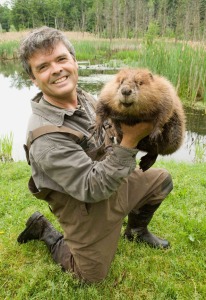
It is the latter population who caught the headlines last week when Natural England, a government quango that regulates such creatures south of the border, gave permission for the beavers to be allowed to live in the wild and issued a licence for their re-introduction under the care of the Devon Wildlife Trust. It would take too much space to rehearse all the arguments for and against the beavers, but in a nutshell the pro camp sees this as a natural re-introduction with benefits for ecology, flood management and tourism. On the no side disease, habitat destruction and impediments to the free passage of migratory fish are cited. For myself I must admit to having yinged and yanged; initially I thought it was a totally bonkers idea, but then I warmed to the 'yes to beavers' way of thinking until I chanced upon the photo that accompanies this article and the story from Quebec, Canada that goes with it.
In North America beavers are the comeback kids; devastated by trapping and human intervention their numbers a few decades ago had dropped to around a 100,000 across the whole of the continent. But today, with a remarkable reversal of fortune, they number over 20 million thanks to a change in forestry practices and the end of the fur trade. A fur pelt that would have made $500 in the 1940's would now get little more than $20. In Quebec alone the population is over a million, an all time high which has bought with it a whole set of new problems costing government, business and property owners of millions of dollars a year with programmes to stop beavers eating trees where they are needed and sterilisation to stem the population growth. Ironically for the English proponents of beavers the greatest cost is in flood defence and repair. Much though we'd like to think the beavers will build their dams where it will benefit humans they don't; beaver dams are built for beavers which in turn may cause unwanted flooding, in one extreme case washing away a railway line causing a derailment with two deaths.
 In truth there may be more nuanced dangers in letting the beavers thrive. We've seen it again and again when species make it into the wild; the American signal crayfish continues to infect and kill our native white claw. The zander, a vicious relative of the pike, has ravaged waterways. The mink helps wipe out swathes of the water vole population. And remember coypu, those furry docile rodents also know as swamp beavers?  It took nearly half a century and millions of pounds before they were finally eradicated in 1989 to save the Norfolk Broads from their burrowing destruction. On balance I think Natural England, probably influenced by emotion and a well organised Wildlife Trust, have come to a wrong decision. Of course the beavers will be interesting and novel, but it seems to me that the risks outweigh the benefits and in this case the precautionary principle should prevail with the population removed from the wild. 
To read the rest of my Newsletter and receive regular updates visit www.fishingbreaks.co.uk Out now banner My recent book Life of a Chalkstream published by William Collins is available from bookshops and Amazon.

Friday, 26 December 2014

2014 in Photos


Newsletter
Saturday December 27th 2014

2014 in photos

Dear Simon,
  
The good news is that we are now closer to the start of the new season that we are from the end of the last one. I hope these few photos keep you going until that first chance to cast a line. My thanks for Bo Hermansen and Ken Takata for the great images; the not so good ones are mine.


JANUARY
Two weeks into January and the floods were upon us; I must admit in the past twenty odd years I have seen the rivers this full on two of three occasions, but I have never seen the meadows flood to such an extent and for such an extended period. This was Wallop Brook; the flooded sections that extend at right angles to the river are remnants of the water meadows that fell into decay in the early 1900's. Nobody alive today has ever seen them full like this.

Wallop water meadows


FEBRUARY
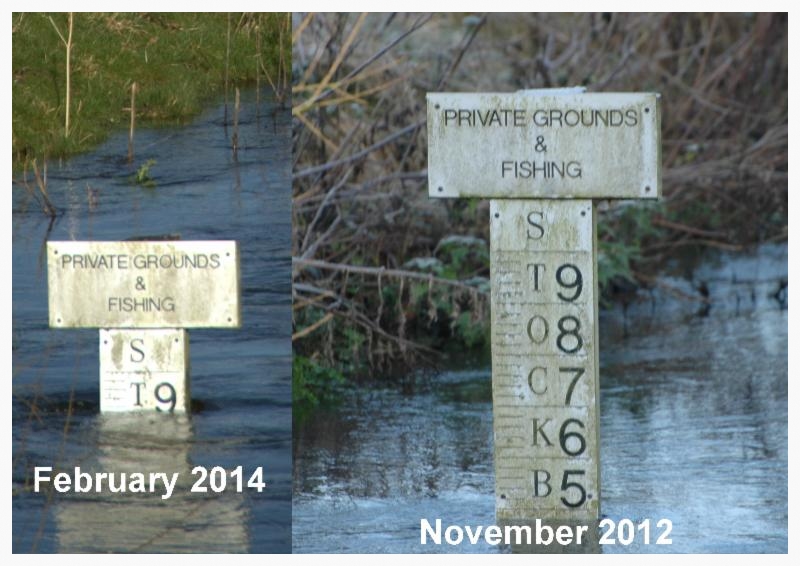
By this point I felt I was a  victim to the 'be careful what you wish for'  syndrome as my desire for every winter to be a wet one went to new levels in every sense of the word. Here is the river gauge on the River Test in Stockbridge. In December 2012 we were in a winter drought; fifteen months on .........

Stockbridge gauge 


MARCH
On March 5th 1914 the P&O liner Morea edged up the River Thames returning from a winter cruise along the north coast of Africa. On board was Frederic M Halford, sick from pneumonia, but before the ship could dock Halford was dead. The father of dry fly fishing was no more. 

"By what is really a life's work, Halford has raised fly fishing for trout, both as a sport and as a scientific pursuit, to a higher level that it has ever before attained, and by so doing has made fly fishing a better and more absorbing recreation for us all." 
Dr. A. C. Kent, Journal of the Fly Fisher's Club, 1914.


APRIL
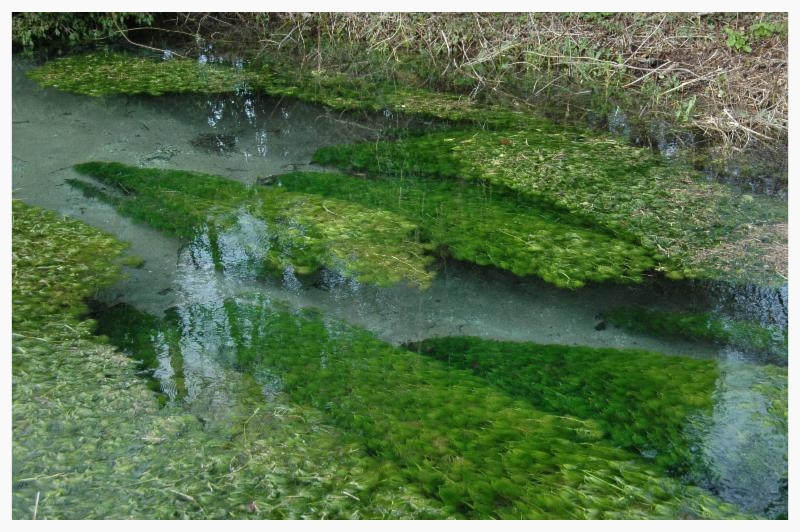
Whilst the government struggled to get a handle on nature Teffont Brook, one of the tiny Wiltshire tributaries that feed the Hampshire Avon, showed the astonishing resilience of the geology of the chalkstreams. If you had to find a living definition of the word pellucid, this translucent water just 100 yards from the spring head says it all.

Teffont Stream March 2014 

MAY
There were all sorts of fanciful theories as to how the once-in-a-hundred-year floods who affect the mayfly hatch. As it turned out, not at all. Our ephemeral friends appeared to the day and in great numbers. 


JUNE 
A true bit of history came up for sale in the Fishing Temple on the River Dove in Derbyshire.This is where Charles Cotton and Izaak Walton collaborated, resulting in Cotton's contribution to the second edition of The Compleat Angler.   

JULY
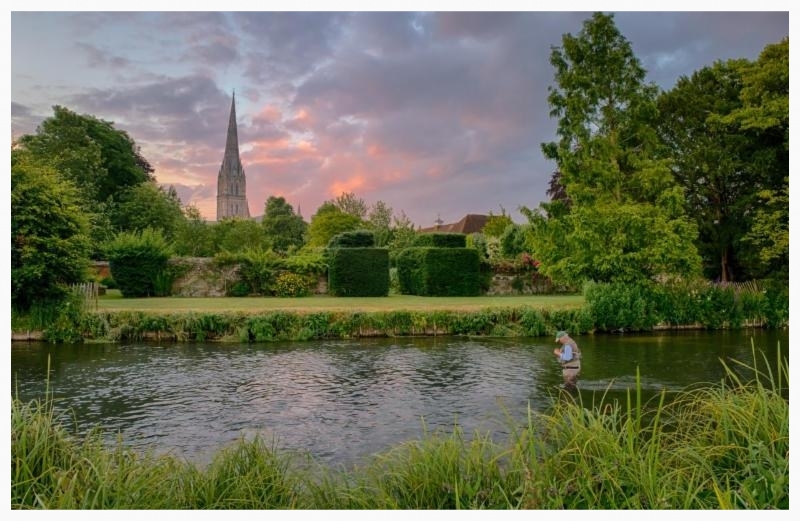
Every two years I do an extended photo shoot travelling the chalkstreams to capture 'the shot'. Each time we try to re-create something famous. This is our appreciation of John Constable's Salisbury Cathedral from the Bishop's Grounds. Dawn shoots are something of a nightmare. We were up at at 3am, waded into position in the pitch dark to be ready a full hour before sunrise. I stood in the same position for 90 minutes feeling every degree of a chalkstream 50F temperature.

Salisbury Cathedral at dawn no. 1 


AUGUST
I know the Himalayan Balsam is a hated invasive species but those pendulous, pink flowers do frame a photo (!) and the balsam musk hanging over the river on warm, still evening is simply divine.

Ilsington River Frome 


SEPTEMBER
Living proof that I do let Diane out of the office sometimes as she hooks a fish on the River Kennet at The Wilderness.
 

OCTOBER
Not often trout make the news pages of a national newspaper but this one did appearing in the Daily Telegraph.


NOVEMBER
I have been  reading Fifty Years on the Test by river keeper Ernest Pain which was published in the 1930's. For November he advises 'eradicate grayling by all means possible'. Ouch!

Grayling 
  
DECEMBER
This perfect photo of a flowering ranunculus is reminder enough through the gloom of winter that a new season and summer lies ahead.


Here's to a great 2015! 

 
Best wishes,
Simon Signature 

Founder & Managing Director  


Friday, 14 November 2014

Just how smart are fish?

Nether Wallop Mill, Hampshire, England - Friday November 14th 2014 

 I have never signed up to the belief that fish have a three second memory. If that was the case how is it that the trout in my lake start to follow me around each morning once I start feeding them over the winter?
 
They truly do follow me; whether alerted by my shadow or the vibrations of my footfalls I don't know, but they will porpoise along the bank beside me. A few months of this gets them in trim form for an impressive party trick with the fishing school pupils at the start of each season. As we assemble on the bank for the obligatory 'how to catch a fish' demonstration they swim in from all corners of the lake. It really does give you something of a Jesus complex ..... needless to say they are rarely hard to catch, usually first cast, which does no harm for your fishing kudos.

But are fish smart? Most people think not, but as an angler who has been outwitted by a trout on more occasions than I care to remember I have always held to the belief that they must have some brainpower. If not, how thick am I? So it came as something of a relief to read the headline in the papers last week 'New research reveals fish are smarter than we thought'.

 Scientists at Bath and Queen Mary Universities have proved that fish have 'parallel visual search'. Apparently that is the ability to pick out one object amongst many whilst ignoring others; a bit like you or me quickly scanning a supermarket shelf for a particular item. It has been assumed for years that fish without the frontal part of the brain in the neocortex were unable do this, instead obliged to examine every item in turn before making a choice.

This confirms, for me at least, much of what I have observed in feeding fish over the years. The activity is rarely random and there are frequently occasions when a particular fish will focus on a particular insect to the exclusion of all others. I'm sure you like me have been in that sort of spot, where a profusion of flies covers the surface but there is only one insect the fish wants to take, and most likely the one you can't identify!

Happily for the egos all of us who have ever been defeated by a feeding fish the co-author of the paper Dr Matthew Parker concludes, 'Fish don't deserve their reputation as the stupid branch of the animal family tree.'

If you wish to read more the paper Parallel Mechanisms for Visual Search in Zebrafish is available on the PLOS ONE academic web site.


The One Fly is back

The River Test One Fly is back for a seventh year on Friday April 24th hosted by kind invitation of Lucy and all the team at The Greyhound on the Test in Stockbridge.

2014 RTOF wining fly
Grant Harrower with his 2014 winning Daddy Long legs
For those of you not familiar One Fly it is both at once a celebration of everything great about the chalkstreams with that little element of competition to kick off a new season.  

 
It is not always the easiest fishing day you'll ever have; at 10am you pick a fly and that's the one you fish with for the day. Dry or nymph? Traditional or a bit edgy? Chance a light tippet but risk being broken? These are just some of the choices that might give you pause for thought.

But don't worry you are not alone; all competitors are accompanied by a Fishing Guide who acts as guide, scorer and confidante. We meet for a welcome breakfast with beat draw taking place at The Greyhound. Then it's off to the river for six hours of what I'll wager is one of the most intensive and nerve jangling fishing days you will ever have. Will you win? Who knows until the prizes are handed out over tea at in the late afternoon of the last Friday in April.

In case you are wondering all fish are released; we score by length not weight. If you are interested I have spaces for two teams or if you can't make up a team some individuals. The entry fee is £295 including a contribution to a worthy fishing cause. More details ....


Fly Fishing Film Tour 2015


SPECIAL INVITE: Following the success of last year's first ever screening of the Fly Fishing Film Tour all One Fly participants are invited to the second annual show that features six of the best short films from around the globe. Last year's premiere was a huge hit, so register early as numbers are limited. Guests and non One Fly participants welcome at £15. 


Thursday 23rd April. Doors open 6.30pm. Show starts 7pm. The Hatch Room, Grosvenor Hotel, High Street, Stockbridge, SO20 6EU.


Carp on the Fly
  
Here's a good plan if you are sorting out the family trip for next summer. In my experience any mention of fly fishing goes down badly, with a reaction that involves much sighing, eyes heavenward and comments along the lines of 'can't you forget about your blasted fishing for just two weeks .......' But I'm sure if you innocently mention Portugal nobody will be any the wiser until it is too late.

My only experience of carp on the fly was on a lake within eyeshot and earshot  of the M25. Hardly a rural idyll but I still remember it well. With a Bonio fly (looks like a dog biscuit as the name suggests) and under the tutelage of Bob James I was hardly likely to fail and I didn't.

That day has always stuck in my memory, so when the Jose Rodrigues video popped into my inbox, I suspect you like me will be tempted.

Warm sunshine, tranquil lakes, Mediterranean food all just a hundred miles south of Lisbon. I can't vouch for Jose's operation having not visited, but he makes a compelling case.

To view the clip click here or visit the Carp on the Fly Adventure Facebook page.


October feedback draw winner 


Well done to Len Armstrong, the final Life of a Chalkstreamwinner for 2014 who fished Mottisfont Abbey on almost the last day of the season in what Len described as 'relentless rain'.

I am promised the Abel hemostats are on their way to me, so as soon as they arrive we'll have the end of season draw.

If you would like to receive my bi-weekly Newsletter please subscribe here


Tuesday, 14 October 2014

How precious is time?

How precious is time? 
  
'You should sue', said someone in an email last week pointing me in the direction of an advert for a country park in the Cotswolds who had re-worked my "Time is precious. Use it fishing" slogan to read "Time is precious. Use it wisely". Naturally I have a copyright lawyer on speed dial ..........
Time is precious 
I must admit I did at first feel sorely tempted for a whole variety of reasons. To start with it did seem a bit of a cheek to take my strap line and re-work it without much attempt to disguise the original idea - the venue even features fishing. Punishing them for that might be satisfying. Then of course if we really got into it in court the ensuing publicity, win or lose, might be worth any financial risk. And add to that the opportunity for some mega-buck payout to recompense me for a heinous copyright violation. Well, case closed really.

As I pondered the many other possible advantages to resorting to the law (actually there are not any) I began to feel a tad guilty. Was "Time is precious. Use it fishing" really an original idea of mine? The truth is it wasn't. I stole it from someone else, so here is my confession.

Years ago I was in the United States driving up The Strip in Las Vegas where I spied this billboard that featured a typical Vegas blonde. You can imagine the type but the other more distracting thing about her was the massive diamond ring she wore. And the strap line? Time is precious. Buy her diamonds. It was a short leap of imagination to apply the thought to fishing, well for me at least.

I am not sure if absolution will come my way for telling the truth but  as Benjamin Disraeli said, "Time is precious, but truth is more precious than time". And as for calling a lawyer, I guess I have now probably blown my chances. Anyway time is certainly too precious for petty vendettas.


Hungerford Literary Festival - Sunday October 19th

I'll be talking about Life of a Chalkstream at the Hungerford Literary Festival on Sunday along with Nicola Chester who knows everything there is to know about otters. 

 Organised by the very excellent Hungerford Bookshop and with a  host of authors far more famous that me, I'll be on at at a very civilised time of 2pm at The Bear Hotel.

 
If you are into cycling I am followed by Sky Sports Ned Boulting talking about On the Road Bike which asks why we have become a nation of obsessive cyclists.

Tickets and more details direct from the organisers, Hungerford Literary Festival.


September feedback draw

Abel hemostatSpooky was again the feedback word of the month. Small flies were the most successful and the biggest fish I heard of (10lbs at Mottisfont Abbey) fell to a size 20 Adams.

Well done this month to Nemanja Pasalic who fished at Broadlands and collects a signed copy of Life of a Chalkstream

For everyone else the end of season draw for the three Abel Hemostats gets ever closer.


Hatch of the Month
  
Add a description
Pink Czech nymph
If I had to pick a single fly to fish through the winter it would be a toss up between the ubiquitous Pheasant Tail Nymph and the nutritious shrimp.

Shrimps, especially during winter, are one of the staples in the diet of both trout and grayling. It doesn't take much to work out why. If you get a chance to run your hand through the weed or kick sample some gravel compare the shrimps to the nymphs - in fish food terms it is the difference between a T-bone steak and a cocktail sausage.

Both the fish, but more particularly grayling, will go to great lengths to find shrimps, Trout will flap sideways along the river bed, almost as if creating a redd to find them. Grayling are more scientific, pushing their snouts under the gravel. If you see grayling tailing up, with little puffs of silt emerging from around their heads it is time to tie on a shrimp. Personally I like bright pink and orange patterns as they are easy to track as you tumble them along the river bed.

Click here for my Hatch Calendar with the full October advice.  


Half term fishing
  
Nether Wallop Mill
Feeding time at Nether Wallop Mill
Half term sneaks in under the wire to cover the last week of our season here at Nether Wallop Mill, where we close up shop on October 31st.

 
As with last year I have spectacularly misjudged how many fish to put in so once again we have a huge stock we'll happily let you take away. It would be nice to think that the fish will overwinter but the truth is that the lake will soon become the plat du jour for every otter and heron in the vicinity. Here is the video of these trutta piranhas at feeding time.

I won't make myself a hostage to fortune by saying you can't fail, but I'd be truly amazed if you did. The options for Family Days, Father & Son  trips and Private Tuition are all listed here.


Chalkstream news for October
October is the month of greatest change on the chalkstreams; the trees will lose their leaves and the rivers will start to fill with the autumn rains. In the rivers grayling become our fish of choice as the trout lose interest, beginning to pair up slowly turning from brown to vivid red. 

Sunrise: 7.07am 
Sunset: 6.42pm
Average temperature: 8-14C
Days of rain: 13 (+0.25mm)

Weed cutting: After mid-October there are no restrictions on when and where weed may be cut; likewise bank repairs and restoration projects will be happening. 

Closing dates: The trout season closes by law on October 31st but by tradition all beats are closed by October 15th. Grayling are governed by the coarse fishing regulations so may continue right through to March 14. These are the grayling rivers we cover are:

River Avon        October 14 - March 14
River Coln         October 1 - March 14
Driffield Beck     October 1- February 28
River Lambourn October 14 - December 31
River Test & tributaries   October 15 - March 14 

Have a good week.


Best wishes,
Simon Signature 
Founder & Managing Director