Friday, 15 February 2019

Fifty inch brown trout

Renée Wilson
 

I am sorry to bring the sad news that Renée Wilson, widow of Dermot Wilson, died last month aged 88 years.

Renee with Fergus at the unveiling of the plaque in July 2018
She was in many respects the unseen hand behind the fly fishing enterprise she and Dermot began here at Nether Wallop Mill. It was, after all, her sharp eye that saw the advert in the property pages of the Daily Telegraph one Saturday when Dermot was away fishing (inevitably!) in Ireland that led to them buying The Mill.

And Renée did indeed have a sharp eye for detail and words. She was in her own right a talented copywriter, having met Dermot when they were both working for the advertising colossus J. Walter Thompson. I saw that first hand when we were writing the text for Dermot's blue plaque - summarising the life of a great man in a handful of words is harder than you might suppose.

I am proud to have known Renée. She was always incredibly supportive but it makes me sad that the final chapter of their story is now closed. She is survived by their only child, Fergus.


Pruning and pumping

The quiet of Wallop Brook has been somewhat disturbed of late; a giant tracked tree cutter and the diesel throb of a massive pump have been the sounds of the week.

Nobody is entirely sure how old the willows that grow along the Brook are. There are plenty of sepia photos dating back to the 19th century that show them. It is said the tree limbs provided the blanks from which the bats of cricketer W G Grace were crafted 130 years ago. But their long life, evidenced by the thick girth of the trunk, is entirely due to the care of man for Salix fragilis has a particular way of living its life.
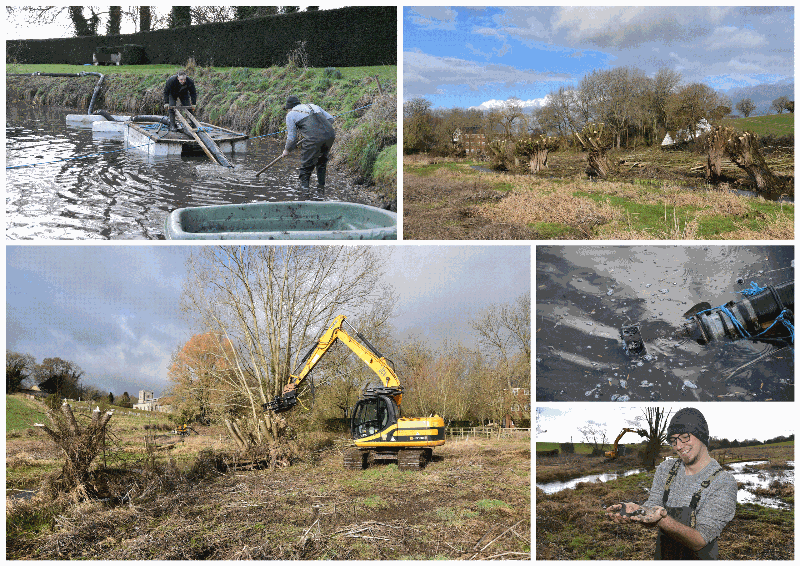
We tend to call these trees by their more common name of crack willows, so named for the whiplash report when one of the tall branches snaps off and falls to the ground. Left to its own devices all the branches would eventually snap off in similar fashion, clearing the ground around the trunk of competing vegetation from the centre of which a new tree would grow to repeat the whole process every 7-15 years. However, regular pollarding to harvest the wood for all manner of uses changes the nature of how the tree grows.

Today there is not the same demand for willow but to prevent the trees reverting to type we continue by cutting the crown every decade. In the past it was done with ladders and chainsaws a process that would take two men two weeks. But the giant nippers on the end of a hydraulic arm completed the task in less than a day, piling the branches up in neat stacks which, once they have dried, will be chipped for use in the bio-mass boiler of the neighbouring farm.

The purpose of the pump on the other hand is a slightly less illustrious. We have here at The Mill what is known as an 'in-line' lake. That is to say the diverted brook flows in at one end and out the other. In many respects that is wonderful - constantly replenished chalkstream water that keeps a clear, cool lake that the fish love regardless of the season or prevailing weather. However, all rivers, even chalkstreams carry silt, which falls to the bed of the lake as the water passes through. Over a period of many years sections of our lake that began life with a depth of five foot have reduced to one. However, the pump with its six inch pipe and sucking head, which is kinder and more efficient than dredging, has removed the decades of build-up.

Today we are back to some sort of normality; you can actually hear the burble of the brook. The willows look a little shorn but come the spring green shoots will sprout. As for the lake, the trout who found much to like in the swirling disturbance of the pump, are rooting around in the newly exposed gravel bottom.
A fifty inch brown trout
 
As regular readers of this Newsletter will know I am not a great one for featuring pictures of trophy fish captures but occasionally one comes along that simply cannot be ignored. 

I think you will agree that this Mongolian brown trout, at fifty inches, is worth gawping at. As you ponder it is worth remembering that this is no Mongol native - the original brown trout were stock fish from Europe, possibly even from the UK.


If you'd like to watch the video about fishing in Mongolia click here


New on the River Test

It is not often you have the opportunity to take up the offer of one of the most iconic beats on the River Test but I'm delighted to say it has come my way.

Broadlands House is a famous stately home, the residence of the Mountbatten family where the lawn slopes down to the river. It is no bad view to have and it is where Prince Charles and Lady Diana spent their honeymoon night and the first three days of married life. They were following in the footsteps of his parents who did something similar when the then Princess Elizabeth married Prince Philip in 1947.

The Tanyard and House beats are perfect for a small group with plenty of river to spread over, open banks and extensive sections which are ideal for wading. There will be a new fishing hut in time for the start of the season but The Cromwell Arms is just 100 yards walk. It offers breakfast, lunch and dinner, plus has comfortable bedrooms. Alternatively The Three Tuns (150 yards) is the welcoming pub the locals head to.

The fishing is reserved for the exclusive use of parties of four. The daily rate includes both beats and a fishing guide who will provide tackle, flies and assistance as required. More details and dates here.

St. Valentine
The Quiz

More questions to hopefully entertain and enlighten. As ever it is just for fun with the answers at the bottom of the Newsletter.

1) Which notoriously brutal leader founded the Mongol Empire in the 13th century?

2) Which trees are also known as sallows and osiers?

3) What was the nationality of Saint Valentine?


Have a good weekend.

Best wishes,
Simon Signature    
Founder & Managing Director


Answers:


1)     Genghis Khan
2)     Willows
3)     Roman

Saturday, 2 February 2019

Mink. Enemy of the people?


Mink. Enemy of the people?

Greetings!

When I was writing 
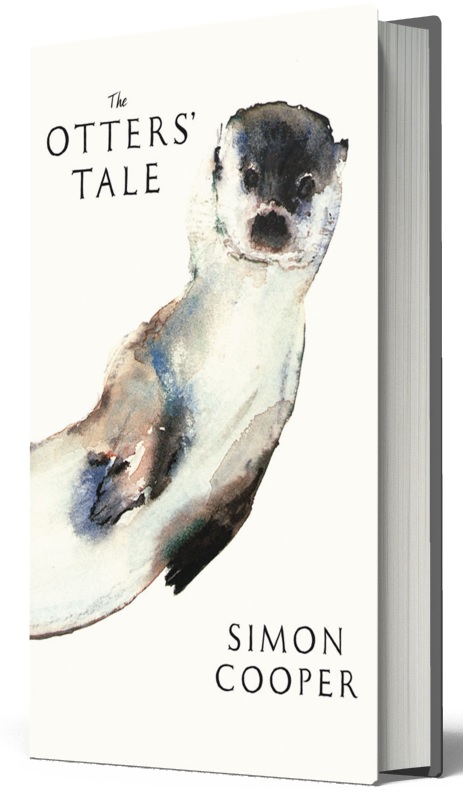
Otters' Tale I ended up doing a fair amount of research into mink. They do, after all, share the same life space as otters albeit as blow-ins to our isles dating back to a period between the First and Second World Wars when they arrived to populate fur farms.

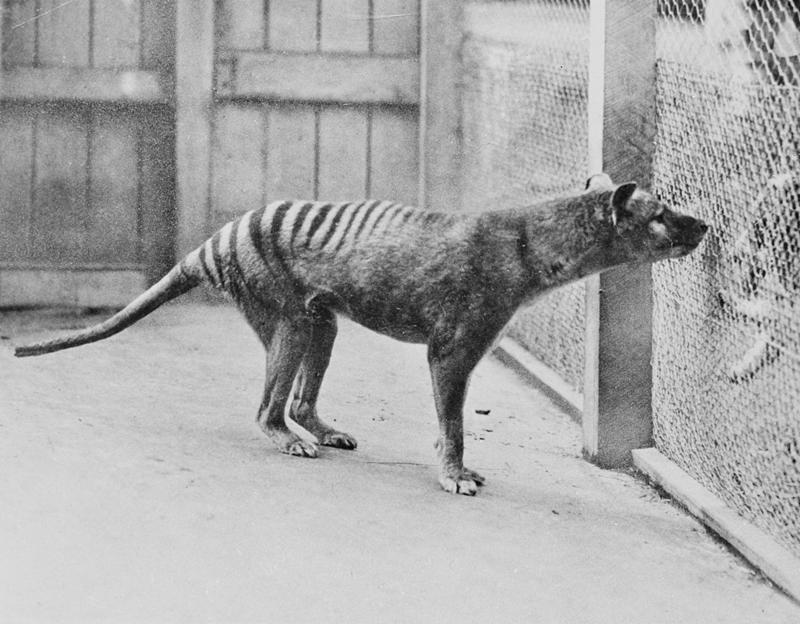
Tasmanian tiger
Mink have a reputation for being vicious. I not sure how entirely true this is - I'd rather go head-to-head with a mink than an otter any day of the week. But that aside they are curious and resourceful guys; there was truly never any chance of them remaining within the confines of the farms. Wild populations were soon established and like any good interloper they found their niche in the natural hierarchy. As luck would have it, at least for them, the otter population was in decline so they filled the vacuum. At the time some blamed mink for the disappearance of the otter but as we now know this was caused by organophosphates.

There was a small hope that when fur farming was finally abolished in the UK in the 2000's that mink, without recruitment from farm escapees, would go into terminal decline. However, after over half a century they were firmly established across most of the mainland. Like otters mink have few predators but they seem to be smarter when it comes to roads; traffic is the biggest single killer of otters but I truly don't ever recall seeing roadkill mink. In fact the only threat to mink are otters; when otters move in mink move out. The resurgence of the otters has made life a bit tougher for mink but they remain a pest, efficient predators of water voles, fish, water fowl and just about anything else that moves and makes for a tasty snack. In return they add very little to the natural order of life by the river. They are takers not givers. With all that in mind a proposal has surfaced for the total eradication of mink in the British Isles.

This is, make no mistake, impressively ambitious. The only comparable exercise I can find is the eradication of the Thylacine or the Tasmanian tiger from that island in the late 1800's. The province of Alberta, Canada had managed to eradicate the brown rat with a programme that has run since the 1950's and various islands in New Zealand, the Galapagos, Alaska and Scotland have been similarly (or almost) successful. The Russian and Chinese have attempted to eliminate tigers but simply succeeded in reducing numbers which is much the same story as for the northern European efforts against wolves.

I have to congratulate the group behind MinkFreeGB; they have the idea but they also seem genuinely interested in exploring the pros and cons before firing the starting gun. They pose four very valid questions: Is it feasible? Is it affordable? Is it justifiable? Is it socially acceptable?

The answers to the first two questions sort of run together. One of the great issues with mink eradication is that it is time consuming and labour intensive. Mink traps are 'live', that is to say you bait the trap and capture the mink alive, so the traps must be checked daily. However, there are now smart traps that alert you by text when triggered. Likewise the emergence of eDNA testing quickly tells you if you have mink in your neighbourhood, water analysis revealing their presence anything up to 21 days later. If this sounds all a bit CSI it is simpler than you might suppose. PondNet distributed thousands of kits to volunteers in 2015 for a nationwide survey into the Great Crested Newt. This sort of rigour is required because it is easy to capture the first 95% of the mink in any given area. It is that last 5% that takes the time and effort. There is no doubt that any eradication programme will be expensive, but technology might make it both feasible and affordable.

Mink capturing a fish
My gut feeling that the weakest part of the MinkFreeGB argument revolves around the justifiable question, what harm do mink really do? Yes, they do kill things, water voles in particular, but they are not solely responsible for the precipitous decline in the water vole population since the 1980's; habitat loss, urban sprawl and pollution are important factors. Would removing mink see a nationwide recovery of Ratty? This needs to be proved beyond question, as do any of the other negatives attributed to mink in relation to native wildlife.

Finally, would a mink cull be socially acceptable? It is easy to assume yes, but with the continuing furore surrounding badgers nothing is certain. In my view I'm pretty sure the theory of common good will win out with most who consider this issue - a few should die for many to survive. However, there are plenty of animal absolutists who take a very different view: all animals have a right to life regardless of the harm they may or may not do. It is going to take some deft PR.

Maybe we'll have to take a leaf out of the RSPB playbook who have won the case for eradicating mice from Gough Island, one of the most isolated places on the planet out in the South Atlantic 1,750 miles from the nearest mainland, a breeding colony for many rare seabirds including the Tristan albatross. Here the non-native mice predate on the chick populations, eating through the body wall near the rump of the bird while they are still alive. It can take up to four days for the chicks to die. The time delay video makes for unpleasant viewing as a 30 gram mouse slowly eats to death a 1 kilogram albatross.

If you would like to register your view on mink eradication use this link to complete the short survey or email minkfreegb@gmail.com


Not so good old Yellow Pages

Last week Yellow Pages celebrated, if that is the correct word, the final distribution of their directory to homes in Brighton. After 53 years it is all over.

Naturally enough this was reason enough to resurrect the J.R. Hartley television advert that ran in in 1983. I groaned. It was a phenomenally successful campaign, an ad that is regularly featured in the top ten adverts of all time. In the unlikely event that you haven't seen it the pitch goes something like this; an elderly man spends a fruitless day visiting bookshops seeking a copy of Fly Fishing by J. R. Hartley. Back at home he slumps exhausted in his armchair where his daughter presents him with a phone and a copy of Yellow Pages. Soon he has located a copy of the book and when asked for his name so it may be kept for him he replies, "My name? Oh, yes, it's J. R. Hartley."

Such was the impact of the advert many assumed the fictional J.R. Hartley really existed and the actor Norman Lumsden became something of a fishing celebrity despite having never held a rod. However, that was not the end of it. In 1991 author Michael Russell wrote and published Fly Fishing: Memories of Angling Days under the pen-name of J.R. Hartley. It was a best seller, racking up sales of 187,000 that Christmas alone. There was then a sequel which did equally well and just to round off Hartley's sporting credentials Golfing by J. Hartley was published. Such was the power of this unlikely brand that when Lumsden died in 2001 at 95 years of age Yellow Pages ran the advert again.

J.R. Hartley - Classic Yellow Pages advert
Why did I groan? Well, to update Henry II's beseeching cry "Will no one rid me of this turbulent advert!" It is fun. And it is an immaculately crafted 52 seconds of film work. But the elderly, tweed clad Hartley did little to update the image of fly fishing. In fact, as does much of the best marketing, it drew on stereotypes to make a point and reinforced the mistaken perception of our sport. Hopefully now we can lay both the image and the advert to rest for ever.

If you really must watch it again here is the link.


Coarse season consultation

If you are not overwhelmed by the number of consultations coming your way here is the official link for the Environment Agency survey which I wrote about in the previous Newsletter.

I would not embark on the survey without a strong glass of something at your side; it is a survey compiled by bureaucrats with academics in mind. It is full of what I believe lawyers call leading questions. But such is the way of a world where we have to jump through the hoops of others in the hope that our voices will be heard.


The Quiz

More questions to hopefully entertain and enlighten. Two bonus questions this week! As ever it is just for fun with the answers at the bottom of the Newsletter.

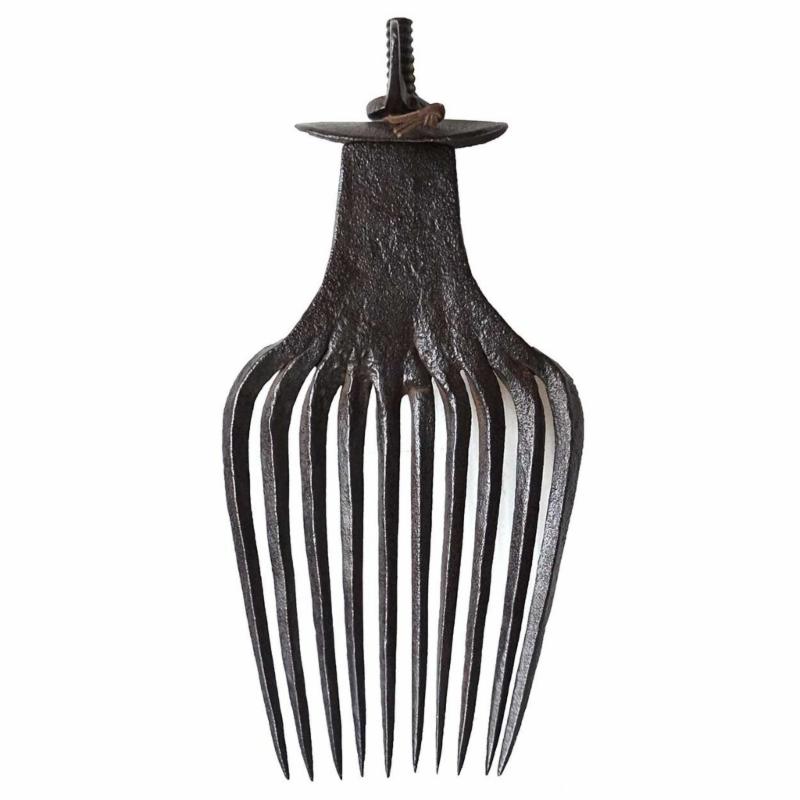
  1. What is the name and purpose of the implement pictured?
  2. How many mink are required to make a full length coat?
  3. Who wrote The Rime of the Ancient Mariner?
  4. In golf how many under par for a single hole is an albatross?
  5. And a condor?

Have a good weekend.

Best wishes,
Simon Signature 
Founder & Managing Director


Answers:

  1. A cleave which is used for capturing eels.
  2. Around 60
  3. Samuel Taylor Coleridge
  4. 3 shots
  5. 4 shots. The last recorded condor was in 2007 over a 510 yard par 5 in Australia.


Friday, 18 January 2019

More or less protection for grayling?


More or less protection for grayling?


The Environment Agency (EA) have just launched a consultation on the current coarse fish close season that runs 15 March to 15 June. In essence the options suggested are: retaining the current statutory close season, retaining a close season but starting on 15 April and ending on 30 June or removing it altogether. This applies only to rivers; enclosed stillwaters and canals do not have close seasons.

I must admit I had always assumed the close season was something of a modern construct but in fact it dates back all the way to 1878 when the MP for Sheffield Anthony Mundella championed the legislation. It seems match angling was a big pastime with club competitions major events. However, this was long before the advent of keep nets so all fish were killed for the weigh-in and in the absence of a close season many spawning fish perished.

The original draft bill proposed a close season from 1 March to 31 May but this was hotly contested by the angling clubs in the North, the London Anglers Association and the Piscatorial Society. In the absence of a consensus a compromise was reached; 15 March - 15 June passed into law and it has remained as such for 140 years. The only significant change was the deregulation of stillwaters in 1995 and canals in 2000.

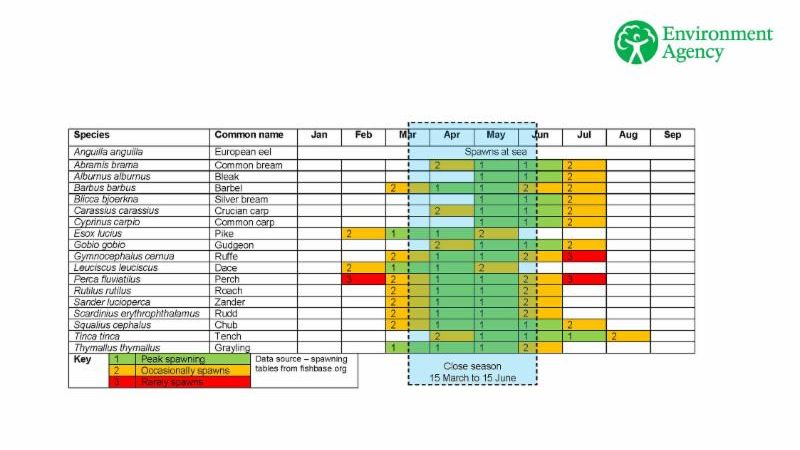
I have to also admit I was largely ignorant until today of the detail of the various coarse fish spawning period; stupidly I assumed that they were all of a piece but the chart from the Environment Agency is enlightening. Firstly, I think it shows the amazing knowledge of our Victorian forbears; in an age before the science we have today they really nailed it for a majority of the species. That said it is interesting to note that across all coarse fish the spawning season runs for seven months with some very distinct differences in behaviour.


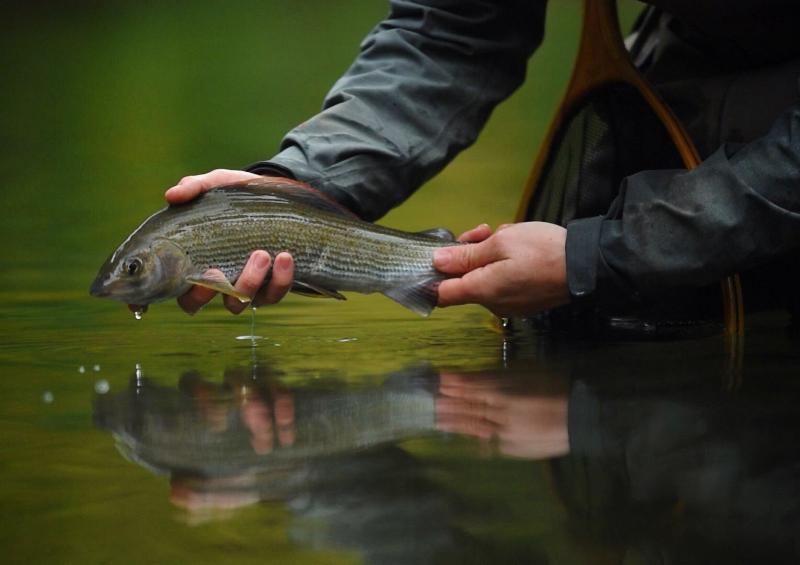
On the basis of the grayling data which shows their peak spawning period being March to May I will be changing our self-imposed closed season. Currently on some of our rivers we grayling fish right through to 14/March; in future this will be taken back to 28/February. The earlier closures will remain unchanged.

As to the wider consultation I do rather find myself scratching my head at the second proposition with a revised close season of 15/April - 30/June. This removes protection for ten species during the first half of April, a peak spawning month and is doubly hard on pike, dace and grayling who will lose a full month of protection. Personally I would think 1/April makes more sense with some separate 1/March provision for dace, grayling and pike. As for removing the close season altogether I find the suggestion both repugnant and unconscionable in an age when we are trying to conserve wild species.

Image courtesy of Chalkstream Fly
But my opinions are simply that: opinions. What we need is some hard science. In 2004 when this issue was last discussed at an official level the EA looked into commissioning research to fill the knowledge gaps, but it didn't happen as the cost of £200,000+ was considered prohibitive. I have no idea how we might go about paying or conducting such research but before changing anything it needs to be done. We've got along fine for 140 years; another two or three years to get it right is worth the wait.

If you'd like to have your say the EA press release says: Consultation has started on the future of the close season for coarse fish on rivers. To find out more click here. Next week we'll invite over 500,000 anglers to respond to the consultation when we send our January e-newsletter to online buyers.

Editor Note: The EA actually started the consultation process in May/June 2018 inviting 20,000 randomly selected anglers from across England to provide their views on the coarse fish close season. Of the 5,147 anglers that took part, 2,553 (49.6%) would like to see a change, with 2,190 (42.5%) wanting to keep the close season as it is. Only 404 (7.9%) are undecided. Of those opting for change, 1,695 (32.9%) are in favour of abolishing the close season altogether and 858 (16.7%) prefer a change to the current close season start and end dates.


100% Price Promise

The internet has changed if not everything then most things; my business is no different. I started Fishing Breaks in the world before the worldwide web when the main source of clients were adverts in 
Trout & Salmon and meticulously crafted mailshots to micro-targeted mailing lists. Goodness it was hard.

Pricing the fishing you sold was something of a dark art. Some agents charged a percentage as a booking fee. Others received commission from the owner. But most, relying on the ignorance of the clients, simply marked up the rates as much as they thought the market would stand. It led to many a fraught post-fishing conversation when two rods - one booked through an agent and the other direct through the owner - compared notes. If you thought Ryanair's Michael O'Leary was unpopular .......

Today the transparency and ubiquity of the internet lays all prices out there for all to see; a few clicks of a mouse will show you the best i.e. lowest price. I understand that. I do it every day as a consumer myself. My business should be no different. And it isn't.

At Fishing Breaks I give you my 100% Price Promise. You will not be able to buy our fishing cheaper anywhere else. There are no booking fees. No credit card charges. The prices you see on the web site are those we have agreed with the owner. If they sell direct to the public our prices will be precisely the same.

If you see or hear any different let me know. I am determined to offer not only the best service but the best price. Always.


New for 2019 - Coombe Mill

It is always exciting to have a new beat. Most years I manage to entice one or two into the Fishing Breaks fold so for 2019 I am delighted to welcome Coombe Mill.

For those of you who know our current beats on the River Avon, namely Avon Springs and Upavon Farm, Coombe Mill is pretty well equidistant between the two so upstream of Avon Springs with the Services Dry Fly Fishing Association largely occupying the six miles of water in between. In fact where Coombe Mill starts the Army water ends; it is proper Frank Sawyer territory.

We sent our Guide Bob Preston, something of a grayling addict, to do a post trout season recce. I hesitate to tell you this but Bob lost count at fifty, though with due modesty he says they were mostly small. But regardless this gives you an indication of how prolific this section of the Avon, an all wild fishery, can be.

The season opens April 15 (£125/Rod) with the prime Mayfly May 15 - June 15 (£145/Rod) though many of you will know that the Avon has regular Danica hatches all through the summer. Coombe Mill is for one or two Rods, with a resident keeper and all the facilities including a rather quaint Shepherds Hut that doubles as the fishing cabin. More details here .....


The Otters' Tale talk 

It is always good to be invited back. In November I hosted a 
Life of a Chalkstream lunch and talk at the Sir Harold Hillier Jermyns House just outside Romsey, Hampshire. 

It was a full house and a lovely crowd with the most fun bit for me always the Q&A session at the end. In fact it went on so long (I think it was interesting ....) that the chef appeared to complain that our lunch was getting cold!

I'm delighted to be going back for The Otters' Tale. The talk takes place at 11.30am on Thursday February 28th. For tickets and information contact the event organiser Terry Lewis terry.lewis@hants.gov.uk 01794 369319


The Quiz

A New Year of questions to hopefully entertain and enlighten. As ever it is just for fun with the answers at the bottom of the Newsletter.


1)     Which Conference opened on this day in 1919?

2)     What is a tepal?

3)     What is the origin of the term 'coarse' in relation to fish?

All the best for 2019.

Best wishes,
Simon Signature 
Founder & Managing Director


Answers:

1)     The Paris Peace Conference that resulted in the Treaty of Versailles.
2)     A tepal is one of the outer parts of a flower. The snowdrop has six; outer and inner rings of three.
3)     In the Middle Ages when bream and their like were commonly eaten the flesh was often described in the literature of the time as 'coarse'.

Friday, 14 December 2018

Third book blues


Third book blues


At a recent Otters' Tale book talk a member of the audience asked whether I had found writing it, my second book, difficult. Apparently second books are the most hard. Being the smartarse I am I replied that I'll tell you when I have written the third.

Now I've I just completed my third book (typed THE END on Monday) I slightly rue my glib reply for the answer is emphatically no - it is the third that is the hardest.

The new book is a million miles away from the first two. It is the story of the horse Frankel who raced 2010-12 and is generally regarded as the greatest racehorse who has ever lived. How come, you might wonder, did this book come about? Not much to do with rivers or nature .....

After the success of the first two the publishers Harper Collins were very kind. You may write any book you like as long as it is a) non-fiction b) something you know something about. Well, in a previous life and for the first decade of my working life I was a bookie. Aside from fishing horse racing was the thing that had always fascinated me the most. I even did a stint in a racing stable, too big to be a jockey but fit enough to wield a pitch fork.

I am still not sure where the Frankel notion came from but it chimed with Harper Collins who had published the million-selling Sea Biscuit book back in 2002 which in turn became a film. So, since April I have walked all the places Frankel ever ran. Visited all the places he ever lived. Met most of the people who did, or have, a significant place in his life. He is alive and well living in considerable luxury in Suffolk servicing 180 mares a year at £175,000 a time. Yes, do the maths*.

I must admit it has in some respects been hard book to write based on fact but also on memories ten years past with some of the main characters no longer with us. I've been through definite stages during the writing: excitement to start with. Hating it for a while. But as it came to an end rather wishing it would not.

It is all done now bar some fiddling about so I can come out from my self-imposed mental exile. Horse (working title) is out in June in time for Royal Ascot but for now it is back to that monthly column for Trout & Salmon. Welcome back fish.


*£31.5 million pa


When a joke comes true

Many of you will remember our grizzled Scottish fishing guide Duncan Weston who died a couple of years ago.

Despite living 'down south' for most of his adult life Duncan never lost his thick Glaswegian accent; plenty of us only understood one word in three of what he said. But Duncan was a great one for telling jokes which were worth the mental translation. His favourite went like this:

A ghillie and his fisherman are sitting on a rock concluding a week of salmon fishing. The angler is bemoaning his lack of success and the cost of the trip.

"If you take into account my flight, my hotel, my fishing and your wages," he says to the ghillie, "that single salmon we caught cost over £5,000". The ghillie ponders this thought for a moment and then replies, "Aye, well it is probably a good thing that you didna' catch two!"

An article in The Sunday Times this past weekend reminded me of Duncan's joke. It was headlined: Spey salmon tip the scales at £60,000 each. The article reads:

"Scottish fly-fishing, the so-called pastime of princes, has produced the world's most expensive fish - salmon costing £60,000 each. The fish were among 500,000 released from an artificial hatchery to restock the Spey, one of Scotland's finest salmon rivers and famous in angling circles.

But a study using genetic fingerprinting techniques, which was conducted by the Spey Fishery Board, showed that out of more than 800 salmon caught, only two came from the £120,000 hatchery. Despite objections from conservationists, however, the Spey board has now announced its intention to double the hatchery output this year to 1m salmon eggs."

On the basis of a single article it is maybe dangerous to jump to a conclusions as to the rights and wrongs of the Spey stocking programme but a Finnish study that was published the same week seems to suggest that it doesn't make much sense.

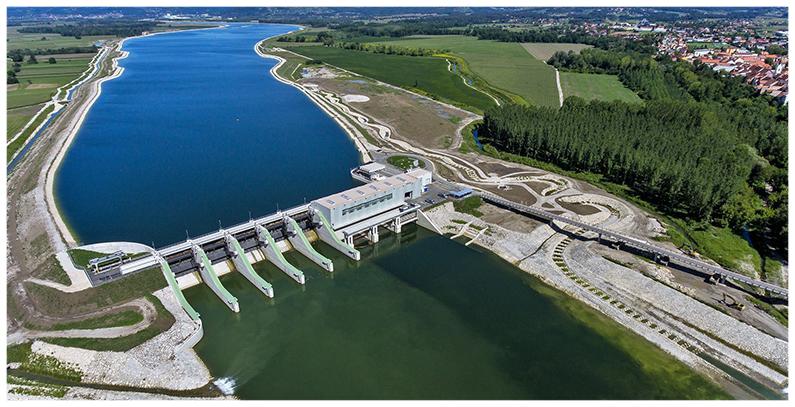
In the years immediately after the Second World War Finland committed itself to hydropower but with an eye to the difficulties that might cause to migratory fish the legislation provided for fish passes. However these were not effective so fish were reared to compensate for falling numbers.

The study by the University of Eastern Finland has found that the fish stocking practice is failing to meet the latest legal and scientific requirements. Before the dams there were 25 rivers used by mating salmon and another 72 that were home to anadromous brown (sea) trout. Today there are just four productive salmon rivers and only a small population of wild migratory brown trout, migratory whitefish and grayling have survived. Professor Anssi Vainikka who led the study says:

"New genetic studies have shown that fish farming alters the genetic traits of farmed fish. As fish adapt to the farm environment, their genetic traits change and they no longer survive in the wild as well as they used to."

The study has concluded that fish stocking does not have the potential to permanently replace the natural reproductive cycles of migratory fish and that the dams are also impacting on the non-migratory populations who are unable to move to freely to different parts of their native river system or to entirely new rivers.

In our little niche of the chalkstreams, where there is a concerted effort to remove obstructions along with a salmon parr introduction programme, I'd think I'd echo all that


Rivers Walks

The BBC are running a new series called River Walks that airs at 7.30pm on Monday evenings. It seems to have been made regionally as here down in the south we started with the River Itchen whilst in the north-east it was the River Tees.

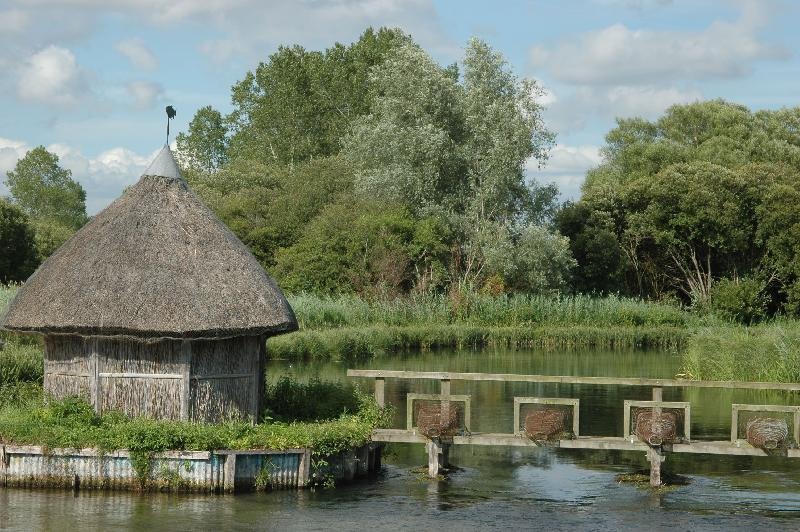
Leckford Eel Traps
Leckford Eel Traps
It is definitely worth a watch if sometimes a little cack-handed. I stared in amazement as during the River Dove programme they cut to some stock shots of ...... wait for it ...... mackerel.

However, the guy from the National Trust explained very clearly and persuasively why they are removing the eighty or so stone weirs from the Dove that date back many centuries. Not sure what they will do when beavers appear.

Which all links very nicely to my own river walk when I'll be hosting a small group to visit some of the iconic chalkstream venues, see traditional weed cutting in action, examine what is left of the historic water meadows and take a look into the secret life of a chalkstream.

We'll meet for my Life of a Chalkstream talk over morning coffee before heading off for a trip around my favourite parts of the River Test. It will be at the height of June when the valley looks at its most glorious and we'll end up in a good pub near the river for a late lunch. For more details and to book click here.

But back to the BBC River Walks; of the eleven shows three are on chalkstreams: Deben, Itchen and Stour. The remainder are the Dart, Dove, Exe, Hodder, Lea, Nidd, Severn and Tees. Watch it on BBC iPlayer  


Have your say

The Environment Agency are currently conducting their occasional National Angling Survey so now is the time to have your say.

You may have to pay .....
It is quite the survey so I'd recommend setting aside 15 minutes and a strong cup of tea.

Judging by the questions and the leading answers you are invited to tick I am fairly sure where they are going on this one: it's an effort to prove that angling is good for mental health and wellbeing. There is also a rather curious question as to how physically demanding your fishing excursions might be!

However there is bit of a hidden agenda: once again the government are trying to encourage support for a fishing licence for sea angling. Last time they tried this it was shot down in flames by a vigorous press and social media campaign. If you want to say no there is opportunity enough within the survey.

Here is the link if you wish to participate. 


The Quiz

A few Christmas themed questions to close out the year and seasonal joke to share. 

Why are the sales of advent calendars on the slide? Because their days are numbered. As Basil Brush would say, boom boom!

As ever three questions to test your brilliance. Answers at the bottom of the page.

1)  When did it last snow in the UK on Christmas Day?

2)  When, and by whom, were Christmas Crackers invented?

3) Who sung and when was the first public performance of the song White Christmas written by Irving Berlin?


As this will be the last full Newsletter of the year (2018 in photos next time) to you all, thank you for all your support and have a truly wonderful holiday break.


Happy Christmas!
Simon Signature 
Founder & Managing Director


1)  2010
2)  By confectioner Tom Smith in London in 1847 as promotional packaging for his bonbon sweets.
3)  Bing Crosby on the radio on Christmas Day 1941.