Saturday, 22 November 2025

The reason why your windscreen has no dead insects


Greetings!


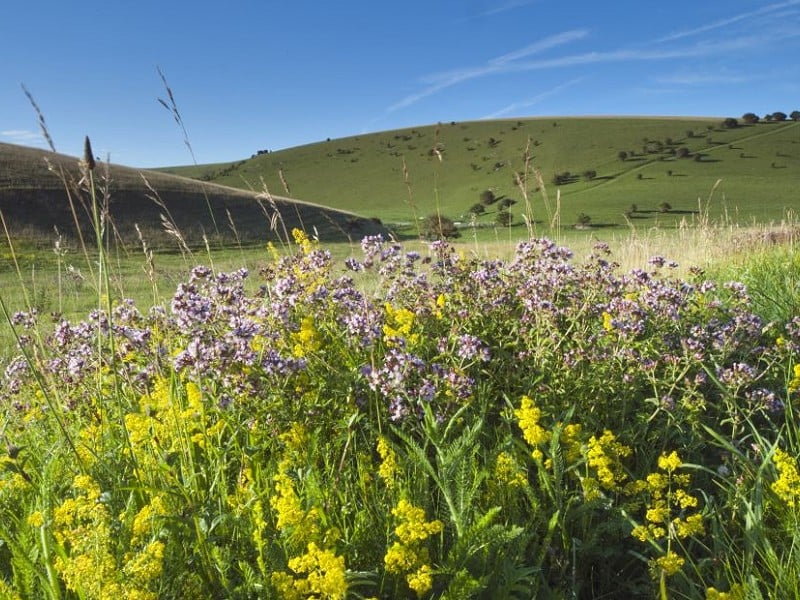
I think we all ask from time to time the question, where have all the insects gone. Clouds of moths gathering around a light at night. Flocks of butterflies festooning the springy turf on a downland walk. That anglers favourite, the blue winged olive, the reliable companion to a day on the river. Today all are absent or around in much reduced numbers. The empirical manifestation of this decline is the lack of corpses spattered on a car windscreen and headlights after any drive in the country.


Modern pesticides (there is a clue in the name) which are slavered over farmland, plus the increasing use of flea treatments for pets and all manners of household chemicals play a part but a survey just published that charts the disappearance of meadows from the British landscape adds another twist to this sorry tale of rural destruction.


A grim outlook


Thanks to the digitisation of maps from the 1960’s which have been layered on to current maps and maps from the 1930’s by the UK Centre of Ecology and Hydrology we can now put numbers to what has happened to our grasslands, wetlands, heathlands and other habitats, along with urban development and farming over the past 90 years. With the exception of woodlands it does not make for happy reading.


Grasslands have shrunk by 29%. Semi-natural habitats including heathland and wetland by 42%. Urban areas that went from 13% in 1930 to just 14% in 1960 then jumped to 20% in 2020. Counterintuitively, in the same period, the woodland area has doubled from 6% to 12%. The one flaw in the digitised map data is that it is unable to differentiate agricultural grassland from wildflower-rich meadowland; other surveys suggest we have lost as much as 97% of wild meadows in this period.


Overall the period of greatest decline was from the 1930’s to the 1960’s which is something I know to be true of our part of Hampshire. I am sure plenty of you are familiar with the Roman road that connects the A303/A34 turnoff with Stockbridge. Today the fields that line the 5 mile route are a bellwether of modern agriculture with rape, wheat, barley, poppies, sunflowers or flax appearing in different years according to the changing demand. But wind the clock back to a point in time within the 90 years of the survey and you would have seen not crops but thousands of acres of grass chalk downland flecked with scrubby hawthorn bushes, lightly grazed by sheep but otherwise left to its own devices.


So, to come back to the question: if the rate of habitat decline has been slowing why have insect populations have fallen so precipitously this century. My guess is that some while ago we passed a tipping point. At first as the wildlife lost its native habitat it moved to other places but animals insects and birds have become marginalised from even these substitute homes as farming has become more efficient, urban spawl taken its toll and pollution rendered uninhabitable swathes of the countryside and thousands of miles of river. In the end our insects are dying out because they are running out of places to live.


Talking up a storm


Did you know it rained in winter? And I also heard a rumour that summer can be hot. Now, of course, to you and me that is no news but for the 24 hour news cycle, the Met Office and every retired weather forecaster in search of continued media exposure this is breaking news.


I despair when we are deluged with stories of upcoming weather ‘events’ or named storms which are essentially nothing more than the weft and weave of the British climate. From a purely selfish point of view it creates havoc for us in the office as the phones light up and the Inbox fills up. Eight times out of ten the predictions are woefully wide of the mark, with us all marched up the metrological hill Duke of York (not that one …) style.


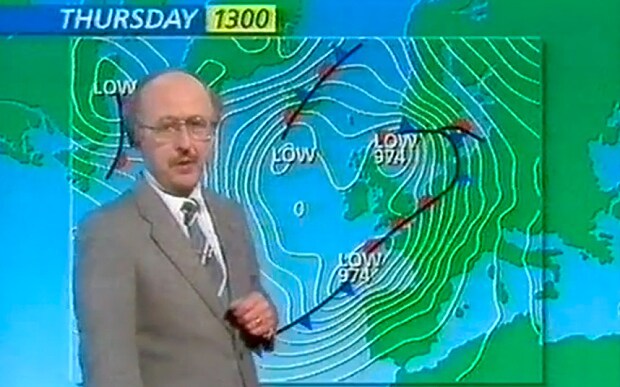
Michael Fish a few hours before the Great Storm of 1987


In the bloodstock industry there is a saying ‘Breed from the best and hope for the best.’ I suspect in the weather industry there is a saying that goes something along the lines of ‘Talk up the storm and ignore the norm.’ The outcome of these headline filling forecasts is rarely as bad as predicted which I guess is a safety first approach borne out of the infamous Michael Fish it-is-a-storm-but-not-much-of-one forecasting error of the 1980’s.


You can see the forecasting, protect my back thought process: well, if we say it is going to be really bad and it is bad, kudos to us. And anyway, if it is not as bad as we say it was going to be how is that going to hurt anyone? Better safe than sorry! At this point high street retailers, anyone in the hospitality business and chalkstream letting agents run screaming for the hills whilst every government agency talking head dons a hi-vis jacket and hard hat to sharp elbow their way into the narrative.


Weather forecasters have a proper scientific title; they are meteorologists pursuing the branch of science concerned with the processes and phenomena of the atmosphere, especially as a means of forecasting the weather. Their mission is not to drive eyeballs to TV channels or clicks to websites by, quite literally, talking up the storm. It is not exactly what a certain President might call Fake News but modern forecasting definitely veers all too easily towards the hyperbolic


PS You can read here an article I wrote for The Spectator in 2021 on the how ‘freak’ weather events are really nothing of the sort.


Psst! Want to start a pot farm?


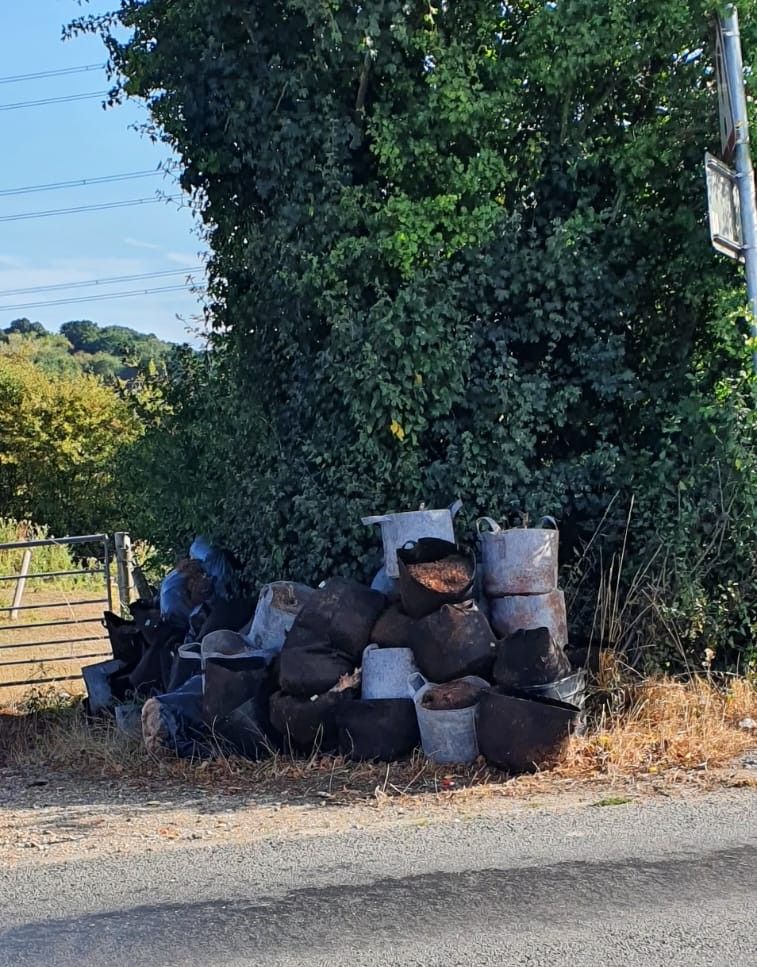
Over the past few years if you wanted to start a cannabis farm, I would surely have been your go to source for all the paraphernalia required. Compost, lighting, pots, shelving, hydroponic equipment – you name it I have had it all, bar the plants themselves (!), courtesy of fly tippers who have, on numerous occasions, chosen the gate entrance to a fishery of ours on the River Itchen as their dumping ground.


I was reminded of this recently for three reasons. Firstly, we were treated to another fly tip, but this time quite boring builder’s rubble and secondly a report by a House of Lords inquiry into the millions of tonnes of waste dumped in the countryside. The Lords report largely focussed on large-scale, organised crime tipping but I can tell you it is a real issue on a smaller, localised level. I can all but guarantee that if I took you out today for a drive around the Test valley, within less than fifteen minutes, we would come across at least one new fly tip. And from my observations these are far from organised but rather the dumping of unwanted household rubbish, sofas, mattresses and garden waste being particular favourites of those who cannot be bothered with the local tip, especially it seems at the weekend.


Pots from a pot farm .......


What happens to the rubbish depends on the exact position of the dump but essentially if it is on your land the removal is at your cost. However, I will give kudos to Winchester City Council who administer most of the Itchen valley, as they have an efficient app for the reporting and removal of fly tips, taking a relaxed view when it might be argued whether the rubbish is not on the public highway but on private land.


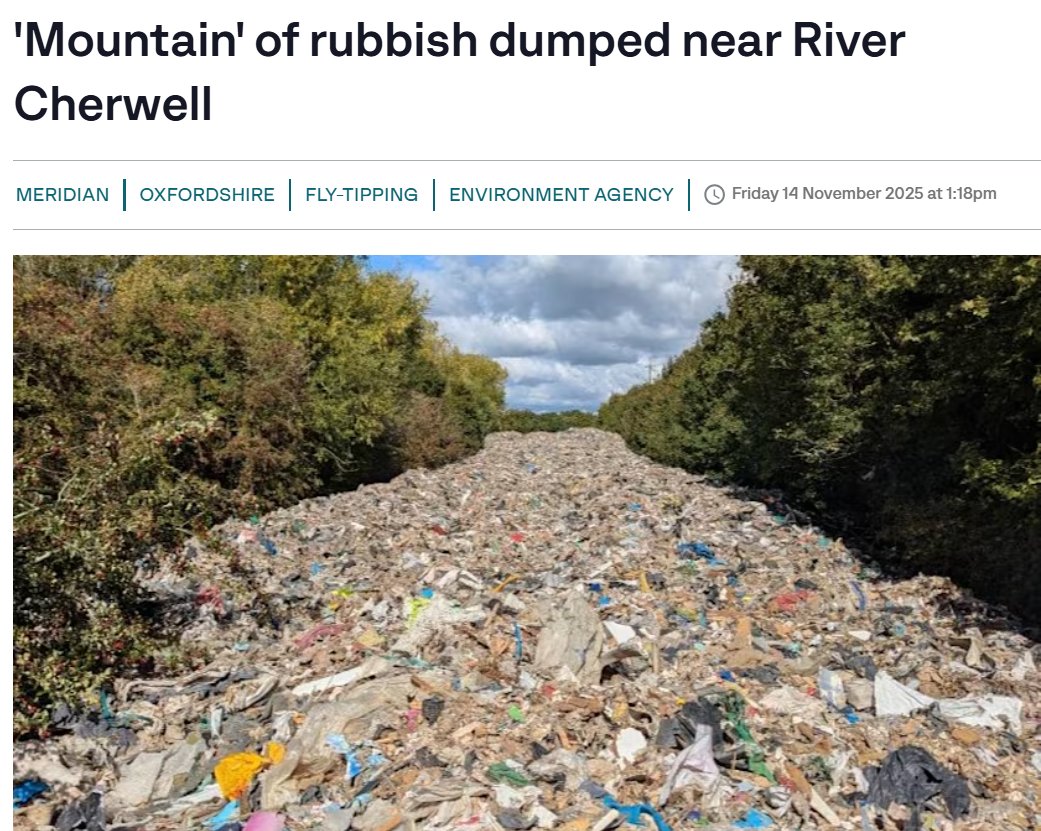
Oh, and the third reason was of course the monumental fly tip by the River Cherwell in Oxfordshire which the press rather primly noted as having ‘been reported by anglers’ as if we were some breed of strange litter vigilantes. Er, it was hundreds of metres long plus 20m wide and 10m deep. Now, guess who is in charge fly tipping regulation? Our old friends, the Environment Agency (EA) who were singled out for criticism in the House of Lords report that was published before news of the Cherwell dump emerged.


The evolution of this story tells you something about the EA. First of all, they responded that the dump had appeared overnight, which seemed a pretty incredible claim at the time considering the scale of it. However, this narrative has been ‘walked back’ the timeline now that it was first reported in May, but the local authority did not carry out a joint visit with the EA until July at which point a cease and desist letter was issued to the landowner but the dump continued to grow as the letter was sent to the wrong person!


Billy Burnell, chairman of a local angling club, monitored the site as it was active and growing bigger, asking the perfectly valid question as to why the EA, having issued the cease and desist notice, a copy of which was pinned to the site gate, were not more proactive in ending the dumping. Just imagine for a moment if the EA gets a report of large groups blatantly fishing without a licence at the same place on a regular basis. Are they going to pop down to pin a sign to the gate? Of course not. A full panoply of bailiffs would be dispatched, replete in stab vests and utility belts much beloved by paramilitary wannabes, ready to march off the miscreants to magistrate’s court followed by a naming and shaming in the local paper.


I truly do not understand the EA. It loves to sweat the small stuff (I could go on for hours about the petty regulation they impose on river management) whilst other much larger, blatant and egregious transgressions from river pollution to fly tipping get lost in a paper jungle.


Rome was not built in a day but this was according to early EA reports


Photo of the Week


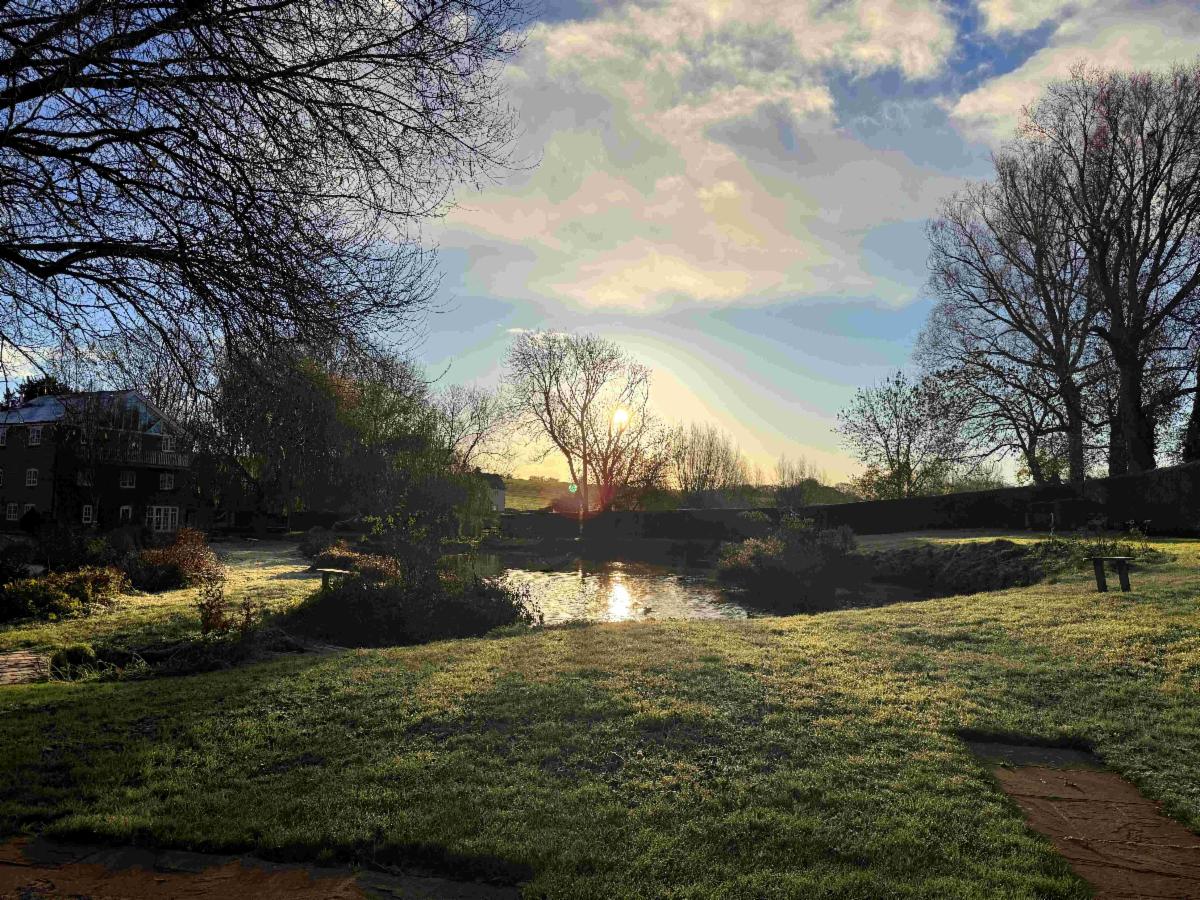
First heavy frost of the year at Nether Wallop Mill


Quiz


The usual random collection of questions this week inspired by the sporting occasions this weekend and the Newsletter topics.


1) In which year was gambling established in Las Vegas? a) 1906 b) 1931 c) 1941


2) In which country, Australia or England, did the Test match of 1882 that gave rose to the subsequent Ashes series, take place? 


3) What is synoptic meteorology?


Answers are below. Good luck!


Have a great weekend of sport.


Best wishes,


Simon Signature


Simon Cooper simon@fishingbreaks.co.uk

Founder & Managing Directorwww.fishingbreaks.co.uk


1) All three are correct depending on whether determined by law, location or format

2) The Oval, England

3) The study of weather over a large area at a common point in time to understand and predict weather patterns

Saturday, 8 November 2025

The death of Irish lakes and rivers


Greetings!


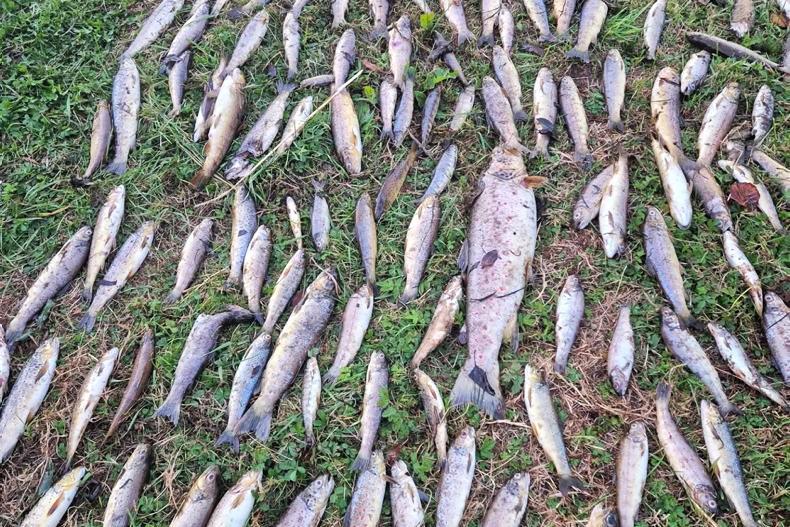
The fish kill of 32,000 salmon and trout along a 25 mile stretch of the River Blackwater in August may have been the largest event ever of its kind in Ireland but really it is just the foaming head on what is the Republic’s toxic river brew.


The headline ‘The death of Irish lakes and rivers’ is not mine; it is taken from the Irish Times on 15/October which reports on the latest six-year review from the Environmental Protection Agency (EPA), the newspaper concluding that the ‘continuing deterioration of rivers, lakes and estuaries risks arriving at a point where they become ecologically dead.’


A few of the victims of the River Blackwater fish kill


The situation is as bad as anything we have in mainland Britain with 70% of estuaries failing to reach satisfactory status, 44% of rivers having too much nitrogen and one third too much phosphorus, with generally 48% of waters rated below minimum standards. Urban wastewater, urban run-off and forestry are all listed as significant polluters, but it is agriculture that the Irish Times turns its editorial guns on. Citing the River Blackwater, with echoes of our own River Wye, the paper talks of the accumulating environmental stresses and persistent EPA-licenced facilities breaching their operating conditions, with little by way of penalty or prosecution.


I feel slightly vindicated by the Irish Times article because when I am on the road doing my Life of a Chalkstream talks I am nearly always asked whether our calamitous situation in the UK is unique. My answer is no, but even when I cite examples, I can tell I lose the room. However, there are three immutable truths about water pollution across the world. The first is that it does not matter who owns the water companies as it is the management that matters and that is nearly always bad. Secondly, agriculture is always a worse polluter than the water companies, but the public ire is rarely directed in the direction of farmers. And thirdly, water regulators always seem to have rings run around them by the very people and institutions they are supposed to regulate.


In case you are wondering as to the cause of the Blackwater kill, I am afraid you will, as with all of Ireland, be kept wondering. Three months on nobody is any the wiser beyond the fact the fish died from some sort of chemical exposure. Where or from whom that came is not known. In fact, and with echoes of the British Rail ‘wrong kind of snow’, the evidence is thought to have washed away.


That was the year that was 2025


How quickly things change. This time last year I was reflecting on one of the wettest seasons in my memory where some rivers ended the year in the condition you might more normally expect them at the start of the year. In fact, if you recall, conditions were so wet plenty of beats opened late, some not at all and some I closed early as the condition of the banks made access all but impossible but for the most intrepid of souls.


Fast forward twelve months and we are ending this year with one of the driest seasons in my memory, where carpet slippers are as much as you need to keep your feet dry. It has been a tough year for the headwaters and small streams, but once you get into the mid-sections of the major chalkstreams they have looked picture perfect, the River Itchen in particular has barely missed a beat.


A summer on the Itchen


Of course, we now start the long march of winter with the hope of copious rains falling on the chalk downs to recharge the aquifers. Currently the data looks something like this with England as a whole, and the chalkstream regions in particular, experiencing four-fifths of average rainfall during the past six months. Bearing in mind that we mostly have thought of this as a drought year, plus those three mind blowing heatwaves of June and July, makes me feel that 80% is a we-got-away-with-it figure.


According to the data crunchers at the Environment Agency it will take just average rainfall over then winter months to get us where we need to be for the start of next season. That instinctively seems to me about right as the groundwater levels, that is the water stored beneath us from past rain, are rated Normal everywhere I checked. By the way in an interesting aside (if you like this sort of thing) a recent study that sampled water entering the chalkstreams to measure pollutants found a way to date the water concluding that some of today’s river water fell as rain 30 years ago. I have to confess that years ago I was told something similar but I thought it something of a chalkstream myth, but apparently not.


All that brings me to wrap up what has been a successful year, one I will look back on and say yes, 2025 was up there in the top quartile of my professional chalkstream life. From a business point of view we have had more clients than ever, the fishing school barely had time to pause for breath and the guides are gibbering wrecks. We had our end of season party last week and the talk was of just chillin’ with a few days of fishing for fun. Go for it, you deserve it.


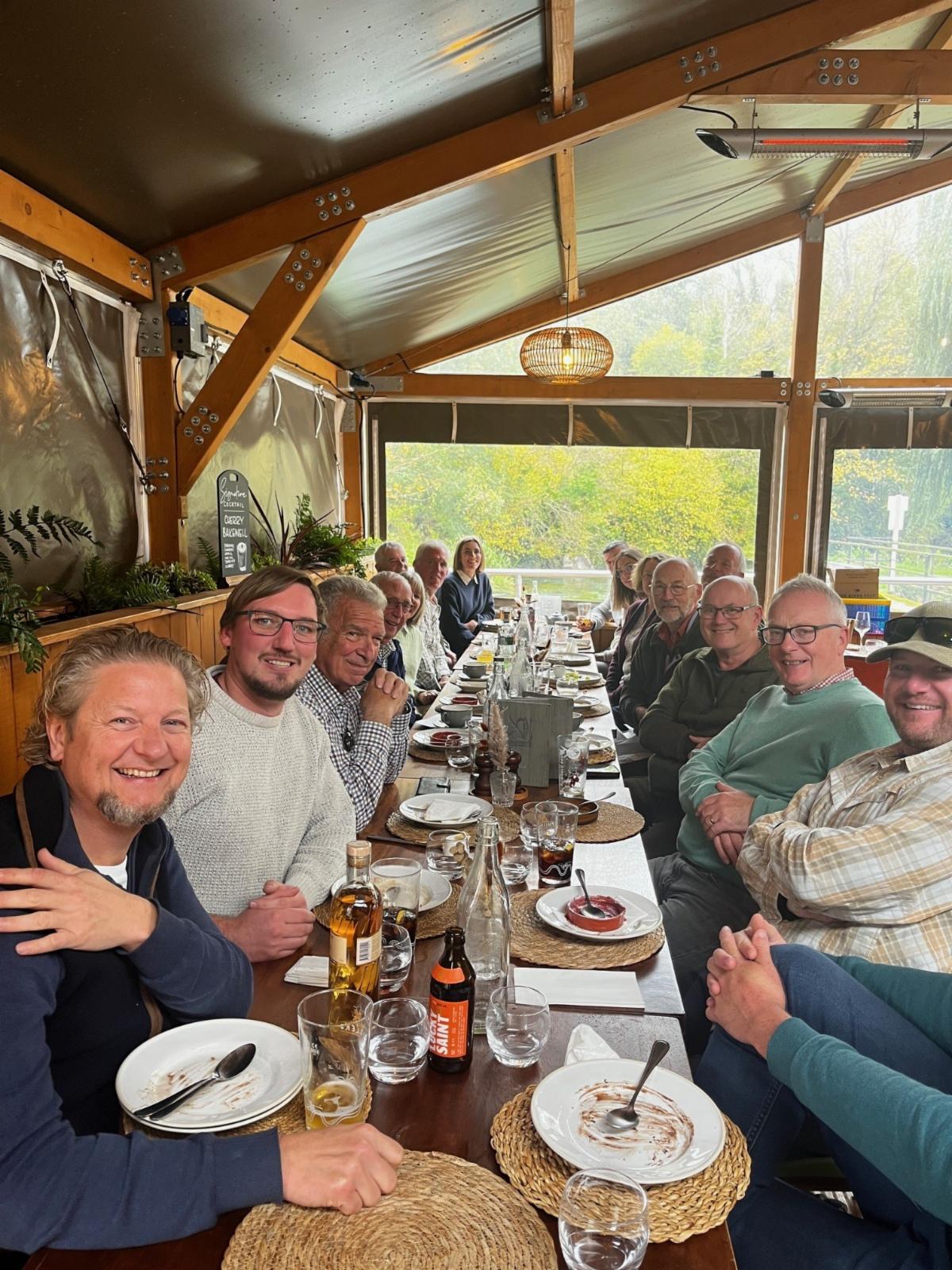
LH side from front: Mark McElroy, Si Fields, Steve Batten, Bob Preston, Richard Leamon, Diane Bassett, Steve Dowling, Chris Sawby & Lucy Waddington. RH side from front: Jamie Pankhurst (legs & arms only!), Keegan Kennedy, Steve Smith, Nick Parker, Malcolm Price, Mark Bedford-Russell, Sarah Lindsay, Livvy Colechin-Jones & Charley Portsmouth.


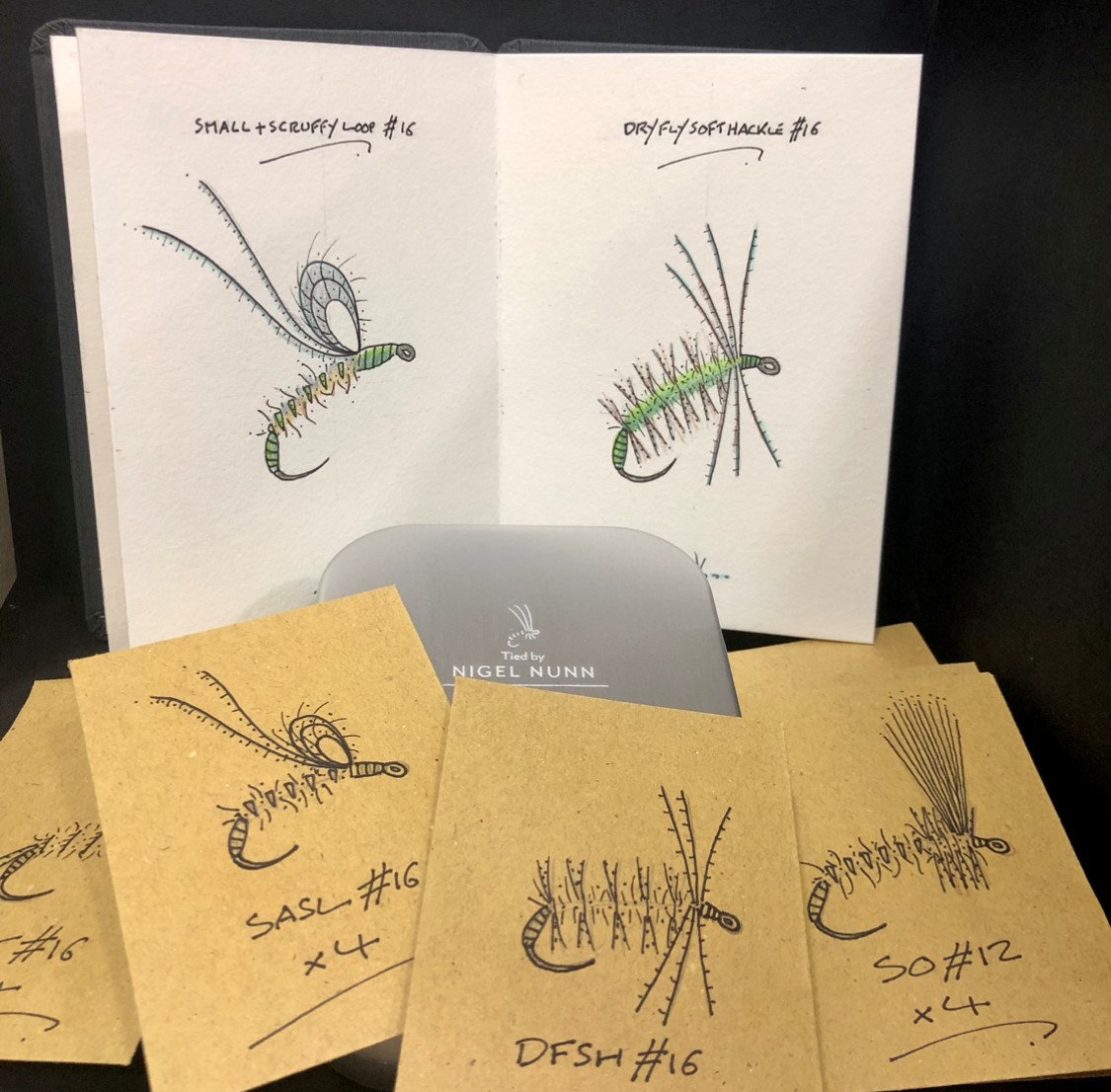
My final duty of the trout season is to announce the winner of the Grand Draw from all the feedback form entries this season, the winner collecting 52 flies (a hot dozen of 13 patterns, 4 of each, enough for a whole season), a hand drawn/illustrated book and one an engraved 4” classic Wheatley boxes from our vice master, Nigel Nunn. Well done, John Hall a regular of many years standing who, on this occasion, fished in July at Qing Ya Xi.


A good trout will always appreciate a well tied fly .....


Dick Cheney: fly fisher and politician


I cannot say I ever met Dick Cheney, but I did once stand beside him in the dinner queue at the One Fly in Jackson Hole, Wyoming his home and the state he represented in Congress on his way to becoming Vice-President under George Bush Jnr.


His passion for fly fishing became something legendary during his time in the White House, the local fishing guides to this day recounting tales of snipers watching over him from high up on the bluffs over the Snake River, Secret Service people in unlikely fishing attire in outriding drift boats, with divers dressed, ready for action. Cheney used to joke that far from being there to prevent some James Bond-style waterborne assassination attempt they were rather there to prevent him drowning. Fishing Wyoming rivers entails taking on Class V whitewater rapids every day, with capsizes frequent. In fact, the One Fly nearly ended the year it started when a guide drowned in exactly these circumstances and I can attend, as judged by the eighteen stiches in my head, as to the ferocity of the water and the unforgiving nature of the rocks.


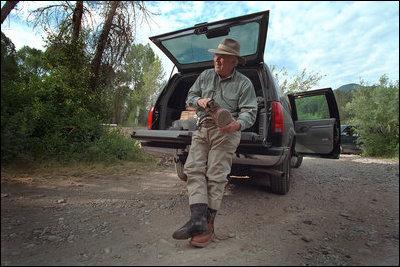
Ready for fishin' not politicin'........


Wyoming loved Cheney and fly fishers loved him more. When he arrived at the One Fly dinner the room would rise as one, cheering and applauding as he made his way to his table. Actually, that is not quite true. My friend would remain seated, arms crossed with a face in a rigid scowl. But then again, he did once run, unsuccessfully, for the House of Representatives as a Democrat.


It is fair to say that Cheney was a polarising figure and with his VEEP popularity rating at 18% low his Washington advisers suggested his love of fly fishing, if more known to the American people, might knock off some rough edges. By all accounts the Vice-President did not really take to the idea; the great outdoors did not come without risk. When first nominated at Secretary of Defense by George Bush Snr. he had to fess-up to three youthful indiscretions. Two were drink driving and the third was fishing out of season, for which he received a fine and, in his words, the annoyance of the rangers ‘confiscating the f*****g fish’. I guess the current Vice-President, with his recent snaffo whilst fishing unlicenced with our then Foreign Secretary, David Lammy was just continuing a long tradition of piscatorial disobedience.


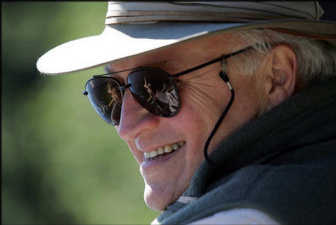
Cheney had also been caught out, aside from the time when he accidentally shot a fellow hunter, in what we would now call a social media pile on when an official photo released of him apparently fly fishing seemed to show naked women reflected in his sunglasses. The truth, a bare arm and some weird reflected optics, was only established when the White House distributed the original hi-res image allowing all to determine he was indeed outdoors and fishing, sans any accompanying dance troupe.


Richard Bruce Cheney, politician and fly fisher, born 30 January 1941; died 3 November 2025. He is survived by Lynne and his daughters.


The sunglasses photo from 2008


Don’t abandon the Chalk Stream recovery pack


This was the UK Parliament petition that 13,081 of you signed earlier this year in response to the abandonment of the Chalk Stream Recovery Pack by the current administration, a report commissioned by the last Conservative government when chaired by Charles Rangeley-Wilson.


If you are not familiar with the Pack, this is how Charles describes it:


“The abandoned but oven-ready recovery pack addressed that protection through a range of commitments including time-bound goals for abstraction and phosphorus reduction bringing all chalk streams to good or high status by certain key dates. It also included undertakings to consider chalk streams irreplaceable habitats in planning law, to consider better practical measures to reduce run-off in improved farming rules for water, to include special consideration for chalk streams in national highways and local road network technical guidance, and in restrictions relating to septic tanks.”


Charles Rangeley-Wilson


You can read here the full Government response to the petition, and why the Pack was abandoned. But in a nutshell the reasoning goes, in what are mostly the Government’s words, that the planned creation a new, powerful, and integrated regulator in place of Ofwat, including a regional element to ensure greater local involvement in water planning allows all sources of pollution to be addressed across the river catchment which makes special measures for chalkstreams obsolete.


If you look at the voting map for the petition signatures you can see where the government is coming from on this with support for chalkstreams overwhelming coming in Tory voting constituencies in regions where there are chalkstreams. Randomly clicking around the UK I did find a parliamentary constituency where just one person had voted for the petition and plenty where it was just a handful. You and I may love chalkstreams, but clearly the Labour ministers do not consider them vote getters.


The truth is I am open minded about the whole Pack debate; not everyone in the chalkstream industry gave it their full support. But on the other hand, I fail to see the logic of the Government argument that all rivers are equal. We offer plenty of special protections such as National Parks, Areas of Outstanding Beauty, Green Belts, SSSIs and so on; the Pack was good because it gave us a case for special pleading. But in the end the real worry is that we are putting all our eggs in the new-style Ofwat basket, plus some touchy-feely stuff about a Plan for Change. It is hard to be hopeful.


Quiz


The usual random collection of questions this week inspired by the date and topics today.


1)     On this day in 1800 what were women in France banned from wearing without a Police permit?


2)     Is the River Blackwater the longest river in Ireland?


3)     Under how many US Presidents did Dick Cheney hold government positions?


Answers are at the bottom of this Newsletter.


Have a good weekend.


Best wishes,


Simon Cooper simon@fishingbreaks.co.uk

Founder & Managing Directorwww.fishingbreaks.co.uk


1)     It was trousers, a law not annulled until 2013

2)     No, the longest is the River Shannon

3)     Three. Gerald Ford as White House Chief of Staff. George H. W. Bush as United States Secretary of Defense. George W. Bush as Vice President of the United States