Tuesday, 13 October 2015

Cut off in it's prime?

Nether Wallop Mill, Stockbridge, Hampshire, UK - Tuesday October 13th 2015


Greetings!

The death was swift. A brief press release from the offices of the CLA (Countryside Landowners Association) consigned the annual Game Fair to history. The biggest event in the rural calendar, at least measured by the number of people that attended, was to be cancelled. No reprieve was offered. Even though dates for the 2016 event at Ragley Hall had been in the diary for two years, it was all over forever. The show, despite being visited by around a 150,000 people, was a loss maker for the CLA and the membership could no longer support the losses.

Heady days. Kate Middleton at the 2004 Game Fair.
There will be many of you out there who will never have visited the Game Fair and plenty more abroad who are not familiar with the concept. In a nutshell take three glorious English summer days at the end of each July. Against the backdrop of a magnificent stately home erect a show ground amidst the oak parkland and alongside the Capability Brown lake. Invite the best of British rural sports, trades and craftsmen to showcase their wares. Throw open the gates to make this a celebration of all things great about the countryside. A place where old friends reconnect and new eyes are opened. What could go wrong? Well, apparently quite a lot. 

I must admit I always thought the Game Fair and the CLA odd bedfellows. The latter, as the name suggests, is an upmarket association. I always rather enjoy its glossy, quarterly magazine but the contents are more suited to Downton Abbey that your local dentist surgery. If it had a problems page (maybe it should ....) the letters would read: "Dear Edgar, My gardener has announced his intention to take his annual two weeks vacation in July. Does he not realise this is grass growing season?" I am probably being a little cruel but you get the general idea.

I don't want to describe the Game Fair of its last few years as downmarket but, in what was clearly an effort for survival, it was chasing an audience that was a very long way from both the magazine and my Utopian vision of what it might be. As an exhibitor and visitor I have been unfulfilled. Certainly financially. As an exhibitor it was a black hole. As a visitor the £35 entrance fee in 2015 was eye-watering. The first ever Game Fair in 1959 was 13p; that is Weimar Republic scale inflation. But setting the money issues aside the show had lost its way. It's USP, unique selling point, that opportunity to offer a glimpse of the magic of country sports, was lost in the melee stands more suited to an urban weekend market. 

Has the Game Fair died in it's prime? Well, probably not. At 56 it was showing its age in a world that has moved on, where I doubt even the term "Game Fair" in itself means anything. It will leave a hole in the summer calendar and plenty will mourn its passing, but maybe in its place will rise something that will inspire future generations as the shows of the 1970's did for me.


Knotweed and other menaces

Ever wondered why the 2012 London Olympics cost us taxpayers so much? Well, I don't exactly know but I bet nobody surveying the Hackey site prior to construction gave the Japanese Knotweed a second glance. They should have done. It took £70m to eradicate before the first concrete slab was poured.

Japanese Knotweed
This I know because I have been re-reading Balsam Bashing and How to tackle other invasive non-native species by Theo Pike who I bumped into at the Wild Trout Awards last week. Though he likes to deflect, Theo is the undoubted authority on all things invasive.  

I know the title of the book is a bit prescriptive but it truly is a good read. I never knew that the Freshwater Shrimp Gammarus pulex, a staple diet of chalkstream trout, was entirely absent from Ireland until misguidedly introduced in the 1950's to Northern Ireland. Now spreading south it is devastating the native population. Our good friend Himalayan Balsam (Britain's tallest annual plant) gets a mention as do rabbits that took me up short. My daughter, a keen spotter of crayfish, was horrified to read Theo's advice "It is illegal to release or allow to escape non-native crayfish ..... crush underfoot."

Anyway it is very good bible to the law of unintended consequences; it should be mandatory reading for anyone keen on introducing beavers, wolves and their like.

Which all leads me in a very roundabout way to congratulate John Wyett who wins the September Feedback Draw winner with a signed copy of Theo's book on its way to you. 

John you, like everyone who has sent in a form this season, goes back in the draw for the fine Hardy Cascapedia reel to be drawn on 31st October. 

Hardy Cascapdedia reel


Jonny's trout

If you ever wondered what a river keeper does at lunchtime, well wonder no more. Jonny Walker, with a deftly placed Daddy Long Legs, plucked this monster trout out of Wallop Brook here at Nether Wallop Mill. Got to be six pounds or more ......


It actually caused a little bit of debate when I posted it on Facebook. Nice stockie said some. Others were not so sure. The truth is Edward leads something of a gilded life in the mill pool. Life is easy. The water is slack and the food plentiful from the bread he steals from the ducks to a multiplicity of small fish that he snacks on for a pastime.

Is he a stockie? Well, he may of been a very, very long time ago but no more than half a pound in weight way back then. Anyway he is back in the river, hopefully relishing his momentary fame.


Mystery fish

We had our end-of-season Guides party last week (yes, we went fishing .....) and Bob Preston bought along a photo of this fish he recently caught. Could we guess what this salmonid was? You can just see the adipose fin, so it is no coarse fish or sea fish but even with that clue we were all bamboozled. 

It was caught on a fly, but not in any traditional method. As Bob describes: "About 15 years ago I finally found out the method that the locals use which is a team of about 6 tiny buzzers with a decent sized lead underneath to get the flies down the 20 metres or so where the fish seem to spend most of their time feeding on plankton."


Maybe you know? Answer at the bottom of the page.


The Invisible World - award winning film

Great work takes dedication; this film is that. The director and film maker Andrew O'Donnell arrived at my home at 9am in July to film
the chalkstreams. 'Come far?' I asked, 'Glasgow' he replied. Yes, they drove down and up in a single day to shoot a few hours of footage. 

Andrew's short film The Invisible World has just won the Salmon & Trout Conservation UK video competition which in the words of the organisers seeks to 'to explore the beauties as well as the threats that face our underwater environment - the invisible world that no-one sees, but which surrounds us all and is so vital to our well-being.' 

Well done Andrew. The £2,000 prize will go some way to paying for the petrol!

View the film on You Tube click on the image or here.

Have a good week.


Best wishes,
Simon Signature 
Founder & Managing Director  


Mystery fish: It is a European whitefish Coregonus lavaretus. We did briefly think it might be a Houting, a fish that is technically extinct, but still caught from time to time in Norway. That said this particular whitefish, caught by Bob in Austria, is pretty rare in itself listed in the vulnerable species category. More about it on Wikipedia.

Thursday, 24 September 2015

Think like an eel

Think like an eel

Here's a problem to solve: up and down the rivers of Britain, and indeed across Europe, thousands of turbines are being installed to generate electricity. In our drive for 'green' energy they seem the ideal solution but aside from the large, big money projects a vast majority are small scale, bringing to life water mills that have lain idle for a century or more. So far, so good. But here's the issue. Turbines are not benign. Those blades rotate at a terrific speed, shredding in the blink of an eye, any living creature unfortunate enough to get sucked in. And sadly that is often eels and eels are one of the great ecological disaster stories of recent years. A population that used to sustain a whole industry on the chalkstreams is in headlong decline, by some estimates collapsing by as much as 90%.

Eels in a netMuch is still unknown about the life of an eel, but in a nutshell the eel starts its life as an egg attached to the sargassum weed of the Sargasso Sea which lies off the east coast of Florida in the Atlantic.  Once hatched the tiny elver hitches a ride on the Gulf Stream that carries it across the ocean for 3.500 miles to the shores of Europe. Seeking out freshwater by smell our international traveller is now 3-4 inches long, heading up a river system in search of a new home. Guided by who knows what the eel hauls himself from the water to find a damp ditch or pond where he will live out the next 10-20 years growing at no more than an inch a year.

Mature and ready to procreate he will use the same sense of smell to find his way back to the river, slivering through the meadow grass in the damp dew of morning. That was the easy bit. Once in the river it is back to the ocean and the return trip to the Sargasso Sea by catching a southern current, but this time the return trip that takes as much as a year. However, this is a one way ticket for the eel for once he re-enters saltwater he stops feeding and will gradually absorb his innards for nourishment, dying once spawning is completed back in the very place of his birth.

During the past decade the number of eels making this amazing round trip has declined dramatically. I've noticed it. Once I would have barely given an eel a second glance, today my sightings are fewer. You don't hear them sucking insects off the reeds at dusk and fish guts that were previously snatched away into the deep by the unseen jaws of ravenous eels now drift downstream unmolested. It is generally thought the collapse in stocks is due to a virus the European eel has caught from the Japanese eel out in the mid- Atlantic. The one or two commercial eel catchers that are left live off slender pickings.

Eel traps: redundant for ever?
So back to that problem - how do you prevent eels entering the turbines? A grille would seem the obvious solution but eels are so slender and lithe that the mesh would have to be so fine as to render the turbine inoperable. With up to third of every eel run being sliced up the scientists at Southampton University, England turned their minds to the problem but cunningly looked for a behavioural solution. The Irish Examiner takes up the story:

"The Southampton scientists wanted to find a way to warn eels of the danger. They began by studying the behaviour of the fish as they travelled down river. A hydro-electric station on the River Stour was taken out of service in the 1970s. It has derelict turbine bays where the team could adjust the flow and velocity of the water passing through them and simulate various conditions eels might encounter approaching a power-station. Forty migrating eels were captured and fitted with acoustic transponders. Eight hydrophones, fitted around the study site, enabled the locations and behaviour of the eels to be monitored. The eels were released upstream of the turbine, five at a time.

Three of the 40 swam upstream and did not enter the study bay. Most of the remaining 37 moved downstream "approaching the intake semi-passively". They followed the main flow but, on encountering a structure ahead of them, made multiple exploratory approaches before passing it. When the rate of water flow increased gradually, the eels continued to move with it, drifting into the turbine shaft. If the water flow began to increase suddenly, however, they avoided the turbine; sudden acceleration warns eels of impending danger.

If engineers can come up with devices to constrict the flow of water and increase it rapidly ahead of a turbine intake, it will be good news for eels. The sudden change in the speed of the water will alert eels to the impending danger. Engineering a slow steady flow towards a fish-pass, on the other hand, should persuade the frightened eels to use that route instead. This won't solve all of the eels' many problems but every little helps."

It is an amazing thought that a solution so simple might work.
.


Game & Wildlife Conservation Trust fisheries report

It is not all light reading but if you get a chance the latest Game & Wildlife Conservation Trust (GWCT) fisheries report is worth delving into.

Poole Harbour electro fishingThere is some good stuff on the Frome salmon work, more on hydropower schemes in relation to salmon smolts, sea trout research, the beaver issue and an update on the long-term grayling study. The report is littered with nuggets of information. For instance I've long known that grayling are an indicator species, perishing or leaving water at the first sign of pollution but I never knew why. Apparently they have a small liver in proportion to their body as compared to trout and salmon so are more sensitive to environmental change.

If you'd like to read the GWCT 2014 report click on this link.


Angling Trust Paul Whitehouse video

Baby blue marlinIn the August Newsletter I posed the question Can you trust the Angling Trust? which sparked some email correspondence with the Trusts' CEO Mark Lloyd.

As ever Mark was congenial and constructive, but he rightly pointed out that the Paul Whitehouse go fishing video is embedded on Matt Hayes' Facebook page where it has been viewed at staggering 185,000 times. If you are a fan of Facebook Matt's is one of the best and most regularly updated of all the fishing sites. 

His photo today of a baby Blue Marlin is typical of the cool stuff he posts. View it here .....


Quiz

 
The usual random selection of questions to confound and amaze. Answers at the bottom of the Newsletter. It is just for fun!


1) What would you make with Arundinaria amabilis?

2) When did Ernest Hemingway, author of Old Man of the Sea, die?

3) What is limnology?

  
Have a good weekend.


Best wishes,
Simon Signature 
Founder & Managing Director  


Quiz answers: 1) A split cane rod 2) 1961  3)  The study of inland waters.

Thursday, 27 August 2015

Can we trust the Trust?

an we trust the Trust? ..... Bob Church 'Memories & Reflections' ..... Video: It takes the eye of a stranger ...... Quiz ..... Plants of the riverbank

Fishing Breaks 25th logo banner

Newsletter
Thursday August 27th 2015
info@fishingbreaks.co.uk
01264 781988
Can we trust the Trust?
 
Dear Simon,
  
I recall talking to Mark Lloyd not long after he took over the Angling Trust which rose into being out from the ashes of the crisis-ridden Anglers Co-operative Association (ACA).  With no money, little organisation and mainly hope to sustain him I don't think many people gave Mark much chance of success. But six years on Mark has confounded his doubters to create what he set out to achieve; an Angling Trust which speaks with a single voice for game, coarse and sea angling.

Mark Lloyd Angling Trust CEOHe has every reason to be proud. I am sure out there in the bigger world beyond angling there is a plum job ripe for him, but for now he may rest on his laurels having landed a £1m a year contract from the Environment Agency  (EA) to increase angling participation, tackle illegal angling and manage a fund to improve angling facilities.
It is a mighty task he has set the Trust and one I suspect will give him as many sleepless nights as he had when the infant Trust lived life from day-to-day. And I'm sure he is being assailed from every side with not only advice but snouts heading for the trough of public money. 

I have no interest in the latter, but this opportunity to change the landscape of fishing for the generation to come deserves some radical thinking.
 
Know your market You will often hear it said angling is the biggest participation sport/pastime in Britain. It isn't and not by a long way. Natural England, the quango tasked with protecting rural England, carries out a quarterly participation survey. Guess where angling ranks in the activity list? 16th. You might not consider some of the things listed as true sports or pastimes e.g. dog walking but twice as many people went horse riding as went fishing and five times as many road cycling (4.5m vs. 26.3m) in the last three months.

We have to come to terms with the fact that angling, however passionate we might be as anglers, is a minority sport. I wrapped my head around this some years ago when the marketing director of a well known fishing tackle retailer slipped me some data that showed there were only 150,000 regular fly fishing participants in the UK. If you are in the fly fishing business I can tell you that is a sobering fact.

However, it is not all gloom - as a nation we love our rivers, lakes and canals. In the same Natural England survey people were asked where they chose to spend their leisure time when visiting 'green spaces'. Beside those same rivers, lakes and canals they said, ranking it 4th in the table with 102m visits in the most recent three months. By the way the top place to go is a park, with just over two and a half times that number. The message is clear; you will get people passionate about rivers for reasons other than angling.
 
Reform the fishing licence Two things scream out for reform - criminal convictions and the abolition of licences for children. Taking the second first I truly cannot think of another sport in Britain were we tax a 12 year old to take part in a healthy, life fulfilling activity. OK maybe it is only £5 for the 12-16 year olds, but a fiver is a fiver and maybe not that easy to squeeze out of Mum or Dad. And once you are sixteen it jumps up to £27, which is a lot of money in a cash-strapped household where that is half a days' pay on minimum wage. The income from child licences is paltry - something like 2% of the total. It should be abolished as of now for anyone under 18.
The acceptable face of angling?
The decriminalisation of the rod licence is a more nuanced argument. Currently if you are caught fishing without a rod licence you risk a criminal conviction and a fine. In the world of carrot and stick this is most definitely the stick approach but you have to ask how effective it is. By all the estimates only one in three anglers bother to buy a licence, with just 2,800 convictions in 2013 from 70,000 checks by wardens. When you add up the huge manpower this took, the cost of court and police time you have to wonder whether we have this one right.  

In much the same way as the debate surrounds the BBC licence a radical solution is required. Let's face it the licence in itself is useless - no more than a simple ruse, backed by the force of law, for raising money by taxing fishermen. I have nothing against cyclists, but when was the last time they paid a cycling tax?

Put that way I think it is hard to win any goodwill for the current system, but as I said it is more nuanced. Every single penny that is raised by the licence (roughly £18m) goes to fishery management though the EA, which is matched in turn by another grant from the government of £12m. It doesn't sound quite so bad now.

I think the trick here is to talk to anglers like adults, decriminalise the licence and put our future efforts into persuasion rather than enforcement.
 
Treat every pound as if it was your own Earlier this year I bumped in an Angling Trust camera crew making a promotional video to promote their new app. It was the full works: script, cameraman, lights, soundman, makeup and director, featuring a well known comedian.

Seemed a great idea I thought. Where was the video to be used I asked; for all the effort a TV campaign seemed the natural choice. Nobody really had any idea. Maybe we'll put it on the web site somebody ventured. 

Well, yes it is currently on the Angling Trust web site and at the current number of viewings (7,000) it has cost £7 for each viewing thus far.

 
The relentless pursuit of purity The Angling Trust is doing a lot; one look at its (rather messy) web site proves this and with the new contract with the EA it will expand further. However, the Trust should never forget its roots in the ACA which was dedicated to protecting rivers from pollution, seeking out wrongdoers and giving a voice where needed.

In an increasingly crowded island, where a growing population demands more use of water, protecting our rivers and lakes will prove harder with each passing year. The relentless pursuit of purity should be forever the reason for the Trust's existence.
 
Can we trust them do this? I think and hope so.


It takes the eye of a stranger
 
Sometimes it takes the eye of a stranger to remind you how beautiful your home patch really is; Tom Moen's short film not only has stunning spey casting footage but some wonderful chalkstream action.

I am fairly certain the chalkstream section was shot on the River Avon at Heale House. A majority of it was clearly filmed in late September but they have, rather mischievously, cut in some Mayfly which is just a little confusing.

However, that rather pedantic comment does the film a great disservice as it is well worth watching. Click here ....


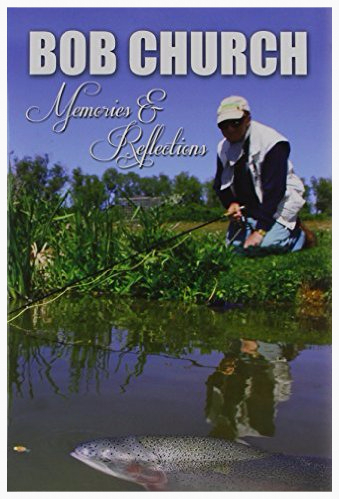
Bob Church 'Memories & Reflections'

Bob Church made himself an angling brand. Nothing unusual about that but he did it across both fly and coarse fishing which does make him unusual, following in the footsteps of Dick Walker.
 

In the 1980's virtually every fishing magazine was by default the Bob Church special edition. If there wasn't an article about him there was an article by him. Failing that there were pages of advertising for his mail order firm.

As world fly fishing champion team member in 1987 and 1988 Bob proved you could be a good all rounder and his legacy will be that he broke down the class divide between coarse and fly fishing.

Now largely retired Bob has just published 'Memories & Reflections' a sort of autobiography that charts his life through his fishing adventures including the up and downs of the world championship that at one point saw him almost banned from taking part. 

It is good to see for both him and angling that he was awarded an MBE in the Queen's Birthday Honours earlier this summer. The book is available fromwww.calmproductions.com or Amazon at £25.


Plants of the riverbank

Hemp Agrimony will be in flower all along the riverbank from July to September. The frothy, pinkish flower heads are a magnet for nectar seeking insects (watch out for wasps) and with its thick green foliage all manners of moths and butterflies call it home.

The Latin name Eupatorium cannabinum gives a clue to the shape of the leaves, but it shares only a resemblance to the Cannabis plant rather than any other 'qualities'.

Hemp agrimony


Quiz

 
The usual random selection of questions to confound and amaze. Answers at the bottom of the Newsletter. It is just for fun!
 
 
1) What is lepidoptery?

2) In traditional quoits how heavy is the steel quoit?

3) Based on the past 30 years averages which is the wettest month of the year?
 
  
Have a good Bank Holiday weekend.
 
 
Best wishes,
Simon Signature    
Founder & Managing Director  

Quiz answers: 1) The study of moths and butterflies 2) 5 1/2  lbs  3) October

Thursday, 13 August 2015

Life of a Chalkstream - Intrepid Brit sets world fly record

IN THIS EDITION:  Intrepid Brit sets world fly record .... Where are the English youth? ..... Special offers ..... Balsam bashing ..... July feedback draw winner ...... Quiz

Fishing Breaks 25th logo banner

Newsletter
Thursday August 13th 2015
info@fishingbreaks.co.uk
01264 781988
Intrepid Brit sets world fly record
 
  
What size is the largest freshwater fish ever caught on a fly? Now I happen to know this as a new record has just been set by an intrepid Brit, but in the spirit of being a know-all I quizzed the office and the Guides. To start off a big Pacific salmon variant in Canada or Alaska got the nod. Then someone proposed that Asian salmonid, the taimen. Mmmmmm most people thought that is a good call. But how about a giant catfish from one of those legendary Spanish rivers? Without reverting to Google nobody really had a clear idea which of the two grew bigger but in the end a catfish at around the 150-200 pound mark got the thumbs up.

Richard Hart with his guide and record fish
Well, actually thumbs down all round. The record caught last week now stands at a staggering 415lbs and the fish is an arapaima. Now I can't pretend to having ever heard ofArapaima gigas that lives in the remote jungle rivers of Guyana and Brazil. It is probably the world's largest freshwater fish which unusually for a fish has to surface to breathe, an adaptation it has acquired over millions of years of evolution to cope with the hypoxic or low oxygen levels of the Amazon floodplain.

These huge beasts, that can grow up to 15ft in length, haven't had a great time in the past century or so. Despite their size they don't seem very fearsome but having to surface every 5-15 minutes for air made them easy prey for spear fishermen who found a ready market for the boneless, nutritious steaks for which they became valued. Today the commercial fishing that remains is a fairly brutal affair but is confined to special areas for local consumption only with some arapaima farmed in river cages.

However, I am pleased to say the same fate has not befallen our record fish though all-in-all catching it and confirming the record does seem something of a palaver. To start with the angler, Richard Hart, a 45 year old auctioneer who lives in Orlando didn't exactly come upon this record by chance. He already holds or has previously set 50 IGFA (International Game Fishing Association) records and had been tracking down a monster arapaima for a month in the remoter regions of Guyana before he came across this one.

In a 20-foot dugout canoe, accompanied by three native guides Richard was geared up for a fight. His outfit? A 16wt Sage more normally used for sailfish, matched with a Tibor Billy Pate tarpon reel and a 100lb mono tippet. And the fly? A modest 7 inch big-game streamer with peacock bass colours that goes under the delightful name of the Chuck-N-Duck. I guess the moniker tells a story all of its own.

"I saw the fish come up for air, which is the way you fish them, and then I threw the fly and he sucked it in. It was an enormous fight." reported Richard, in what sounds fairly typical British understatement. 

However to claim the record the fish must be weighed, in this case alive because the Government requires all catch-and-release for sport fishing, on certified scales. How do you do this in a primitive canoe? Well, by using a pulley, a makeshift sling and a heavy rope over a conveniently located tree.  And the result 415lbs 8oz, 13ft 5 inches in length and 7 feet in girth.

Richard says he is going back next year to better his record. Somehow I think that might be a tough call; the biggest arapaima ever recorded is 440lbs but then again the Amazon basin is a mighty big place.
 
 
Deans Court (River Allen)
Special offers
 
Just two this week to tempt the fishing buds, which includes our new beat on the River Allen.

2-for-1 or half price if you want to fish alone. £37.50/Rod for the remainder of August.
Book on-line or call 01264 781988

2-for-1 on our teaching lake at The Mill which is stuffed with fish. Sunday August 23rd. £125 for two. Save £125. 
Book on-line or call 01264 781988


Himalayan Balsam: the Asian invader

I find it  hard to hate Himalayan Balsam; that heady sweet scent that hangs over the river bank on a still summer evening is both exotic and unexpected. I know it is a menace, but those pink/purple flowers are beautiful, so unlike anything native.

But it is an insidious guest, quick to grow and fast spreading. Like our native nettles it has that ability to crowd out everything else, creating the plant equivalent of scorched earth. Look down amongst the stems and all you will see is bare soil.


I think I did read somewhere 
that a selective weed killer is
on the way but if your problems
are more immediate I'd highly 
recommend Theo Pike's book 
Balsam Bashing. It is available 
direct from the 
publishers Merlin Unwin. 


July feedback draw winner
 
I think it is fair to say that I approached July with a certain amount of trepidation as the dry spell looked to continue and everyone assumed that the weed after the June cut wouldn't grow much. Happily on both counts I was wrong. Though the fish were resolutely picky some days, the rivers looked great and held up all month long. 
 
The fates have decreed that the July winner, like that of June, was fishing at Compton Chamberlayne on the River Nadder. This time it is Graham Nicholls who has a choice: a signed copy of Life of a Chalkstream in paperback or a Union fly box. I will not be offended if you choose the latter. The end of season draw is for a wonderful Hardy Cascapedia reel.


Quiz

 
A trio  of questions to either confound you or confirm your brilliance. Answers as the bottom of the Newsletter. It is just for fun!
 
 
1) What does a herpetologist study?
 
2) What is the biggest ever fish caught on rod and reel?

 
3) Who lives in a holt?


Where are the British youth?

I did hope to bring you news of how the British or any of the home nation teams were doing in the World Youth Fly Fishing Championships that are taking place in Vail, Colorado, USA this week.

I scanned down the list of teams to see how we are doing: Canada, Czech Republic, France, Ireland, New Zealand, Poland, Slovenia, South Africa, Spain, USA ...... it is not that we are doing badly it is simply that we are not there at all.

In the middle of what is National Fishing Month wouldn't it have been the coolest thing to have sent a team out to participate? It is not as if the competition is new; this  is the 14th year. I don't know the whys and wherefores ofFIPS-Mouche who run both this and the World Championship (by the way in the USA in 2016) but maybe someone out there knows why we don't have a team.

  
Have a good weekend.
 
 
Best wishes,
Simon Signature    
Founder & Managing Director  

Quiz answers: 1) Amphibians and reptiles  2) A Great White Shark of 3,427lbs caught by Captain Frank Mundas the inspiration for Quint in Jaws. 3) An otter.