Thursday, 21 April 2016

90 Years Ago Today ......

90 years ago today ....
 

Ninety years ago today Queen Elizabeth was just a few hours old, born at the not very social hour of 2.40am. As we celebrate her birthday today I began to wonder how different a day on a chalkstream might have been back then in 1926 if I had wandered out that morning to cast a line to mark her birth.

Queen Mother. New Zealand. 1927.
To start with I'd have probably been highly conflicted as to whether to use nymph or dry fly. This wasn't a choice about fishing or entomology. It defined you as a man. Halford, the high-priest of the dry fly wasn't long dead (he died in 1913) but his apostles were almost Taliban-like in their fervour for all things dry. 

Skues, the man who effectively invented nymph fishing and promoted the technique in the 1920's and 30's, was vilified for his beliefs. If social media was around he would have had many trolls, Twitter storms breaking above his head daily. There was definitely something that spoke of class about the debate. As that Conservative politician Alan Clarke once said of Michael Heseltine, alluding to the fact that his wealth was made not inherited, "Well, he had to buy his own furniture you know". Fishing a nymph was for the bourgeois and arrivistes in the eyes of some.

As for the kit, well a creel was de rigeur. You will rarely see a painting or photo from those early days that doesn't feature a wicker basket with a fish tail or two poking from beneath the lid. I'm not sure the concept of catch and release even existed. That said I suspect there were many more losses than we have today - snapped hooks, a rarity with modern manufacture, were commonplace. Leaders had progressed from braided horsehair to catgut, which despite its name had nothing to do with cats. It is derived from silkworm gut through a process invented by the Chinese way back in the mists of time. However, it snapped easily and was of variable quality, relying on being kept moist in a tin when not in use. The invention of nylon by Dr. Carruthers at DuPont was another decade away. Rods would have certainly been split cane; we'd have to wait until Prince Charles was in shorts before fibre glass took a bow. Clothing was tweed, tweed and yet more tweed. A tie was compulsory as far as I can tell, even to the extent of wing collars. Footwear was largely leather boots, though believe it or not the manufacture of waders went way back the previous century, with the foundation of the Hodgman Rubber Company in 1838.

You might assume that I'd arrive at the river to see a river thick with hatches, fish rising at every turn. Somehow I am not so sure. I know plenty believe this was so, recalling a golden age on the chalkstreams that nobody today was alive to witness. There is plenty of evidence that Edwardian fly fishermen complained of all those things we complain of today - lack of fly life, lack of rising fish. Going back to Halford as an earlier example, he abandoned the River Kennet in the 1880's in favour of the River Test citing as his reason, yes you've guessed it, lack of rising fish. I suspect it was, and will be, forever thus for us fickle fly fishers.
The Queen and Prince Philip. 1972. Not sure fishing is Her Majesty's thing .....

But how about the river - what would that look like? Actually not so very different. A great many of the structures that we use today date back a hundred years or more - bridges, sluices, hatches and so on - indicate that the river levels, with the seasonal highs and lows, are much the same. 

As for the water itself that is a whole different story, but maybe not with a conclusion you'd expect. There is no doubt that today those of us that care for the chalkstreams are fighting unseen pollutants. The rivers look bright and clean, but in the water are all kinds of nasty by-products of modern life. It would be unfair to single out one group out because we all contribute: watercress and trout farms, agricultural pesticides and chemicals, run off from the roads, sewage effluent from antediluvian plants and domestic septic tanks. I could go on but you get the picture. But actually it wasn't so different in the 1920's because what struck me when doing research for Life of a Chalkstream was the vast amount of industry that ran on the backs of the chalkstreams from leather tanning plants to carpet makers and bank note production, not to mention the working mills every mile or so who were all in constant conflict with the fishermen.

And as for the fish, well I'm pretty sure that however long the second Elizabethan age ends up being it will not have much effect on their millions years of evolution. On that April morning of 1926 for all the differences in my kit and my attire, the battle would have been joined then as today, a triumvirate of fish, fly and man. As the dictionarydefinition of this Latin political regime astutely says of the word, 'The arrangement can be formal or informal, and though the three are usually equal on paper, in reality this is rarely the case.

Amen to that.


WHERE THE SUPER-RICH FISH

Here's a survey from New World Wealth, a South African firm that mines data on the global wealth sector. They report, rather coyly I thought, that "Fly-fishing is an increasingly popular pastime for millionaires globally." 

Good to know for those of us in the business. I guess it is the ultimate expression of trickle-down economics.

 
Rank
River
Area
1
Snake River
Jackson Hole, Wyoming, USA
2
Brooks River
Katmai National Park, Alaska, USA
3
Bow River
Banff National Park, Canada
4
River Spey
Tulchan Estate, Scotland
5
Beiar River
Beiarn, Norway
6
Madison River
Montana, USA
7
Ahuriri River
Central Otago, New Zealand
8
Yellowstone River
Montana, USA
9
Newhalen River
Alaska, USA
10
West Ranga River
Iceland
 

Interesting to see that three, the Snake, Madison and Yellowstone are all clustered around the mid-west more famous as cowboy country and skiing at Jackson Hole. But having pressed my nose against the glass of many an estate agent window in Jackson City where ranches of $25 million plus are commonplace I'm not entirely surprised. 

You may read the survey in full that covers airlines, hotel and trains on the New World Wealth website.
Madison River. Photo by Ken Takata.

QUIZ

This week three questions with a royal theme. It's just for fun and answers are at the bottom of the page. 


1) Where was Queen Elizabeth II born?

2) Which Scottish salmon river does Balmoral Castle overlook?

3) Which fishing tackle shop has a Royal warrant from HRH The Prince of Wales?


Have a good weekend.

 
Best wishes,
Simon Signature    
Founder & Managing Director  

Quiz answers: 1) 17 Bruton Street, Mayfair, London 2) River Dee 3) Farlows of Pall Mall

Thursday, 7 April 2016

You're a long time dead

Someone asked me an interesting question last week: what would you do if given precisely 5 years to live, assuming your death was to be neither traumatic or fearful (a big ask I know). My immediate answer was to do more fishing. Then I considered the question again - family, travel, money - well, they all crowded in but in the end I circled back to fishing. As former Liverpool football manager Bill Shankley replied when asked whether football was life and death, "No, it's more important than that."

Well, I'm not intending to die just yet (make that my epitaph) but I'm beginning to think Bill may have had a point. Let's face it you'll never be able to re-live the year again. Once the days are gone, they are gone. The cadence of the summer months can't be jammed into single day or week. So, having decided on the principle of more fishing I think I better set a few parameters.

Ilsington River Frome
Ilsington - River Frome

To start off with I going to be a bit more relaxed, less proprietorial if you like. I have a feeling that the river keepers live in fear of my announcement that I am coming fishing - texts and calls will follow. If I'm particularly exercised photos with pithy captions. But then again that is my job, so I might have to work on that one.  

I'm definitely going to be less of a fishing tart. I've sort of become like one of those gnarled ski guides (habits not looks) who only venture out on to the slopes when the conditions are perfect plus. Yes, I say to myself, I'll go fishing tomorrow. But come the morning I'll look out the window, decide that it is a less than optimum day and conclude that the following day will be better. Maybe this should be called maƱana fishing because the truth is you end up hardly ever going. However, in the credit column it does make you have a great strike rate when you actually get out.

I did consider making 2016 an all dry fly year but have ditched this idea. In a purist, set the bar high sense it might be interesting but I genuinely enjoy sight nymph fishing. Plenty will argue that this is the most skilful chalkstream art. I'm not going to get into that, but if I'm fishing more that should mean more fun and nymphs are fun. 

However, I am going to broaden the selection of flies in my box. In recent years I have gotten into the habit of carrying fewer and fewer patterns, relying on a few 'go to' ones. I can't remember the last time I looked at the array, saw a fly I didn't recognise and thought what the hell, let us give it a whirl. A bit of randomness can't do any harm.

And where to go? In truth is the older I get, the less prescriptive I am. Of course I have my favourites but that is increasingly about the people - the river keeper who stops his mowing to shoot the breeze. Neighbours who gossip about local goings on. A good pub for lunch. But aside from that the combination of a river and fishing just about anywhere is enough for me. As my old Dad used to say, you're a long time dead. 

It is time to go fishing.

The Parsonage
The Parsonage - River Test
 
 COUNTRYSIDE EXPERIENCE SHOW 

The demise of the Game Fair has left something of a hole in the event calendar but you'll be pleased to hear that the guys at Meon Springs in Hampshire have really created something good for fly fishermen as part the Countryside Experience Show that takes place this weekend (April 9/10th).

I really do like the The Kids' Pond. As organiser Jamie Butler says on the web site: "Even if you're too small to wave a fly rod - but are big enough to want the excitement of catching a trout - then the Kids' Pond is for you.  It's aimed at children between three and eight-years-old and it gives them the chance to catch their first fish, Under the supervision of a qualified instructor they'll be able to have a go with a rod, reel and some bait to see if they can catch a trout to take home. Great fun!"

This is all part of the Fishing Village which includes:
  • Casting Masterclass with Charles Jardine
  • Try before you buy with Snowbee Tackle
  • 20 minute Casting Tutorials with GAIA instructors
  • Fly tying tent with Wessex Fly Tyers
The show runs from 10am-4.30pm each day. There are sections for shooting, gundogs, 4x4 driving and farming. Tickets and informatiowww.countryexperienceshow.com

QUIZ

This week three questions with a slight natural history/evolutionary bent. It's just for fun and answers are at the bottom of the page. 


1) Which birthday does David Attenborough celebrate this year?

2) In which year was Charles Darwin's Origin of the Species published?

3) Which is the oldest living plant species?


HATCH & FLY OF THE MONTH


Have a good weekend.

 
Best wishes,
Simon Signature    
Founder & Managing Director  

Quiz answers: 1) 90th 2) 1859 3) Gingko tree (pictured)

Thursday, 17 March 2016

Anglers the salvation for rare duck?

Nether Wallop Mill, Stockbridge, England
  

The headlines in The Scotsman and the BBC splashed much the same message: Survival of rare duck in Scotland 'depends on trout fishing'. I must admit it rather caught my eye, with the article which went on to say:

"Conservationists believe they have identified the cause of a decline in numbers of a rare duck. In the UK, common scoters breed at only a few locations in the Flow Country of Caithness and Sutherland and lochs in the hills and glens near Inverness.

A key cause is now thought to be rising numbers of trout which eat the ducks' main food source, freshwater insects.

RSPB Scotland and others have raised concerns the bird could become extinct locally because of poor breeding. The charity suspects declining angling on the lochs has helped boost brown trout populations.

Dr Mark Hancock, from the RSPB's Centre for Conservation Science said: "Of all the lochs we investigated during this work, scoters bred most often at those with the shallowest water and the most large, freshwater invertebrates. It soon became clear that there were more insects where there were fewer brown trout, so it looks like scoters are being limited by a lack of food in places where the fish are eating it all. We're now using these results to design new ways of helping scoters. For example, in areas of the north Highlands where angling activity has dropped off and fish numbers have increased, more trout angling is potentially one way to boost freshwater insect life."

Dr Andy Douse of SNH and co-author of the study, said: "Scotland is the only part of the UK to have breeding scoters, many of which nest in legally-protected nature conservation sites.  This study highlights promising management options for restoring populations of this declining species."

A Scoter duck
The first time I read the article I thought interesting, but after a few re-reads something about it slightly needled me. Firstly, it was the assumption that trout fishing was seen as a form of fish population control, the implicit belief that we killed the fish we catch.  I don't know about you but most anglers I know prefer catch and release and on the occasions I have fished Scottish lochs, mostly populated with beautiful wild browns, I wouldn't have done anything else. 
 
Then there was the statement 'It soon became clear that there were more insects where there were fewer brown trout ....'. Well, I'm sure you know that there have been decades of research into the state of fly life on the chalkstreams and in all that time I have never once seen any fly life decline attributed to the fish population. Invasive species, pollution, climate, water flows to name but four that might be cited, but trout? If anyone ever suggested that the fish be removed from a stretch of river to boost the fly life we'd call the men in white coats.

Then there was that final bit of Orwellian group speak, "This study highlights promising management options for restoring populations of this declining species." I think from all the above we can see where this particular policy might be heading. Encouraging us to fish is great news, but I suspect they may have other measures in mind and that would be wrong because, despite an eye catching headline, the conclusion is based on flawed logic. 

Caithness
 
FISHING FOR NATIONAL HONOUR IN 2016

What do Finland, Japan, Luxembourg, Malta, New Zealand, The Netherlands and the United States all have in common? Before you expend too much brain energy on what I suspect is an impossible ask I'll put you out of your misery - they are the first seven (of 30 anticipated) countries that have confirmed for the 2016 World Fly Fishing Championship.

Colorado River
Spread over seven days starting on September 11 this year's contest is being held in Vail, Colorado this only being the second time it has been hosted by the USA, the last being way back in 1997. 

If you are looking for a guide to a possible winner, the host nation is always a good bet; over the past 35 years they have been the victors on ten occasions. The Czech Republic is the form team with victory in four of the past six contests. Spain are the current holders having won in Bosnia and Herzegovina in 2015.

Like in football and rugby the United Kingdom enters on a home nation basis. England have lifted the trophy five times, the last back in 2009 when it was held in Scotland, when the Scots took third place as well. Wales have had two second place finishes, 1995 and 2000. The latter I recall very well as it was held in southern England right in prime Mayfly.  Hardly challenging for the 400 odd best fly fishermen in the world? I think it took the remainder of the season for the River Test trout to recover from the trauma.

If anyone out there has news of the home nations teams do get in touch; we'd like to follow your progress. I have to confess I have never fished Colorado, but from everything I have learnt in Idaho and Wyoming it will, as the locals say, be 'totally awesome' but never easy.

More details on the 36th FIPS-Mouche World Fly Fishing Championship web site. 


QUIZ

This week three topical botanical puzzlers; you will see all three currently flowering in your garden. It's just for fun and answers are at the bottom of the page. 

1) What is the common name for Galanthus?

2) What is the common name for Narcissus?

3) What is the common name for Sativus?


NEW FOR 2016 - Wild rainbows

Recently I took a trip to Derbyshire to visit Warren Slaney the keeper on the Haddon Hall Estate. If I recall the number rightly Warren told me he and his fellow keeper Jan Hobot have 27 miles of river under their care including fishing on the Wye that has one of Britain's very few wild rainbow trout populations.

Nobody has a definitive explanation as to why these rainbows have thrived here but nowhere else. It could have just been something as one-off as mutant gene in the original stocked fish. Alternatively it could be that the particular water source from the limestone hills mimics the geology of the American homelands. Whatever freak of nature created this USP it is a pretty compelling unique selling point and I'm glad I made that 3 hour drive north.

The Lathkill. Photo courtesy of Guido Vinck

As many of you will know The Peacock Hotel in the local village Rowsley is part of the Haddon Hall Estate, which sells day tickets on both the River Lathkill and Wye. However, what you may not know is that there is now access through Fishing Breaks to the Dukes Beat on the Wye and the Hall Beat on the Lathkill. This is the private family fishing and only a very few days each season will be made available.

To enjoy them both I recommend back-to-back days. By the way, you can leave your nymph box at home. A strict dry fly only rule was introduced on June 6th 1865.

Details on prices/booking here and there is more on the story of Haddon Hall here.

Have a good weekend.

 
Best wishes,
Simon Signature    
Founder & Managing Director  

Quiz answers: 1) Snowdrop 2) Daffodil 3) Crocus

Thursday, 25 February 2016

Licence to Fish

There has been much discussion around the National Fishing Licence now that the administration and enforcement has passed from the Environment Agency to the Angling Trust. It seemed the perfect opportunity for changes, so I for one am delighted that a press release last week heralded innovation for 2017.

Most logically your licence will now run for a year from the date of purchase; in the past all licences ran from 1/April regardless of when bought so it was a positive disincentive for anyone considering buying one later in the year.

The release continues saying that licences are to be 'free for junior anglers'. They don't state exactly the age for a junior but I'm assuming from the currently structure (free for under 12's, reduced rate for 12-16 years) this will mean all under 16's are free. 

If this is correct huge high fives and congratulations to whoever pushed this through. This is a massive shot in the arm for all those who are working hard to promote fishing in communities and schools by removing a licence that was both an administrative and financial barrier to participation.

There is a slight sting in the tail as the news release ends with the announcement that licence fees will be increased in 2017. All that said I don't think we can begrudge this as it will be the first rise in 7 years. Do take comfort that all the money does goes directly to fishery work, plus a whole lot more that comes our way via grant-in-aid from the government.  If you want to see where the money is spent in your area click on this link; you will see some interesting stuff going on.

My one disappointment is that not possessing a fishing licence will remain a criminal offence. It seems to me a Victorian solution to a problem that is better solved in other ways. Criminalising an innocent pastime is a crime in itself; far better to devise penalties and incentives in the same way that train or parking tickets are collected. I'm minded of something I heard from a local squash club where they had a problem with players wearing black soled shoes which marked the court  despite  numerous notices stating 'Do Not Wear Black Soled Shoes'. Then someone changed the wording to read 'Please Check Your Opponent is Not Wearing Black Soled Shoes'. Lo and behold with a combination of nudge and peer group pressure the problem went away.

Let us save the long arm of the law for truly heinous crimes against angling.
 
NEW FOR 2016 - AN ITCHEN BRACE

For reasons of accident rather than any particular plan I have always seemed to have had more fishing on the River Test than the River Itchen. Nothing wrong in that - they are both great rivers usually spoken of in the same sentence - but I've been conscious for a while that I needed some more beats on the river that flows through what was once the capital of England.

East Lodge

Actually the opportunities for finding fishing on the Itchen are less by the simple fact of geography; the Itchen is just twenty miles from source to sea whilst the Test is double that. Add in tributaries, carriers and so on the disparity is greater still. There is probably four times as much river bank in the Test catchment compared to the Itchen.

But such is the strange happenchance of life that for 2016 I am delighted to say that I have fishing on not one, but two more beats on the River Itchen at East Lodge and Shawford Park. The former I have heard a great deal about in recent years as the keen, young keeper there Rob Rees was a flat mate of our own river keeper Jonny Walker. If you are a dry fly aficionado this is the place to head for; there are no nymphs allowed here. How that doyen of the Itchen and inventor of the nymph GEM Skues would have coped, heaven knows.

At Shawford Park the two beats run through the beautiful parkland grounds of Shawford Park House. This is a hidden gem, hardly fished at all in recent years and I suspect the location alone will take your breath away. Here you have a mixture of the main river and a fast carrier, the latter great for wading if you fancy it. 
All in all if you fancy a trip to the Itchen you will not be disappointed whichever you choose. More details here.

QUIZ

GEM Skues
Here are a few bi-weekly puzzlers to confuse, confound or illuminate. It's just for fun and answers are at the bottom of the page.

1) When did George Skues publish Minor Tactics of the Chalk Stream that launched the nymph revolution?

2) Which native tree used to be planted outside houses to ward off witches?

3) What is an osteologist?


MAYFLY BEAUTY

One of my first ever guides and river keeper, Simon Ward has recently produced a great short film that captures the beauty and wonderment of the Mayfly. 
Mayfly insect

Set to an original soundtrack by Hamish Napier this will transport you to the river in an instant. Look out for the scene in which the adult emerges from the nymph - it shows the amazing effort this requires.

Watch it here.....

Have a good weekend.

 
Best wishes,
Simon Signature    
Founder & Managing Director  

Quiz answers: 1) 1910 2) Rowan, Sorbus aucuparia 3) A collector and student of bones.

Monday, 15 February 2016

Which is your favourite fish?

Which is your favourite fish? 

Greetings!
  

Which is your favourite fish? I have to admit I had never given it much thought until the other day when an email from underwater photographer Jack Perks urged me to vote in the UK National Fish poll he has organised.

An unlikely winner?
The purpose is to find the iconic native species that means something to us as a nation and embody Britishness, which makes a simple choice a deal more complicated. 

The logistics of even picking the fish as eligible for the poll is not easy. How do you define native? Carp are included on the basis of a 600 year tenure but rainbow trout, a mere 150 year ago arrival are not. Should European eels go in the fresh or sea column?   

As Jack points out there are over 400 native species, freshwater and seawater, so he has helpfully narrowed the list down to 20 in both categories.  I confess there is a fish on the freshwater list I had never heard of - the Vendace. Wikipedia tells me it is 'an edible whitefish found in lakes in northern Europe. In Britain it is now confined to two lakes in the English Lake District.' My feeling is that Coregonus vandesius will struggle to garner many votes.

Looking around the world for clues for which to pick isn't helpful. Birds? Well, just about every country has a national bird. But fish? Well not so much - I could only find three nations with a national fish and that is a diverse bunch. Costa Rica has the Manatee, Japan unsurprisingly the Koi carp and South Africa the not-very-attractive Galijoen that looks a bit like sea bream. 

Who knows what we will choose and whether the British people will take a fish to their heart. My only hope is that the poll doesn't get hijacked by a 'species' group - I am sure plenty of you will recall a few years back when something similar happened tying the BBC in all sorts of knots when Bob Nudd topped the voting for Sports Personality of the Year.

If you'd like to vote you have until 26th March when a top ten will be announced with a further round of voting to establish the winner. Me? Well, in the sea category I am going to put my tick beside the mackerel on the basis that it must have been the first fish many of us caught and thus inspired a lifetime of angling. In the river my marketing head tells me Brown Trout, but in my heart the Three Spined Stickleback wins every time with a life story as interesting as any fish that ever lived.

Here is the link to vote.


WATER NEWS

Mill racing ....
I am writing this on Valentine's Day with joy in my heart and the sound of rushing water in my ears - the chalkstreams are full. 

It was looking grim at the end of November; we were showing few signs of making up for a very dry 2015 but the Gods have smiled. December was wet and January positively bucketed down giving us twice the average long term rainfall. As the monthly Environment  Agency report says, 'river flows and groundwater levels ranged from normal to exceptionally high status' in January.

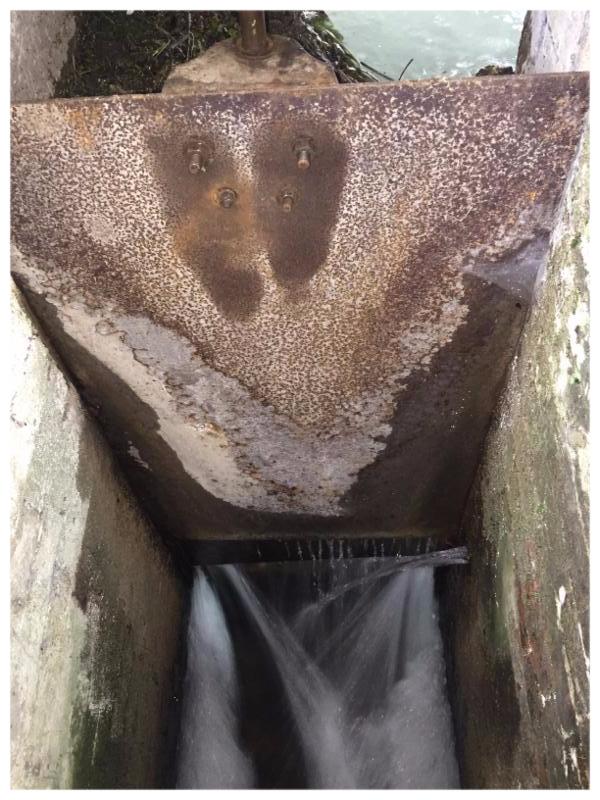
It is good to have it validated but I really take my cue from the mill race that runs under the office here at Nether Wallop Mill. All through the summer and autumn the steel gate that controls the inflow is screwed down tight to preserve what water there is upstream.  As winter goes on I gradually open it up and when I can finally lift it all the way I know we have reached saturation point.  That day came about two weeks ago. The water pummels through without constraint; some weeks I even have to run the mill wheel to let even more past.

Nether Wallop mill wheel & race


This is all good. The aquifer, that giant sponge deep beneath us that feeds the chalkstreams, is now full. We are set for the season ahead.

PS I have tried to capture the noise and power of the flow in this 35 second video. The mill wheel is cast iron, built c. 1865. As you will see it is in need of a repaint - for some reason at one time it was painted white. I suspect I will not be troubling the Oscar committee .....


NEW FOR 2016

You may well be reading this over half term juggling work emails, cursing the cost of Alpine lift passes and wondering who on earth invented the long half term. Surely it was just three days in our day?

I can't do much about the Pound/Euro exchange rate but if you are looking for a diversion for the summer holidays I'll point you in the direction of my week long Kids Fish Camp for July.

It has come out of the Saturday school fishing clubs - a chance to learn all about fly fishing here at Nether Wallop Mill. We do all the obvious casting and catching stuff but add in some entomology, fly tying, a trip to a fish farm and culminate the week with a day on the beautiful Bullington Manor beat on the Upper Test.

Our very own Alan Middleton runs the week with great expertise and enthusiasm. It is open to all ages 8-15. No experience required. Tackle provided. More details here ....

.


QUIZ

Here are a few bi-weekly puzzlers to confuse, confound or illuminate. It's just for fun and answers are at the bottom of the page.

1) St Valentine is the patron saint of what activity?

2) What is odontology?

3) A gam is the collective noun for what species?


WEED CUTTING BUT NOT AS WE KNOW IT

I was rootling around at an antiques fair in Stockbridge a couple of weekends ago and came across this photograph in a Hampshire history book. It was immediately recognisable as Itchen Stoke Mill as was the activity, weed cutting, but as Captain Kirk would say, not as we know it.


I thought at first they might be harrowing the river; that was commonly done to encourage spawning but with the photo dated around 1905 and the foliage suggesting this is summer or early autumn the timing would not be right. The current owner, Roger Harrison, cast some light. He tells me this was indeed weed cutting but of a fairly radical sort. The machine is moving a heavy cast iron bar along the river bed, tearing out the weed to create open channels in preparation for the water meadow flooding during the winter. The principle being that by removing the weed the water level would drop allowing the land to be drained more easily as and when required.

The bar didn't rip out the roots of the ranunculus so it would re-grow the following spring. It is thought that the bar, heavy as it was did, by accident rather than design, create some good, loose spawning gravel as it trundled along the bed as would have the hooves of the shire horses.

If you happen to visit this part of the River Itchen* you will notice the only change is trees; back then the Itchen valley was entirely denuded of trees which I guess was a product of the sheep grazing that dominated the area at that time.  

*Stop at The Bush Inn at Ovington and  walk back a hundred yards up the road. There is also a lovely footpath walk alongside the river.


Have a good week wherever you might be.


Best wishes,
Simon Signature 
Founder & Managing Director  

Quiz answers: 1) Bee keeping 2) The scientific study of teeth 3) Whales