Friday, 5 June 2026

Everyone loves a Mayfly


Dear Simon,


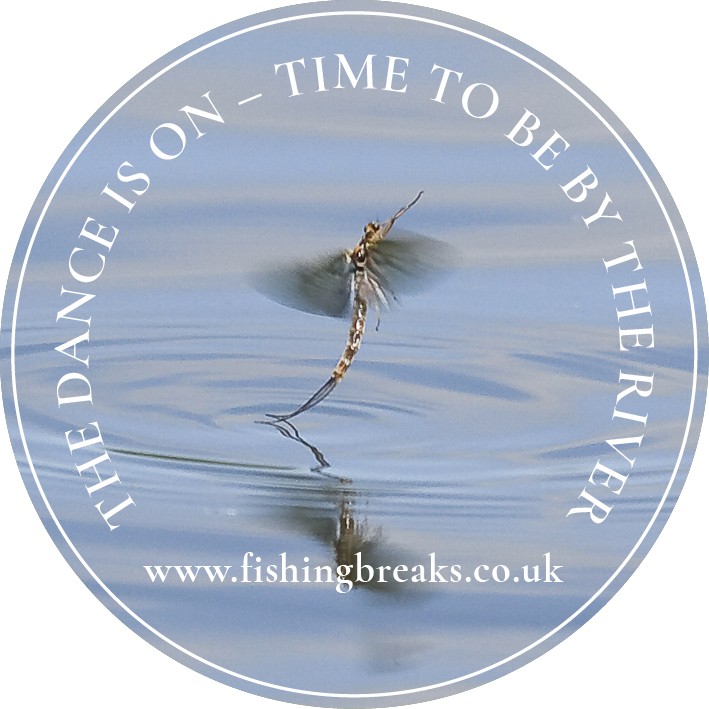
Of course, us humans love the mayfly, but in the evolution of the planet our piscatorial interest is but a pinprick in the passing of time for they are an important part of the ecological life of a river.


I got to thinking about this last week sitting beside the River Test at The Parsonage, which has had an early hatch this year, as I watched with wonder as a pair of merlins twisted, turned, dived and jinked amongst the hatch hoovering up this once-a-year feast. This was a first for me, I have never seen merlins act in this way, which got me compiling a mental list of mayfly gorgers, but I soon gave up. The list is simply too numerous from the fish, bird and bat families. Given the opportunity everyone eats a mayfly except perhaps us humans though I am reliably informed they taste ‘buttery’.

Mayfly are a vital protein fillip at this crucial time of year when so many species are at the height of the breeding season or, in the case of fish, putting on condition after the deprivations of winter for trout or at the end of the spawning season for coarse fish – the only times I have caught a chub on the fly is with a mayfly. Add to that the year round presence of large, tasty mayfly nymphs in the river.


But mayflies are important not just as food sources but also as river dirt collectors or more technically, nutrient "bridges". When the nymphs consume algae and detritus from the riverbed, they absorb carbon and nutrients, cleaning the river which needs a high oxygen level and a pristine aquatic habitat for them to survive. When they hatch, mature, and die, these nutrients are deposited into the surrounding meadows, fertilising the land as part of Mother Nature's perfect circle of life.


So that is Ephemera danica for you – more than just a pretty dance and an excuse to go fishing.

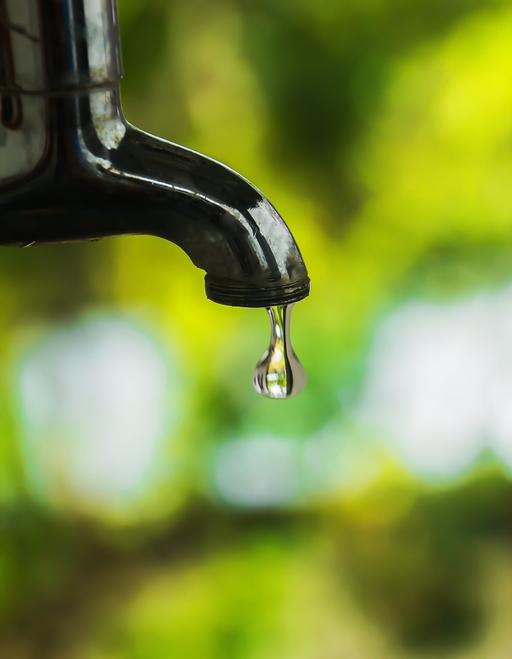
Giving away water for free is a bad thing

If you thought plans both north and south of the border to impose price caps on selected food items were the stuff of a particularly bad dream read on whilst economists everywhere hold their heads in their hands in despair…….


It is early in the New Year as you head to work by train. As you proffer your season ticket the barrier attendant cheerily waves you through “No charge sir, you travel for free until July.” At Pret a Manger the barista hands you your coffee inscribed with the message, “Free drinks until July :)”. What a day you reflect as you take a seat on the train for the free ride back home, opening your personal emails which contain (groan) your latest Council Tax and electricity bills. You knew the vibe could not last … but joy of joys the munificence continues with nothing to pay until summer.

I know this all sounds completely mad but if you are a customer of Affinity Water, who supply 3.8 million people in parts of London, eastern and south eastern England, this exact thing might just be about to happen as they trial a four tier charging scheme that gives all customers the first 30,000 litres of annual water free, with a rising cost per litre as household water use increases. Now, to put that 30,000 number in context daily that is roughly 200 days of water consumption for one person in a year, and with Affinity that will be FREE!


The publicly stated rationale of this policy is to penalise heavy water users but also reduce water consumption. I can just about see the heavy user argument, especially in the regions where water is most scarce but in which insane asylum were water executives staying when they brainstormed a policy to give away water for free to reduce use? It seems not just bonkers, but actually unnecessary.


Firstly, the long term trend is that that water use on a per head basis is falling, something like 18% over the past 20 years. Secondly, we really have not resolved the water meter issue, the greatest single motivator for reducing consumption, with still 40% of households unmetered with water bills based not on use but the rateable value of the property. The truth is that the challenge of providing sufficient water in certain regions of the UK has little to do with climate change or rising personal consumption but rather the overall rise in the population and the ever growing number of households.


My gut feeling is that the Affinity tiered pricing proposal has more to do with politics than any true attempt at reducing consumption. What politician is ever going to discourage giving away a valued resource to the voters for free? And therein lies the problem. We really do not value the true cost of water both in the economic and ecological sense and the Affinity scheme can only worsen that.

Wondering About the Wye? She’s Still a Beauty!


In the thick of Mayfly season, as we currently are, it is sometimes hard to raise your eyes to look at the further horizon but as my old friend John Bailey reminded me last week, he is counting down the days to the opening of the coarse fishing season on his beloved River Wye.


As you know at Fishing Breaks we do not offer much beyond the chalkstreams and limestone streams, but John has always been the honourable exception which has included that fated day back in 2015 when his maggot trip on the River Frome produced the largest grayling ever caught on rod and line in the British Isles. But enough of history as John has been bending my ear such is his excitement, and he penned me this update for you all: 

John Bailey on the River Wye, where he is most at home

“I believe in complete transparency. The Wye is nowhere near the river it was when I first fished it in the 1960s, but, then again, what river hasn’t suffered calamitous decline? However, the river still holds fabulous perch and pike, cracking chub and , above all, the beautiful, battling, brave hearted barbel. I’ve always been a mug for alliteration.


So, in one way, I feel a day on the Wye is worthwhile if only to listen to me explain how we get river management wrong in the UK. But then, you’ll be relieved to hear, we will fish as well. In these days of declining salmon and sea trout, I’m very keen to show there are wild fish alternatives that can be caught in appealing ways. You do not have to sit on a box day long, staring at a rod tip. If you are unsteady on your pins, you can do that of course, and we can talk about Mortimer, Whitehouse and the state of the world whilst catching nice fish. Otherwise, we can wade, touch ledger, freeline, float fish and even fly fish for chub to seven pounds and barbel almost double that. Don’t worry about gear: I have enough for an army. I’m amazed by how few anglers have caught a barbel. They are magnificently wild and cunning and deserve proper recognition as a worthwhile target. I’m gratified that so many Fishing Breaks customers have come back for repeat experiences.


You can stay where you like if your journey is long or you book two days, but I do recommend The Red Lion at Bredwardine. It’s a true old English fishing pub with comfortable rooms. It’s where I began my guiding career on the Wye thirty four years ago, after leaving teaching. Failing that, The Agent’s House at Whitney on Wye is great also. I hope to see you post June 16th. There’s a lot to talk about, a lot to see and a lot to catch. We’ll also have fun, which at the end of it all, is why (Wye?) we’re here.”


You may check out John’s dates here which include, thanks to a cancellation, a slot on the opening day!

The house hatch is on


It seems that there is not only a hatch of mayfly this month but also a flurry of activity in the river house market. Last time I bought you news of Testcombe House this time it is a long time Fishing Breaks fixture of 19 years, Dunbridge on the River Dun, near Romsey.


Dunerley Cottage to give it its correct name, is a detached house set on the banks of the river with 490 yards of single bank fishing set in 13 acres of gardens and riverside meadows. The house, originally a French barn, has four bedrooms, a kitchen with river views and an oak-framed conservatory within a roll cast of the water.


The Dun itself is a primary tributary of the River Test, a mixture of shallow gravel sections and deeper, holding pools. The fishing is left hand bank only as you look upstream. The opposite bank is part of the National Trust Mottisfont Abbey estate and has never been fished in all the years I have been associated with it. The property is being marketed by Knight Frank for £2.95m. Download the brochure here and contact George Clarendon at Knight Frank for more details and viewing.


As I say there is a flurry of riverside properties for sale and in addition to Testcombe and Dunerley there is an ‘off the market’ 10,000 sq. ft, 10 bedroom mill on the River Test somewhere between Stockbridge and Romsey at £4.25m. If you would like more details email me for the details and I will connect you with the selling agent.

Dunerley Cottage. Download the brochure here ....

Quiz


A short selection of questions based on the topics in this newsletter, the date today or something topical.


1)     The opening battle of which war took place on this day in 1455 in St Albans?


2)     When did Bank Holidays officially begin in  the UK? A) 1871 B) 1891  C) 1911 D) 1931


3)     Fifty-one clubs have competed in the Premier League since its inception in 1992. How many have won the title?


It is just for fun and the answers are below.


Have a good Bank Holiday weekend.


Best wishes,

Simon Signature

Check & book dates here

Simon Cooper simon@fishingbreaks.co.uk

Founder & Managing Directorwww.fishingbreaks.co.uk

Quiz answers:


1)     War of the Roses

2)     1871 following the passage of the Bank Holidays Act

3)     Seven: Manchester United (13), Manchester City (8), Chelsea (5), Arsenal (4), Liverpool (2), Blackburn Rovers (1) and Leicester City (1)

No comments:

Post a Comment