Friday, 2 June 2017

My top 10 flies

Lenin once wrote "there are decades when nothing happens and weeks when decades happen". I don't ever recall history denoting the Russian leader as a fly fisher, but in his quote there is a grain of truth for us fly fishers.

Once the frenetic excitement of the Mayfly is over it does sometimes seem that there are days when nothing happens. Commonly you will hear it said that the trout stop feeding, lapsing into a post-Mayfly torpor. But this is something of a myth. Like us they can't go more than a few days without food. The difference is that they revert to type: selective, picky and suspicious.

For a while this can be frustrating, but working on the adage that hell is a fish every cast June is the month to roll up our sleeves, double down on basic entomology and take the challenge. I can't promise I have all the answers but over the years I have tried to hone my fly box down to fewer rather than more patterns. I have to confess that I like to have a wide range of sizes of these favoured few, from the standard 14s to some tiny 24s. Of course the latter spawns all kinds tippet issues, not to mention tying on in dim light, but it is all part of the aforementioned challenge.

So, here are my top 10 flies for the chalkstreams. I am grateful to The Field magazine for allowing me to reproduce the text from the original article that I wrote for the recently published May issue:
 
"Estimates vary, but there are something in the region of 6,000 fly patterns tied just to catch trout. Your job as a fly fisher is simple: to assess the conditions in order to bring that boggling array down to just a single pattern for a given fish at a given moment. Since few of us carry a suitable Google algorithm around in our heads, this process is at best imperfect. But there is hope.

If you are looking for guidance probably the worst ploy is to stop en route to the river at the local fly store. Not that this isn't fantastic fun; it is part of the ritual of any fishing trip. But as they like to say in the tackle trade, 'flies are tied to catch fishermen, not fish'. You have been warned. The truth is you probably already have the perfect fly for the day in your box; it is just a question of knowing which it is.

Trout, especially chalkstream brown trout, are creatures of habit. Unless something momentous invades their space they will live out their three to five years of adult life within a few yards of the spot they were spawned. In that time they will progress from eating almost microscopic invertebrates to a positive smorgasbord of aquatic delicacies. When we consider what trout eat 'flies' are part of a wider story: snails, shrimps, ova, infant crayfish, caterpillars, grubs and moths are just a few of the other items on the menu.

At this point perhaps I haven't helped you much. I've widened rather than reduced the array of possibilities, introducing whole new vistas of food groups to which you hadn't given much consideration in the past, but don't despair. The process of elimination is easier than you think.

Firstly you need to consider the life of a trout, which is in truth, a pretty simple one. When not thinking about sex or survival trout's only real concern is food and this dominates just about every moment of every daylight hour. A trout has to consume vast quantities of food each day, but, and this is both its strength and weakness. For every item it eats, it will reject or ignore dozens of others.

As the angler, this is the biggest problem you face: your offering will be up for close scrutiny, compared and contrasted against the more numerous naturals. The quality of the cast, the drift, the thickness of the tippet and much more all come into play but ultimately it is your fly that will be the deciding factor. Of course we have all seen the trout that has a rush of blood to the head, grabbing without discrimination as something passes, but that is the exception rather than the rule. For the most part trout are methodical and measured. That is where you will win.

If you watch the evolution of a hatch on a river it is always a progressive affair. If the insects are ones you recognise it is a mistake to instantly start casting at every trout in the vicinity with your imitation. You are right to match the hatch, but you are wrong to think you might goad the trout into action. They like to take things steady, eyeing up the stream of insects before finally sampling one. The second rise will come more easily, as will the third and so on. Once the fish has the taste of the naturals and has become emboldened by them, your imitation is more likely to be taken. That is how you win.

As an aside I have often wondered why, when a river surface teems with the real thing, a trout would ever deign to consider a man-made fly, however perfectly tied. After all, you can easily spot the difference from 10 metres away as your fly drifts downriver, so at much closer range, surely it's a pretty simple analysis for the trout? I can only assume that they react a bit like us humans when presented with a bowl of chips - you just can't resist the one that looks a bit different.

If I were of a mathematical bent and were creating an equation for fly selection, the biggest factor has to be the season. The food in and on the river varies with the time of the year so you need to carry that basic bit of knowledge around in your head as to what hatches and when, if only for purposes of elimination. You can make it easy on yourself - I organise my flies in separate boxes for April, May, June and so on, then I have a generic box for those that work across the season. That is how I arrive at my top 10.


It is hard to overstate how attuned trout are to the changing of the seasons; the famous mayfly, Ephemera danica, is a good case in point. You would think that after three or four weeks of gorging on these huge morsels, the mayfly would be firmly lodged in the memory of a trout. But cast one to a trout any time outside the mayfly period and it will be plainly ignored. Trout might not have a mighty brain but they are not daft; they need the comfort of familiarity.

So, after matching the hatch to the season, what else do you need to consider? The great delight of chalkstreams is that you are able to observe trout feeding, so adjust your tactics accordingly. Some people maintain that seeing a rising fish is the best thing you'll ever see on a chalkstream. I disagree. It is spotting a fish that is about to rise. You can see that they are quivering with latent energy. Books describe it as 'on the fin'; a fish just beneath the surface, with its body angled slightly upwards, fins flexing and ready to rise when the moment demands it. This is the time for a dry.

But fish don't feed on the surface all the time. In fact they probably obtain 9/10ths of their food elsewhere. Watch for the other signs. I know it sounds blindingly obvious but if the fish is moving left and right in the stream, mouth opening and closing, it must be nymphing so use a nymph. Similarly if it is kicking up the gravel with tail, head or body it is dislodging shrimps so the answer should be obvious.

Observe and you will quickly eliminate everything but the possible. That is the moment to delve into your fly box to tie on the pattern of choice.

Here is the content of my fly boxes. You can't possibly cover every contingency, so keep it simple, stick to these reliables and you'll rarely get skunked."
 
Black Gnat
This is your all-purpose midge or gnat imitator. Along with some of the others in my top 10, have this in the smaller sizes as well. Sizes 12-18; April-September. A size 12 will double for the Hawthorn in late April and early May.
 
Blue Winged Olive
This is the classic chalkstream fly that is the most widespread of the summer olives. Handily the Pheasant Tail is a good imitation of the nymphal stage and the Parachute Adams the emerger. Sizes 14-18; June-September.
 
Cinnamon Sedge
There are over 30 different British caddis species but the ones trout are interested in are all fairly similar so this one pattern will suffice. The smaller size will do when the April grannom hatch is on and the Klinkhammer imitates the emerger. Sizes 10-14; May-September.
 
Daddy Long Legs
Not a river fly at all, but these terrestrials (also called Crane Flies) are so commonly blown on to the water that trout go mad for this big mouthful. Best fished in the surface film, so not too much floatant. Size 8-12; July-September.
 
Iron Blue
When the conditions are cold, wet and blustery in May, September and October this deceptively delicate fly is the one to turn to. Iron Blues just love to hatch in these conditions. Sizes 14-18; May, September and October.
 
Klinkhammer
This is the most modern fly of the 10, created by Dutchman Hans van Klinken in the 1980s. Very versatile, easy to see and will work all season. Imitates an emerging caddis or sedge, so classified as one of the two emergers in my selection. Choose the colour you wish, though grayling like red. Sizes 12-14; all year.
 
Parachute Adams
The original Adams was invented by Leonard Hallady from Michigan, USA in 1922 who named it after the first person to catch a fish with it, Judge Charles E. Adams. I have to confess that the Parachute version is my 'go to' pattern every time. It floats like a dream, will take lots of punishment and is easy to see. Sizes 12-20; all year.
 
Pheasant Tail Nymph
Without a doubt the most widely used fly in the world; you will find a variant in the fly box of just about every freshwater guide around the globe. It was created by Frank Sawyer during his time as river keeper for the army on the River Avon in Hampshire from 1928 to 1980. It is simple and effective, imitating all manner of chalkstream invertebrates. If you are not sure what to use sub-surface, this is your default. Have weighted and unweighted versions, sizes 10-18; all year.
 
Shrimp
At certain times of the year shrimp, or gammarus to be Latin about them, account for 80 per cent of a trout's diet. Ignore them at your peril. Pink or green. Weighted and unweighted versions. Sizes 12-14; all year.
 
Thomas Mayfly
A monster of a fly but the most effective Emphemera danica imitator of them all. Sizes 8-10; May and June.
Fly box
 

MAY HATCH REPORT & FEEDBACK WINNER

Does God like to taunt us fly fishers? In April the southern chalkstream region was dry, the rain total just 19% of LTA (long term average). Come the third week of May, when every inch of every river was occupied, we were trending at 110% LTA, with most of that in that third week with some colossal thunderstorms. Plenty of us were drenched.

Strangely the Mayfly seem immune to heavy rain; one of the best days the guides reported for fishing was one of the worst for weather As for the hatch itself? It could well turn out to be one for the record books with plenty of shrewd observers saying this was the best in living memory.

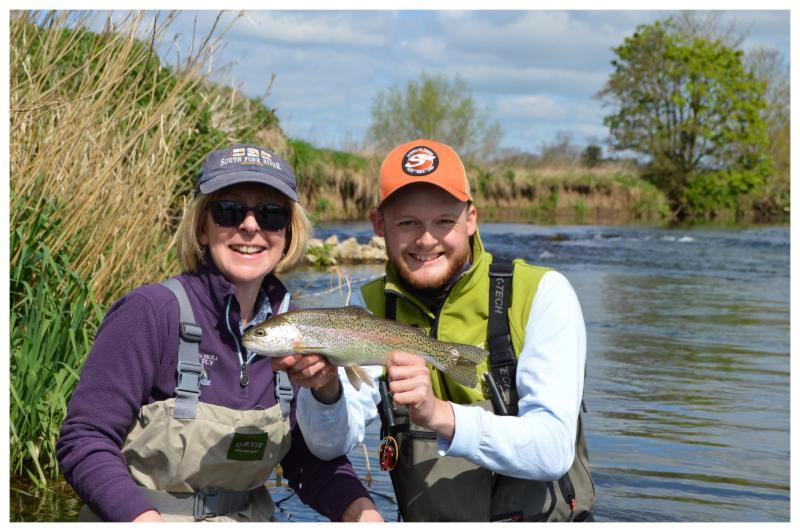
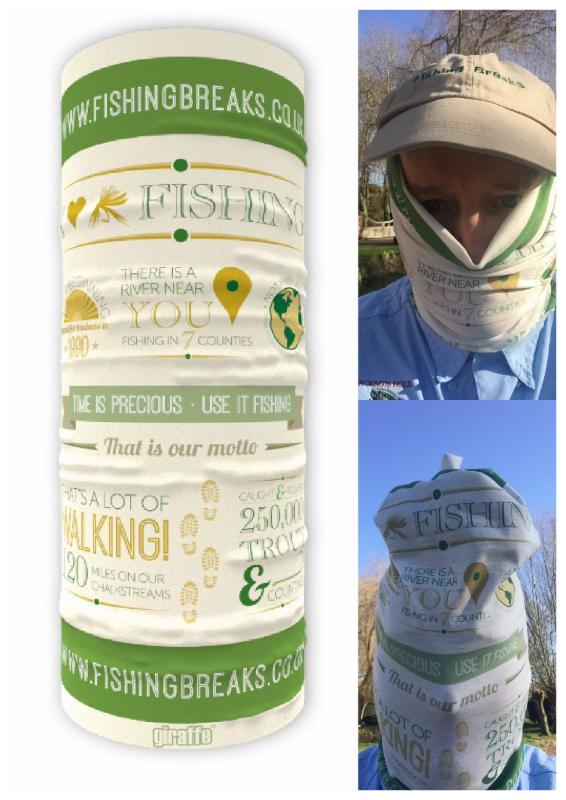
I am pleased to say the winner of the Fishing Breaks snood for May is Mrs. Davies who fished here at Nether Wallop Mill. It is in the post today. Everyone goes back in the draw at the end of October for the tactile Abel TR1 reel. Hard to not want to win that one!


QUIZ

Alec Douglas-Hume. Left himself plenty of time for fishing .....
Within a week of reading this we should have some idea of the make-up of our new government. 

So, a few parliamentary questions to keep us ahead of events It is, as ever, just for fun with answers at the bottom of the page.

1)  How many Members of Parliament are there?

2) How many Prime Minsters have there been since the end of World War II?

3)   Who had the longest and shortest tenure?


Have a good weekend.
 
Best wishes,
Simon Signature    
Founder & Managing Director  


Quiz answers:
  
1)      Currently none (they all lose their seats on the dissolution of Parliament) until the new Parliament is formed with 650.
2)      Fourteen. Winston Churchill and Harold Wilson each served twice.
3)      Margaret Thatcher (1979-90) and Alec Douglas-Hume (1963-64)

Friday, 19 May 2017

The mystical, magical Mayfly

Greetings!

Well, I finally cracked on Tuesday. The reports of Mayfly were too much. Calls, emails, social media postings - you were all alive with news as to how the river was alive. That odd freak of nature we crave so much, the mayfly, was on the move. The numbers were not great nor was the hatch intense. In fact sporadic was the most commonly used word. But it was happening. That was enough.

I don't exactly know why I resisted for so many days. Maybe anticipation is a pleasure in itself? So off I headed late in the day, arriving at the river just before 6pm.

From the bridge I could see a few fish were rising, at least three within casting range, with one taking mayfly for sure. But the lot of a river manager is not without some sacrifices. I don't expect you to feel my pain but one of the downsides of fishing your own water is that you are always doing a sort of audit in your head: are there seats that need repair. Should we trim back that overhanging branch? Why is there a discarded can lodged in the silt? So, inevitably, any trip of mine involves an element of work (are you still not feeling my pain?) so I eventually picked up my rod closer to seven than six.

I hardly dare count back of the number of years I have watched the Ephemera Danica hatch but for all that I have never lost the awe for another Mother Nature masterclass. It always confounds me, that despite a prior winter or spring that can range from benign to some of the worst on record, our little insect buddy arrives bang on time every year. Climate change? Nobody has told the mayfly.

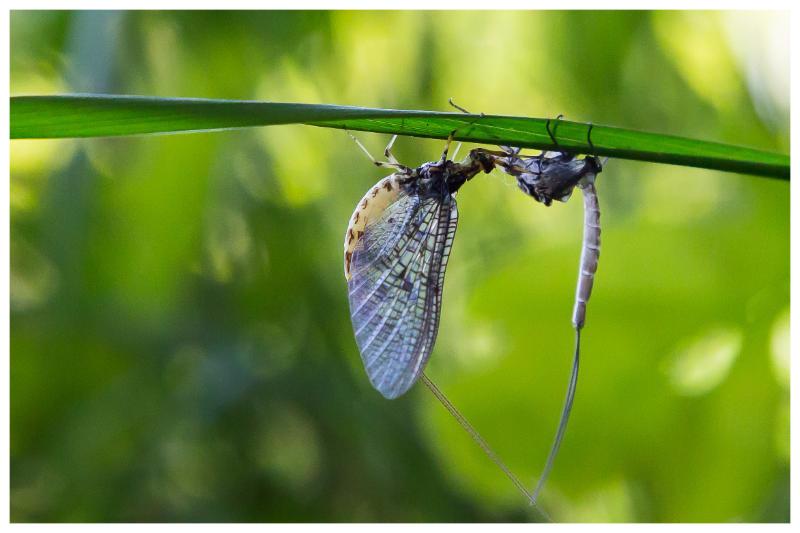
And then there is that moment when our scruffy, gangly nymph sheds his underwater persona to become the most amazing insect on the wing. How is it they even know how to fly? Just a few breaths of fresh air, a few moments stretching those newly minted wings and ping, off in the air. And everyone one of those millions, maybe billions, of danica knows his or her role in the brief hours of life to come. The males gather along the banks, forming in columns beside bushes and trees, fluttering up, then drifting down. Fluttering up, drifting down. It seems an odd way to attract a mate but maybe it is the entomological equivalent of a disco. Regardless it works, as females dive in from the side-lines, grasping onto the chosen one to perform congress mid-flight.

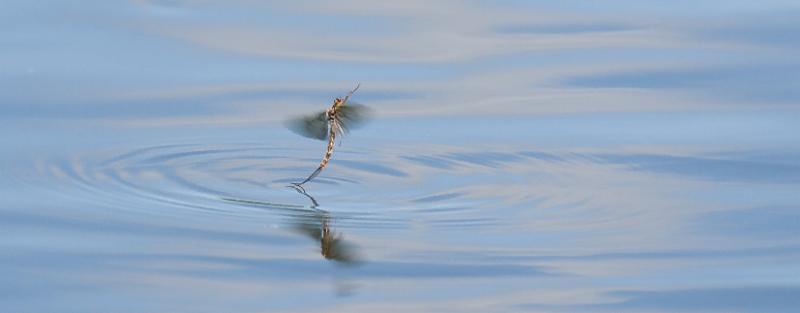
There is no post-coital pillow talk; let's face it if you don't even have the ability to eat (mayflies have mouths but no stomachs) time is not exactly on your side. The male slinks off; he'll be dead by morning. For the female it is a choice of an immediate return to the river for egg-laying or resting up overnight. Whichever path she follows the tableaux is the same, dipping down to touch the river with her abdomen, letting the surface tension to draw out long strings of eggs in a series of ever shortening dives until eventually she rises no more, collapsing in a heap of twitching tails, body and wings until she either drowns or is sucked down by an opportunistic trout. But the deed is done. The sticky egg strings drift towards the river bed, attaching themselves to stones and weed. In time they will hatch into tiny nymphs that will evolve to complete the circle of life almost to the day, two years later.

On Tuesday evening there was no sign of the spinners, the females laying eggs. It was strictly newly hatched duns, still something of a novelty for the small, wild browns who leapt clear of the water to grab the mays mid-flight. Such youthful enthusiasm - give them a few days to discover easier ways of capturing supper. But I was kind to them. I stayed my cast; it seemed unfair that such exuberance should be snuffed out with the painful realisation that all that floats is not all it might appear.

Instead I headed for one of the hatch pools where the big, lazy trout hang. It is one of the features of the early weeks of the mayfly hatch that fish cruise. You don't absolutely have to be saucer accurate with your cast. More or less is enough. If the fish like what they see they will come to you. Treasure that moment. It will not be the same later in the season.

And so I cast my line and let the turbulence of the pool take the fly where the current dictated. Regular mends to the left and the right kept it in the feeding zone until with that slow deliberation of a fish that knows it really doesn't need to try that hard, a head broke the surface and slurped down the fly. The two fish that quickly followed, to the precise same tactic, more than sated my mayfly desires, so I shambled towards home happy to ignore all other rises, which made me feel rather noble. But it could not last.

As I write this late on Thursday I have to confess that the fever is back. I have checked the fishing diaries and spied a few gaps. I have left Sunday conspicuously clear of domestic chores and family commitments. I have a feeling the magic and mystery of the mayfly will draw me back to the river before the weekend is out.


PUBLICITY SHY OTTERS

I am reasonably certain that I have many disturbed night ahead of me this summer. The maternal star of The Otters' Tale, Kuschta, is back again with a new litter of pups, this time numbering three.  They disturbing on two levels.
Grooming for the camera

Firstly, and most obviously, noise. A family of otters cannot move anywhere without eeking to one another. And believe me it is not just the occasional eek. As they arrive in a raggedy convoy the one at the back will eek to the one ahead, then the next in line will do the same to the next and so on in regular five second rotation.  On reaching our relatively small lake you'd think that would be it, but no, on and on goes the eeking. It only stops when they have finally eaten, settling down to groom and rest. And that is, of course, the other disturbing thing knowing that somewhere between the noise and the silence they will have created mayhem in the trout lake.

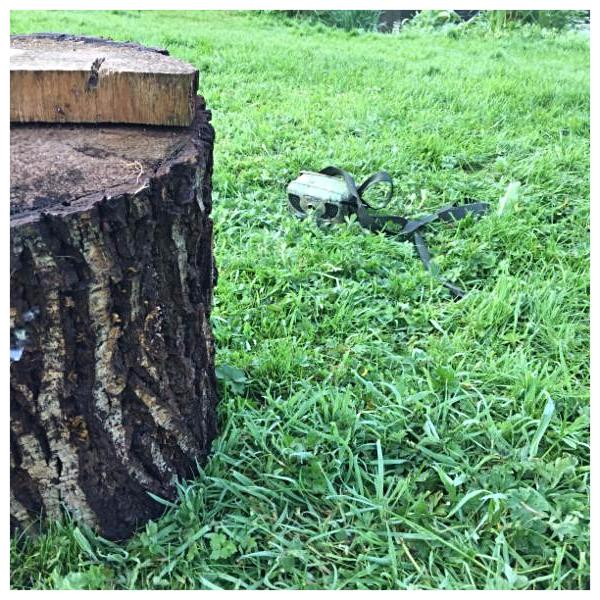
I do try to track their antics with a night vision camera and by way of 'disguise', knowing where they like to play, I have rolled in a log to which it is attached. Fool proof? Apparently not. Having played and groomed for the camera last night, they clearly took umbrage at the intrusion, proving themselves able to undo the tensioned strap, tear the camera from the log, abandoning it and the housing on the grass.

Why? I have absolutely no idea. Maybe I am going to need a camera to monitor the camera or simply pay the otters image rights, but you'd have thought all those fish were payment enough.


MY PERFECT SUMMERS

I found the school calendar incredibly frustrating. Did nobody in academia realise that the Mayfly hatch was long over by the time the school gates finally closed for the summer holidays? I did try to point this out to my headmaster once, but having long written me off as a hopeless case, he failed to rally to my cause for a radical shake up in term dates.

However, on the plus side I pretty well had my patch of the River Meon to myself. The men with grand cars and large cigars had vacated the river banks for the fleshpots of Ascot, Henley and the Riviera. Their loss (I doubt they saw it that way...) was my gain.

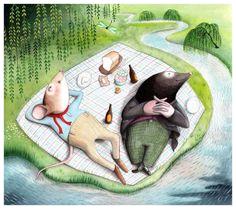
Sure, it was all rather unkempt, but some of my best memories are still of those long summers beside the stream. To slightly alter the words of Ratty in Wind in the Willows to Mole, 'Believe me, my young friend, there is nothing - absolutely nothing - half so much worth doing as simply messing about in rivers.'

So, in that vein, though (I hope) considerably less haphazard than my own summer we are running a three day river camp. It is a chance be a river keeper, help on a restoration projection, and learn the rudiments of being a fishing guide, all interspersed with lots of fishing.


River Camp
Takes place on the River Test near Stockbridge, Hampshire daily 10am-5pm for three days. Suitable for children 12-16 years. Fully supervised with all tackle and equipment provided. £275/child with 10% discount for siblings. July 17-19.

Kids Fish Camp
Run at Nether Wallop Mill near Stockbridge over four mornings (10am-1pm) and one full day (10am-3pm) over a week. Suitable for 8-15 years. Full tuition and all tackle provided. £250/child with 10% discount for siblings. July 24-28.

For more details click here .....


QUIZ

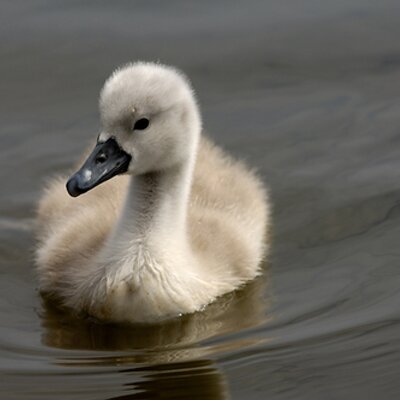
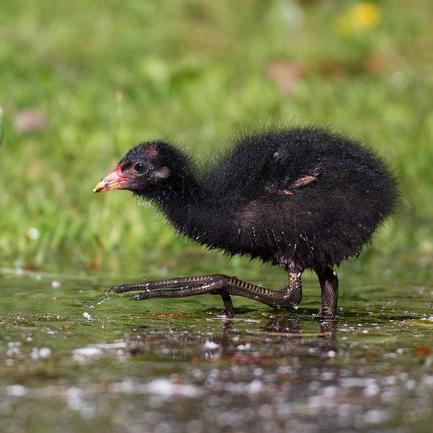
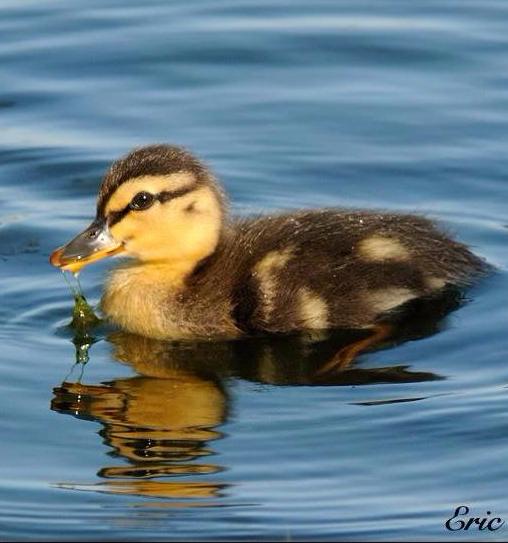
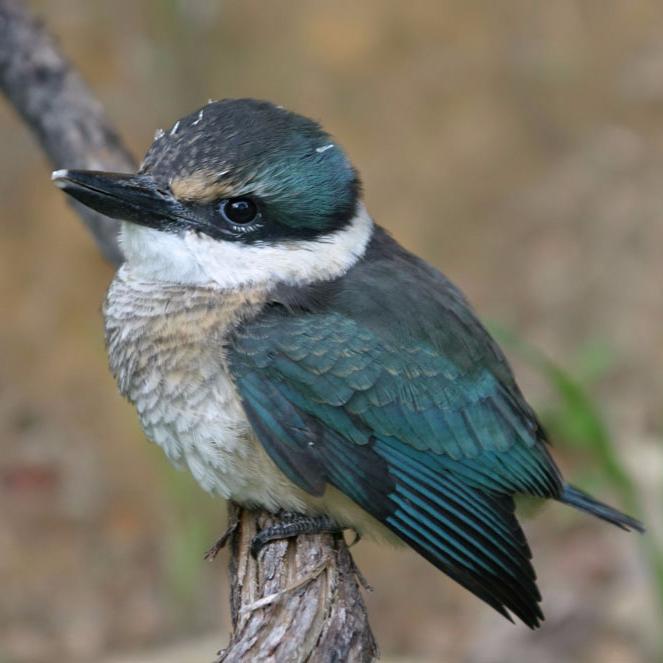
You will see all four of these fledglings on or near the river at this time of year. What adult will each the grow into? It is, as ever, just for fun with answers at the bottom of the page.


Have a good weekend.


Best wishes,
Simon Signature 
Founder & Managing Director  


Quiz answers: Top left: Swan. Top right: Moorhen. Bottom left: Mallard. Bottom right: Kingfisher

Friday, 5 May 2017

Who wrote the rules for progress

Nether Wallop Mill, Hampshire, England


Greetings!

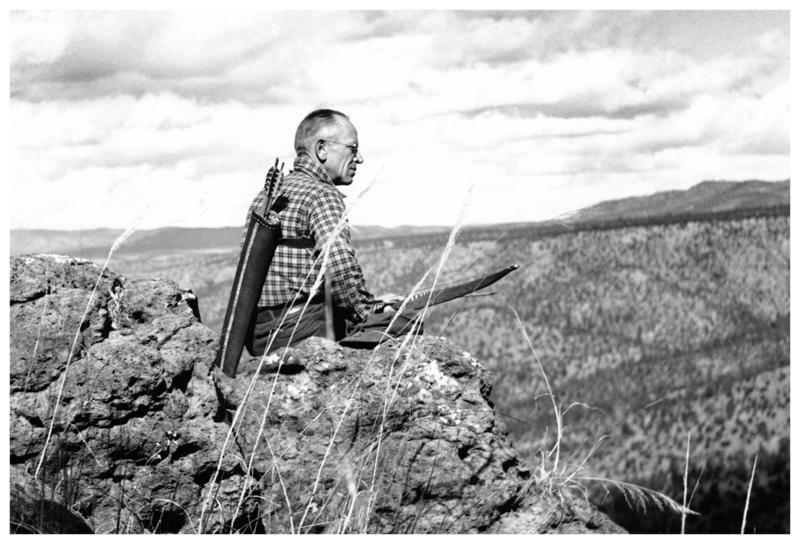
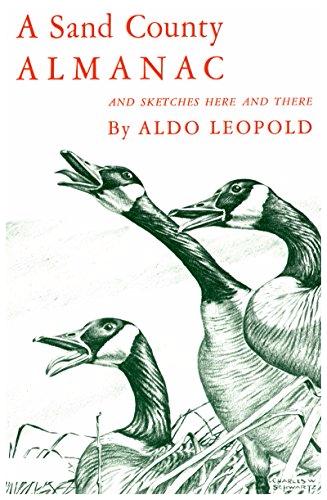
I am not entirely sure how I came to read Aldo Leopold's A Sand County Almanac. It is a remarkable book, far more interesting and readable that its tag as the conceptual book on environmental ethics suggests. 

Aldo Leopold
Despite being published way back in 1949, written about a way of life that has long disappeared, it still sells forty or fifty thousand copies a year.

In a world where media currency is counted in millions or billions that may not sound very many, but when you consider that the most recent blockbuster of natural history writing H for Hawk has sold 180,00 copies in total, the scale of the Almanac's achievement during modern times is colossal.

Leopold was, by profession, a United States Forest Ranger the service he joined in 1909, working his way up through the ranks before moving into academia to become the world's first ever wildlife professor at the University of Wisconsin.  

However in his early days his job was to kill bears, wolves, and mountain lions in New Mexico at the behest of local cattle farmers. But he hated the task, the product of a policy that believed that the wilderness should be tamed for the benefit of man regardless of the consequence to animals.

So began his evolution to become an ecological ethicist. Put in the simplest of terms he believed in the balance of nature, in a world where progress did not subjugate the needs of wildlife to the requirements of mankind. Long before he entered the halls of learning he put such beliefs into practice returning bears and mountain lions to the New Mexico wilderness.

Later in life, settled in Wisconsin with his family (incidentally all five of his children followed his path into environmental academia) he bought eighty acres in the sand country in the centre of the state. This once-forested region had been logged, swept by repeated fires, overgrazed by dairy cows, and left barren. It was here he put his theories to work and A Sandy County Almanac is the product of that time.

This is my favourite section of the book; I can't do it justice by précising it, so I hope you will pardon me for quoting it at length:

"Old Bigfoot was a robber-baron, and Escudilla [the mountain] was his castle. Each spring, when the warm winds had softened the shadows on the snow, the old grizzly crawled out of his hibernation den in the rock slides and, descending the mountain, bashed in the head of a cow. Eating his fill, he climbed back to his crags, and there summered peaceably on marmots, conies, berries, and roots.

I once saw one of his kills. The cow's skull and neck were pulp, as if she had collided head-on with a fast freight.

No one ever saw the old bear, but in the muddy springs about the base of the cliffs you saw his incredible tracks. Seeing them made the most hard-bitten cowboys aware of bear. Wherever they rode they saw the mountain, and when they saw the mountain they thought of bear. Campfire conversation ran to beef, bailes, and bear. Bigfoot claimed for his own only a cow a year, and a few square miles of useless rocks, but his personality pervaded the county.

Those were the days when progress first came to the cow country. Progress had various emissaries.

One was the first transcontinental automobilist. The cowboys understood this breaker of roads; he talked the same breezy bravado as any breaker of bronchos.

They did not understand, but they listened to and looked at, the pretty lady in black velvet who came to enlighten them, in a Boston accent, about woman suffrage.

They marveled, too, at the telephone engineer who strung wires on the junipers and brought instantaneous messages from the town. An old man asked whether the wire could bring him a side of bacon.

One spring, progress sent still another emissary, a government trapper, a sort of St. George in overalls, seeking dragons to slay at government expense. Were there, he asked, any destructive animals in need of slaying? Yes, there was the big bear.

The trapper packed his mule and headed for Escudilla.

In a month he was back, his mule staggering under a heavy hide. There was only one barn in town big enough to dry it on. He had tried traps, poison, and all his usual wiles to no avail. Then he had erected a set-gun in a defile through which only the bear could pass, and waited. The last grizzly walked into the string and shot himself.

It was June. The pelt was foul, patchy, and worthless. It seemed to us rather an insult to deny the last grizzly the chance to leave a good pelt as a memorial to his race. All he left was a skull in the National Museum, and a quarrel among scientists over the Latin name of the skull.

It was only after we pondered on these things that we began to wonder who wrote the rules for progress."
  
That phrase, who wrote the rules for progress, floated back into my consciousness the other day as the media wagon moved from Brexit to General Election. Who is writing the rules these days?

The truth is we have the most amazing and beautiful country, which despite some of the terrible things we have done to it in the name of progress, still takes my breath away daily. But there is only so much pain a landscape and the creatures that inhabit it can take.

At some point a rule book needs to be written. I would say 'new' rule book, but that wouldn't really be the truth for there is no 'old' rule book. Countryside policy, such as it is, has been by gradual creep, bowing to the needs of agriculture and urbanisation. Take housing: nobody ever asks 'should' we build more houses, simply where and how many.

Of course if you ask the 'should' question you stand prey to the accusation of denying progress, but this was Leopold's answer:

"Man will always kill the thing he loves, and so we the pioneers have killed our wilderness. Some say we had to. Be that as it may, I am glad I shall never be young without wild country to be young in."

Well, I don't think we have yet killed the thing we love but we are perilously close. It is time, in this crowded part of England, to truly protect the precious for when it is gone, it is gone forever.


THE TALENTED MR. BUCKLEY

You have to admire our dedication to the cause here at Fishing Breaks. Diane took time out from a family weekend in Derbyshire to spend the day with guide, Andy Buckley, on the Middle Dove. Now, the way Diane tells it she says escaping from an in-law event was just a huge coincidence ........

I know Andy from his days behind the counter at Farlow's in London. It wasn't that long ago; I recall he arranged a book signing event soon after the publication of Life of a Chalkstream but since then he has travelled the world, taking a stint guiding in the Seychelles before being drawn back to his native county.

To say he knows this stretch of the middle Dove well is something of an understatement; he caught his first ever trout on the fly on this very beat. Now if you are wondering where exactly we are talking about, it truly is not a far extremity of England. Draw a line from Birmingham to Sheffield and more-or-less at the midpoint is the farming town of Uttoxeter.  As Andy says you are just over two hours from London, an hour from Manchester and less from Birmingham.

Now I think what took Diane by surprise was that Andy appeared bristling like a hedgehog with four rigged rods; that is his modus and it is something of an eye opener for us staid southern chalkstream types. He carries two eight foot 4wt rods for dries and two ten foot rods for spiders and nymphs. So don't bring your own, rely on Andy.

This is fishing something akin to shooting with a loader; no messing about for a change of fly or new tippet as one rod departs and another smoothly slides into your grasp. And if you want a whole new arsenal of techniques this is the place to learn:  dry flies, dry-dropper rigs, indicator nymphing, North Country spiders and the French leader all get an airing during an average day. And the fish? Well, it is largely brown trout, the occasional wild rainbow trout and if you are after a specimen grayling you will always be in with a chance.

As Diane will attend Andy is the most charming and helpful of guides. This is no boot camp. Simply a gorgeous river with an enthusiast who really knows his stuff. More details here .....


LAST CALL FOR CHALK

I am delighted to say that we have surpassed our Kickstarter funding target for CHALK - The Movie so things are moving apace.

More details here ....
Firstly, thank you to everyone who has supported us in all manner of ways. The actual initial offering closes today at 4pm so it is not too late or if you need to ponder some more don't hesitate to be in touch later on.

We already have a slew of filming dates in the diary. Mother Nature waits for no man so we've had to get a wiggle on to arrange the rivers for all that amazing Mayfly footage you'll be expecting of us.

SAVE THE DATE: London premiere of CHALK will be on Thursday November 23rd.


APRIL FEEDBACK DRAW WINNER

You will have done very well to get a drop of rain on your head when out on the river during April which looks like being the driest April for twenty years. It was also very warm so we were treated to some tremendous hatches of olives and grannom.

The winner of the Fishing Breaks snood was Graham Winer who fished with his regular group at Compton Chamberlayne, commenting that they had never seen the Nadder so clear, so early. It makes sense.

Everyone is now in the end of season draw for the Abel TR1 reel. Good luck!


QUIZ

A bit of a week for gaffes, so as we are all familiar with a fishing gaff, I am using that tenuous verbal connection for the quiz. It is just for fun and the answers are at the bottom of the page.

1)      A hakapik is a Norwegian type of gaff. It is used for killing what?

2)      A gaff rig is what?

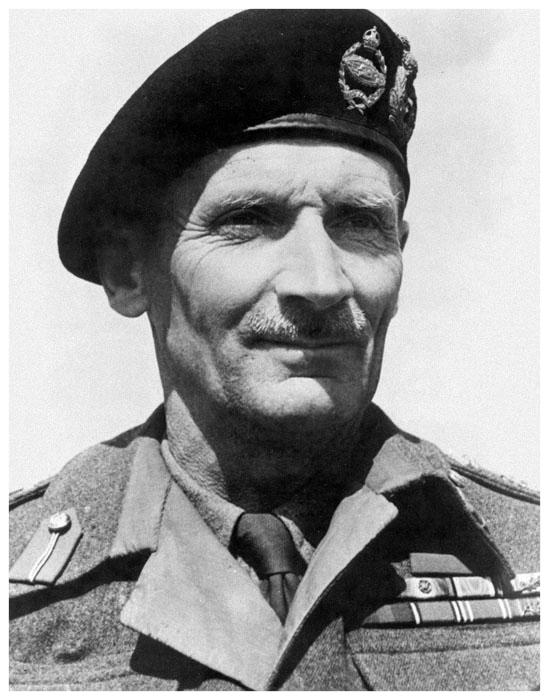
3)  The unsuccessful Operation Gaff overseen by Field Marshall Montgomery in 1944 was organised to assassinate or capture which German Field Marshall?

4)      Why would a chicken wear gaffs?


Have a good weekend.


Best wishes,
Simon Signature 
Founder & Managing Director  


Quiz answers: 

1)      Seals   2) A configuration of sails, mast and stays on a gaff cutter  3) Rommel    4) They are cockfighting spurs